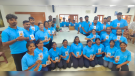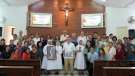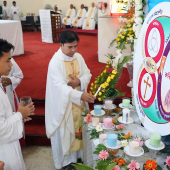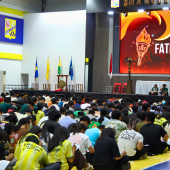



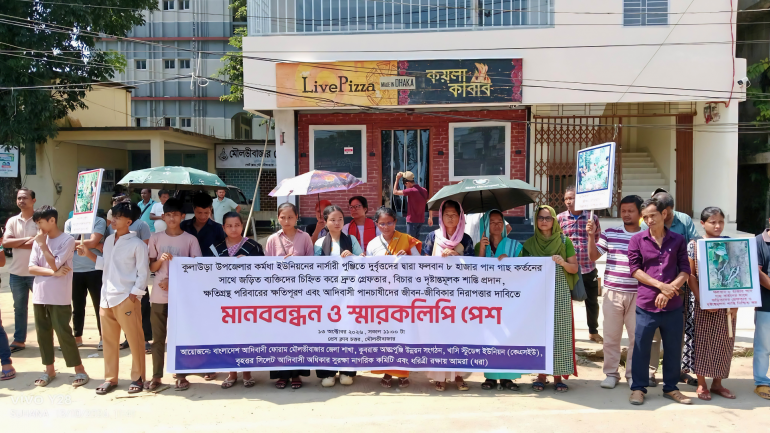
Indigenous Khasi and Garo community members, Catholic faithful, students, and human rights activists staged a protest in northeastern Bangladesh on October 13, demanding justice after more than 8,000 fruit-bearing betel leaf vines were destroyed in an indigenous settlement, causing an estimated loss of nearly 5 million taka (about US$40,000).
The demonstrators formed a human chain and held a rally outside the Moulvibazar Press Club before marching to the Deputy Commissioner’s office to submit a memorandum calling for the identification and prosecution of those responsible, compensation for affected families, and stronger protection for indigenous farmers.
The vines were cut down on September 30 in Nursery Khasi Punji, an indigenous settlement in Kulaura Upazila of Moulvibazar district, northeastern Bangladesh. The plantations were the primary source of income for 10 Khasi and Garo families, most of whom belong to Lokhipur Catholic Parish.
“How many more Khasi betel leaf plantations must be destroyed before the state takes notice?” asked Flora Babli Talang, a Catholic and president of the Moulvibazar district unit of the Bangladesh Indigenous Forum.
“Those responsible are enemies of the Khasi and Garo peoples and enemies of the nation. We demand their immediate arrest and exemplary punishment,” she said.
Talang said indigenous families across several punjis, or traditional Khasi settlements, were living in fear and urged authorities to strengthen security.
For the affected farmers, the destruction threatens their families’ ability to meet basic needs, including children’s education.
“Betel leaf cultivation is our only source of income,” one farmer told RVA News. “With the vines cut down, I do not know how I will feed my children.”
Khasi youth leader Saju Marchiang said the attack occurred under cover of darkness, leaving no witnesses. He added that some victims were reluctant to file complaints because they feared retaliation.
“In previous incidents, people who named suspects later faced attacks themselves,” Marchiang said. “The victims are afraid because they are a minority community and feel vulnerable.”


On October 9, Assistant Superintendent of Police Mostafizur Rahman visited the settlement and assured residents that authorities would investigate the incident and identify those responsible. No arrests had been reported as of October 13.
Local church leaders and community representatives said the latest incident followed earlier attacks on indigenous betel leaf plantations in the region.
In February 2025, more than 6,500 fruit-bearing vines belonging to 21 families in the same settlement area were reportedly destroyed following a dispute linked to plantation theft. Community leaders also reported that homes were vandalized, property was looted, and residents were threatened.
On March 28, 2026, another 1,200 vines belonging to a Khasi couple in Ichachhara Punji were destroyed. Community representatives estimate that more than 30,000 vines have been cut down across indigenous settlements in recent years.
They said few perpetrators had been identified or prosecuted despite repeated complaints.
Betel leaf cultivation requires years of care before vines reach full productivity. Their destruction can therefore deprive families of income for an extended period, erasing years of labor and investment.
The memorandum submitted to local authorities called for prosecution of those responsible for the September 30 attack, compensation for affected families, stronger security for indigenous farmers, and greater protection of indigenous rights.
As they await action from authorities, the families remain concerned about the safety of their remaining plantations and their ability to sustain their livelihoods on ancestral lands.
Radio Veritas Asia (RVA), a media platform of the Catholic Church, aims to share Christ. RVA started in 1969 as a continental Catholic radio station to serve Asian countries in their respective local language, thus earning the tag “the Voice of Asian Christianity.” Responding to the emerging context, RVA embraced media platforms to connect with the global Asian audience via its 21 language websites and various social media platforms.
Latest News