

Laudato Si’ Platform Shifts Focus from Participation Numbers to Measurable Ecological Change


Five years after its launch, the Laudato Si’ Action Platform is shifting its focus from counting participating Catholic institutions and their ecological initiatives to assessing how effectively they are changing their decisions and practices in response to the environmental crisis.
The initiative, which has enrolled more than 13,000 participants, including over 6,200 institutions worldwide, announced new digital tools, offline resources and plans to explore artificial intelligence during the presentation of its Fifth Annual Report at the Holy See Press Office on November 4.
Sr. Alessandra Smerilli, FMA, Prefect of the Dicastery for Promoting Integral Human Development, said the anniversary offered an opportunity for the Church to examine whether its commitment to ecological conversion was producing meaningful change.
“An anniversary is also a time for an examination of conscience,” she said.
Alonso de Llanes, director of the Platform, cautioned that participation and reported activities should not be mistaken for tangible results.
“An enrollment is a beginning, not an achievement. A plan is a commitment, not yet a result. And an action reported as complete does not necessarily tell us what changed,” he said.
Among the major developments is the launch of a Digital Atlas of Laudato Si’, designed to connect participating Catholic institutions with geographical, climate and environmental data.
The tool will allow users to locate participating institutions in different countries and dioceses and, where permission is granted, explore their ecological plans alongside information on deforestation, emissions and exposure to hurricanes. The initiative aims to help dioceses, parishes, schools and religious congregations make better-informed environmental decisions.
The Platform also announced that its core formation and planning process will be available offline for the first time through printed resources. This will enable communities with limited internet access to develop ecological plans, identify actions and assess their progress.
A new Learning Hub is also planned to facilitate the exchange of experiences among Catholic institutions, allowing successful initiatives in one community to inform others.
The organization is further exploring artificial intelligence tools to help participants identify relevant resources and possible ecological actions. However, De Llanes stressed that technology must support rather than replace human judgment and local decision-making.
Dr. Lorna Gold, executive director of the Laudato Si’ Movement, called for greater institutional commitment, urging Catholic institutions to examine their investments, property management, energy consumption, purchasing practices and environmental education.
“The climate crisis will not wait for our institutions to become comfortable with change,” she said, challenging the Church to demonstrate not merely its willingness to respond but its readiness to change institutional practices.
Bishop Allwyn D’Silva of Mumbai, western India, shared experiences of ecological initiatives that began with personal commitments, including Lenten carbon fasts, rainwater harvesting, solar energy and reducing disposable plastics, and gradually became part of parish and diocesan life.
“If our faith can change what we choose for forty days, why should it not change what our institutions choose for the next forty years?” he asked.
Sr. Roxanne Schares, SSND, executive secretary of the International Union of Superiors General (UISG), reported that more than 50 percent of religious congregations worldwide are enrolled in the Platform, representing a network of approximately 600,000 sisters from more than 1,900 congregations.
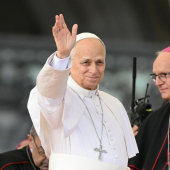
The anniversary program began with representatives of the Platform attending Pope Leo XIV’s General Audience in St. Peter’s Square on November 4. The Pope greeted them at the conclusion of the audience.
The fifth-anniversary activities will continue on November 6 with an interactive workshop examining artificial intelligence, human creativity and integral ecology.
The developments mark a new phase for the initiative, emphasizing that ecological conversion must move beyond declarations and individual projects to influence the long-term decisions and institutional practices of the global Catholic Church.
Radio Veritas Asia (RVA), a media platform of the Catholic Church, aims to share Christ. RVA started in 1969 as a continental Catholic radio station to serve Asian countries in their respective local language, thus earning the tag “the Voice of Asian Christianity.” Responding to the emerging context, RVA embraced media platforms to connect with the global Asian audience via its 21 language websites and various social media platforms.
Latest News