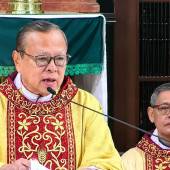



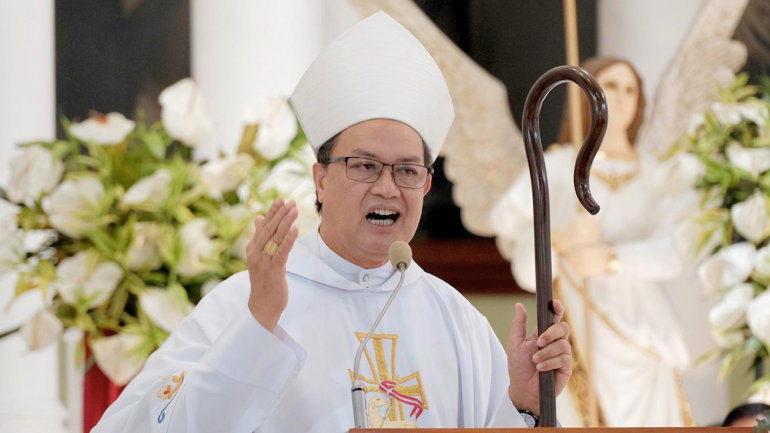
Cardinal Pablo Virgilio David of Kalookan, a diocese in the northern part of Metro Manila, the Philippines’ capital region, has urged Filipinos frustrated with their country’s political system not to withdraw from public life, warning that the disengagement of people committed to the common good can allow bad politics to prevail.
In a reflection posted Monday, Cardinal David acknowledged the growing frustration among Filipinos who look at the progress of neighboring Asian countries and ask what has gone wrong in their own country.
He said part of the problem may lie in the widespread perception that politics is inherently corrupt, politicians are inherently dishonest, and elections offer little more than a choice between the lesser of two evils.
Such disillusionment, he warned, can discourage people of integrity from entering public life.
“Perhaps the greatest victory of bad politics is when good people become so disgusted that they withdraw from politics altogether,” Cardinal David said.
Rather than abandoning politics, he called for efforts to reclaim it as a form of service directed toward the common good.
Cardinal David cited Pope Francis’ teaching that politics, when oriented toward the common good, can be “one of the highest expressions of charity.”
Catholic social teaching, he said, does not regard political engagement as beneath those committed to serving others. Political decisions affect human dignity, the welfare of the poor, access to opportunities, the fair distribution of resources, care for creation and the pursuit of peace.
“The problem, therefore, is not politics. It is the corruption of politics,” Cardinal David said.
He argued that political renewal requires more than educating voters or monitoring elections. It also requires forming leaders, strengthening genuine political parties, developing alternative political programs and encouraging people of integrity to consider public service a vocation.
Cardinal David pointed to the late Jesse Robredo, former Philippine interior secretary, as an example of transformational leadership. Robredo promoted a model of governance that sought to move “from patronage to participation, from personalities to institutions, and from dependency to empowerment.”
The cardinal also noted the emergence of a new generation of public servants who continue to believe that public office can be a genuine form of service.
Looking toward the Philippines’ 2028 elections, Cardinal David said political renewal should not begin only when candidates are being chosen. It must start now in communities, local governments, civic movements and political parties through leadership formation and the development of alternative political visions.
He urged Filipinos to move beyond simply asking what has gone wrong and to consider what they themselves can do to change the situation.
The challenge, he suggested, is not merely to wait for better politicians but to help create the conditions in which better leadership can emerge.
For Cardinal David, political change therefore begins with participation. If people committed to justice and the common good withdraw from politics, they leave the public arena to others. But if they engage, form leaders and build alternatives, they can help restore politics to its proper purpose: service of society and the common good.
Radio Veritas Asia (RVA), a media platform of the Catholic Church, aims to share Christ. RVA started in 1969 as a continental Catholic radio station to serve Asian countries in their respective local language, thus earning the tag “the Voice of Asian Christianity.” Responding to the emerging context, RVA embraced media platforms to connect with the global Asian audience via its 21 language websites and various social media platforms.
Latest News