


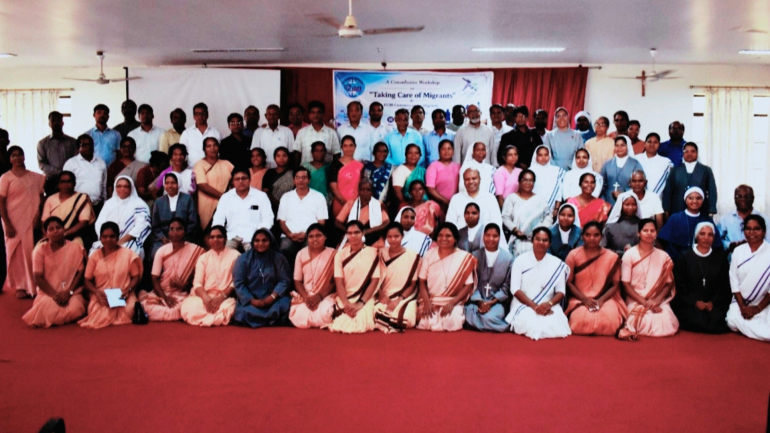
The Conference of Catholic Bishops of India (CCBI) Commission for Migrants has organized a consultative workshop in eastern India’s Jharkhand state to strengthen the Catholic Church’s response to migrants and promote safe, dignified and rights-based migration.
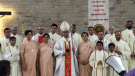
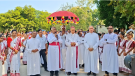
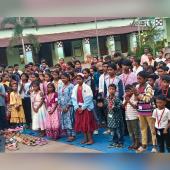
About 95 priests, religious and lay leaders from different dioceses participated in the workshop, “Taking Care of Migrants,” at the Social Development Centre in Ranchi, the capital of Jharkhand, on August 21. The event was organized in collaboration with SIGN–CRI Ranchi.
The workshop focused on practical responses to human trafficking, bonded labor and other forms of exploitation faced by people who leave their homes in search of employment and better livelihoods.
Bishop Vincent Barwa of Simdega identified poverty, limited employment opportunities, inadequate education and poor access to health care as major factors driving migration, particularly among tribal communities. He called for greater investment in education, skills training and sustainable livelihoods to reduce migrants’ vulnerability.
Auxiliary Bishop Anand of Ranchi stressed the importance of empowering young people while preserving Jharkhand’s rich tribal heritage and social identity.
The workshop emphasized that the Church’s pastoral responsibility must extend beyond migrants’ places of origin to accompany them throughout their journey and at their destinations.
Fr. Alwin, director of SIGN, highlighted the need for continued pastoral support for migrants, while Fr. Manoj, TOR, president of CRI Ranchi, urged dioceses and parishes to turn reflection into concrete grassroots action.
Sr. Rani Punnasseril, HCM, a national council member of the CCBI Commission for Migrants, called for coordinated action from the point of departure to the destination, focusing on safe migration, awareness, accompaniment, networking and protection.
Fr. Siby Eravimangalam, CMF, urged parishes to identify migrants from their communities, maintain contact with them and strengthen links between communities of origin and destination.
Brother Clement Digal, a theologian, said the Church’s ministry to migrants must be rooted in the Christian conviction of the inherent dignity of every person.
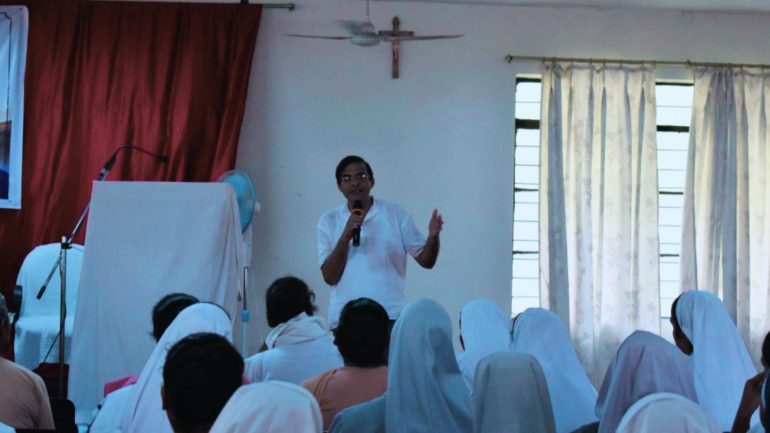
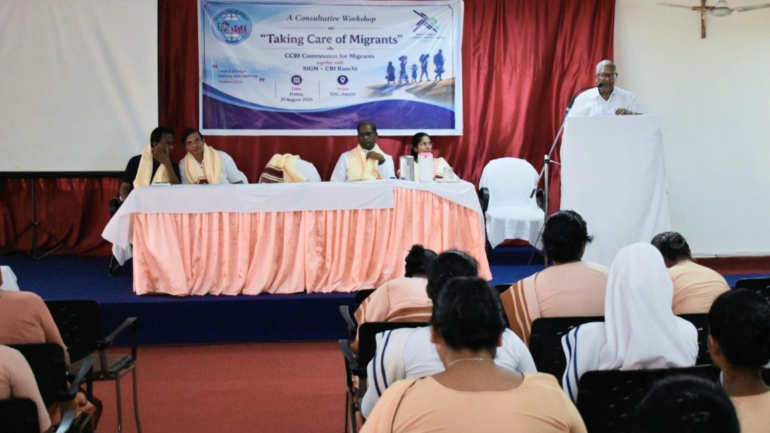
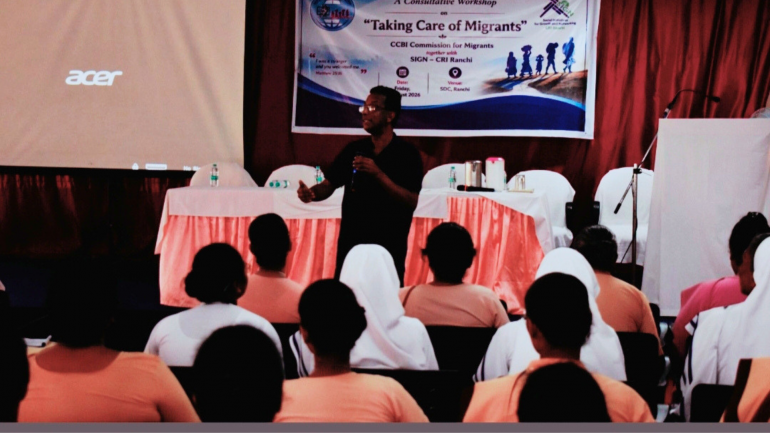
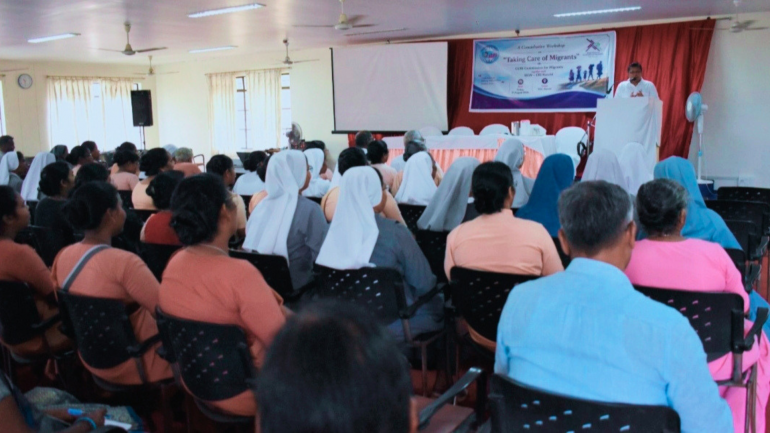
“A migrant is not merely a laborer seeking employment or a victim in need of assistance; he or she is a person created in the image of God,” he said, describing migrant accompaniment as a Gospel responsibility grounded in justice, solidarity and human fraternity.
Brother Clement urged the Church to address not only the consequences of migration but also the conditions that force people into unsafe and exploitative situations.
“The Church is called to stand with migrants, defend their rights, strengthen their voice and help create communities where migration can be a choice for a better future rather than an escape from poverty,” he said.
Human-rights activist Nirmal Gorana sensitized participants to bonded labor and human trafficking, emphasizing pre-migration awareness, legal literacy and early identification of exploitation.
The workshop produced a practical action plan covering awareness programs in schools and self-help groups, training on migrant rights, systematic documentation, legal intervention and advocacy with government authorities.
The CRI and participating dioceses agreed to collaborate in implementing and monitoring the initiatives. Parishes will also observe the 2026 World Day of Migrants and Refugees through awareness activities and pastoral outreach.
The consultation reaffirmed the Church’s commitment to know, accompany, protect and empower migrants, with participants stressing that migration should provide opportunities for a better life rather than expose people to exploitation.
Radio Veritas Asia (RVA), a media platform of the Catholic Church, aims to share Christ. RVA started in 1969 as a continental Catholic radio station to serve Asian countries in their respective local language, thus earning the tag “the Voice of Asian Christianity.” Responding to the emerging context, RVA embraced media platforms to connect with the global Asian audience via its 21 language websites and various social media platforms.
Latest News