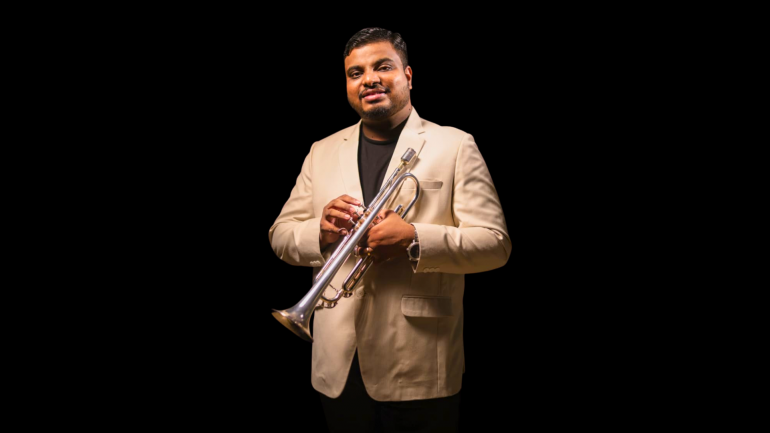
For Senon Silvestre De Souza, music in the Church is not a performance but an act of prayer and worship.
“We are not here to perform,” the Goan musician and composer said. “We are here to praise and worship God through the ministry of music, and to glorify Him.”
From Azossim in Goa, western India, De Souza has built a musical career that brings together faith, music and Goan Konkani cultural heritage. Yet he traces his musical journey not to the stage or recording studio, but to his parish church, where he began playing the violin at the second Sunday Mass as a young musician.
“I always knew that my musical talent was a gift from God, and that I was called to use it for His praise and glory,” he said.
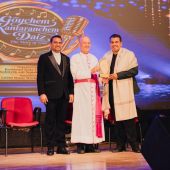
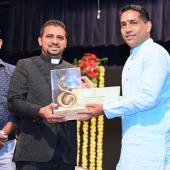
De Souza is now known for his work in tiatr, Goa’s popular Konkani theater tradition, as well as in Konkani music. Over more than a decade, he has composed, arranged and performed music for more than 100 tiatrs, numerous albums and more than 200 stage productions. He has received several Best Music Awards from the Kala Academy Goa and the Tiatr Academy of Goa and was honored with the Tiatr Academy of Goa’s Young Achievers Award in 2022.
Despite his professional career, he continues to serve in parish music ministry.
For De Souza, the purpose of liturgical music is to help the congregation pray rather than draw attention to the musicians. Instruments should support the voices, he said, while the words of a hymn should remain clear and meaningful.
His own understanding of sacred music has deepened over the years. As a young musician, he often sang and played without reflecting closely on the meaning of the hymns. Today, he makes a conscious effort to understand their message before performing them.
A hymn, he believes, can lead people toward gratitude, repentance, reflection and prayer. Music becomes ministry when musicians first enter into the meaning of the hymn and then help the congregation do the same.
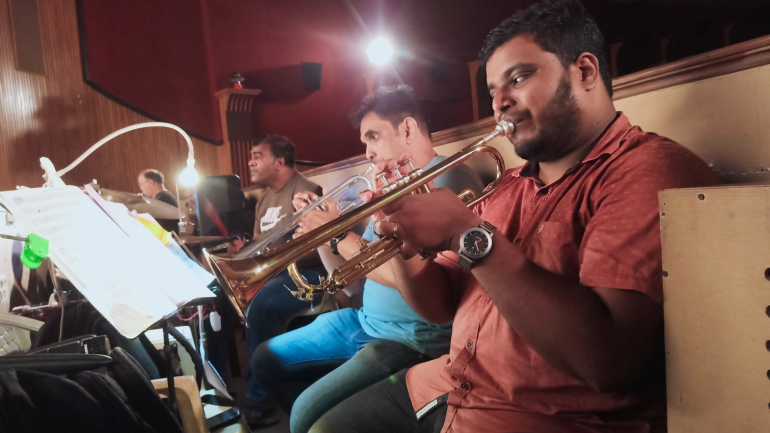
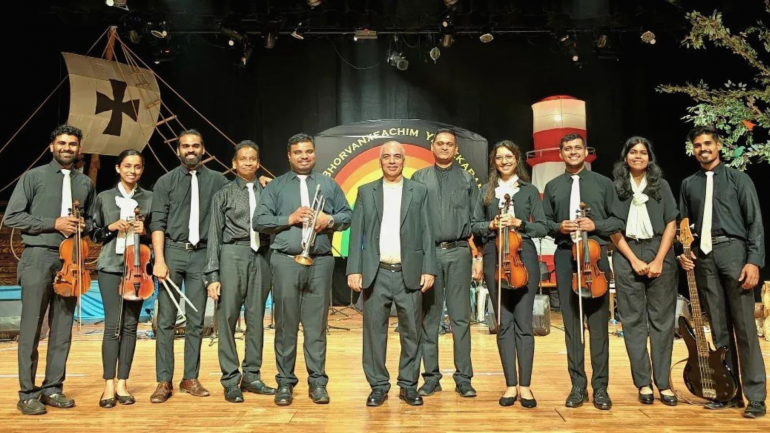
His musical ministry also extends beyond the parish. He has composed and arranged music for Lenten tiatrs in Goa, helping communicate themes of Christ’s Passion, sacrifice, repentance and redemption through a distinctly Goan artistic tradition.
He also participated in the musical team for Porgottnnar (Proclaimer), a large-scale musical operetta conducted during the exposition of the sacred relics of St. Francis Xavier.
For De Souza, music also serves as a way of preserving Goa’s Christian and Konkani heritage. He particularly values the traditional Ladain (Litany), whose distinctive melodies form part of the musical heritage of Goan Catholic communities.
“Keeping these melodies alive” is important, he believes, so that faith and culture can be passed on to younger generations.
His vocation is lived within his family as well. A husband and father of two, De Souza sees his family life as another opportunity to transmit Catholic values through example. His wife also sings in the parish choir.
Although he has achieved recognition as a musician, De Souza remains conscious that his ministry is also a journey of faith. He acknowledges areas in his spiritual preparation that still need growth.
Ultimately, he does not want his legacy to be measured only by musical achievements.
“I would rather proclaim the message of love through my work, through my actions, through my deeds, and, most importantly, through the way I live my life,” he said.
For this Goan Catholic musician, music finds its deepest meaning when it leads people beyond the musician and toward God.
Radio Veritas Asia (RVA), a media platform of the Catholic Church, aims to share Christ. RVA started in 1969 as a continental Catholic radio station to serve Asian countries in their respective local language, thus earning the tag “the Voice of Asian Christianity.” Responding to the emerging context, RVA embraced media platforms to connect with the global Asian audience via its 21 language websites and various social media platforms.
Latest News