At EDSA 40 rally, Caritas Philippines President urges Filipinos to move from “People Power” to “People Responsibility”

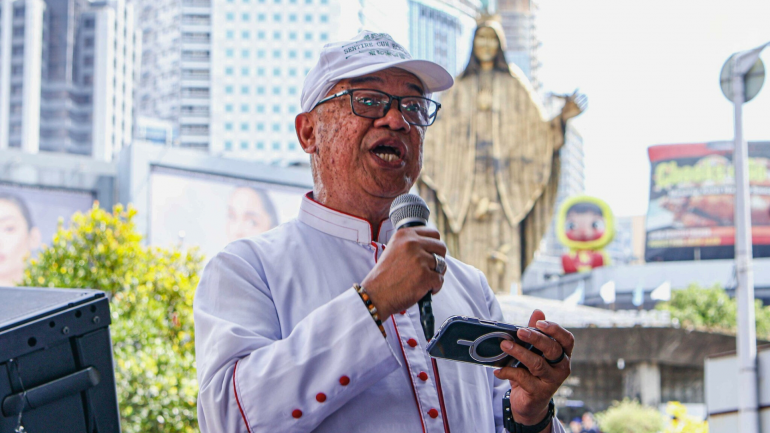
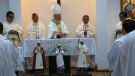
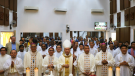
Marking the 40th anniversary of the 1986 People Power uprising, Bishop Gerardo Alminaza, President of Caritas Philippines, called on Filipinos to move beyond commemorating history and instead practice what he described as “People Responsibility” in confronting present-day injustices.
Speaking before church groups, workers, indigenous representatives and youth at the EDSA Shrine on Feb 25, Bishop Alminaza recalled how “a flood of people” gathered along Epifanio de los Santos Avenue in 1986 to reclaim democracy.
“Forty years ago, EDSA was flooded, not with water, but with people.” Bishop Alminaza said, describing the uprising as a surge of courage and conscience that “washed away fear.”
The bishop of San Carlos extended the metaphor to present conditions, pointing to what he called today’s “floods”: corruption, poverty, environmental destruction, land injustice, and human rights violations.
Bishop Alminza, who chairs CBCP’s Commission on Social Action, Justice, and Peace, said democracy must not only be remembered but actively defended through peaceful civic engagement, integrity in workplaces, and solidarity with marginalized communities.
He cited climate-related disasters affecting vulnerable communities, labor insecurity faced by workers, and the continuing struggles of indigenous peoples defending ancestral lands.
He also referred to ongoing proceedings at the International Criminal Court linked to the government’s past anti-drug campaign under former president Rodrigo Duterte, describing accountability as essential to breaking what he called a “culture of impunity.”
“This is not about revenge,” he said. “It is about accountability.”
The bishop urged Filipinos to “flood” institutions and communities not with anger, but with truth, transparency and moral courage.
The prelate emphasized that charity alone is insufficient without structural reform.
Bishop Alminaza also introduced the Visayan term “Hayuma,” a word used by fisherfolk to describe the patient mending of torn nets before returning to sea.
In a pastoral context, he said, it symbolizes repairing damaged social structures and restoring dignity to those harmed by injustice.
“EDSA is not only a memory of what we achieved,” he said. “It is a question of what we will do now.”
The 1986 uprising, widely known as the People Power Revolution, led to the restoration of democratic institutions after years of authoritarian rule.
Four decades later, church leaders at the gathering said its spirit remains relevant as Filipinos confront new social and political challenges.
Radio Veritas Asia (RVA), a media platform of the Catholic Church, aims to share Christ. RVA started in 1969 as a continental Catholic radio station to serve Asian countries in their respective local language, thus earning the tag “the Voice of Asian Christianity.” Responding to the emerging context, RVA embraced media platforms to connect with the global Asian audience via its 21 language websites and various social media platforms.
Latest News