


FABC Assembly Pauses for Prayer as Cardinal Tagle Calls Christ the True Bridge-Builder

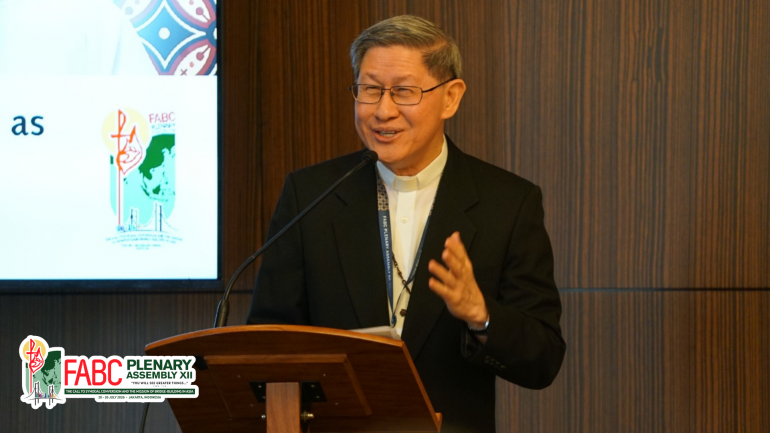
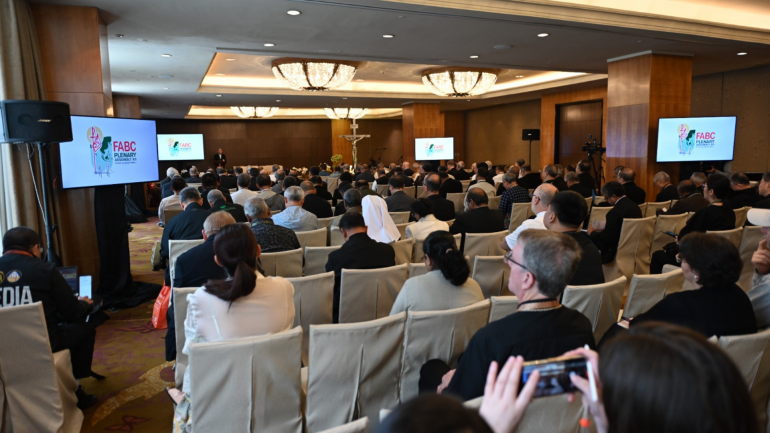
The third day of the 12th Plenary Assembly of the Federation of Asian Bishops' Conferences (FABC) took on a contemplative tone on July 22 as bishops and delegates from across Asia set aside reports and deliberations for a Day of Prayer and Recollection.
The day-long retreat invited participants to step back from the Assembly's working sessions to pray, reflect, and discern together before continuing discussions on the theme, "Synodal Conversion and the Mission to Be Bridges and Bridge-Builders in Asia."
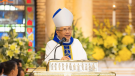
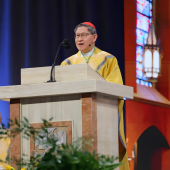
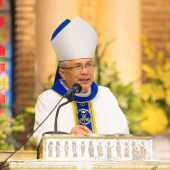
Gathered in the Gerbera Hall of Hotel Mulia in Jakarta, delegates began the day with a spiritual conference led by Cardinal Luis Antonio Tagle, Pro-Prefect of the Dicastery for Evangelization. Reflecting on John 1:43-51—the biblical text chosen for the Assembly—he urged participants to keep their eyes fixed not on strategies, structures, or pastoral plans, but on Jesus Christ.
For Cardinal Tagle, the Assembly's call to synodal conversion and bridge-building can only be understood by first contemplating Christ.
"The ladder suggests Jesus as the bridge in whom God and humanity—and I would say creation—are held together," he said, referring to Jesus' reference to Jacob's dream in the Gospel passage that inspires this year's Assembly.
The image of the bridge has become a defining theme of the weeklong gathering, with delegates emphasizing the Church's mission to foster dialogue and reconciliation across cultures, religions, nations, and social divides. Cardinal Tagle, however, reminded participants that Christians can become bridge-builders only by first encountering Christ, who is the bridge between heaven and earth.
Drawing from the Prologue of the Gospel of John, he reflected on the mystery of the Word through whom all things were created and who became flesh to dwell among humanity.
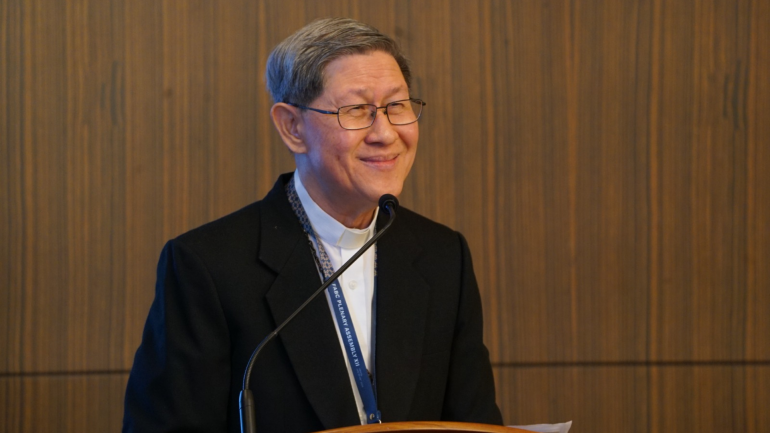
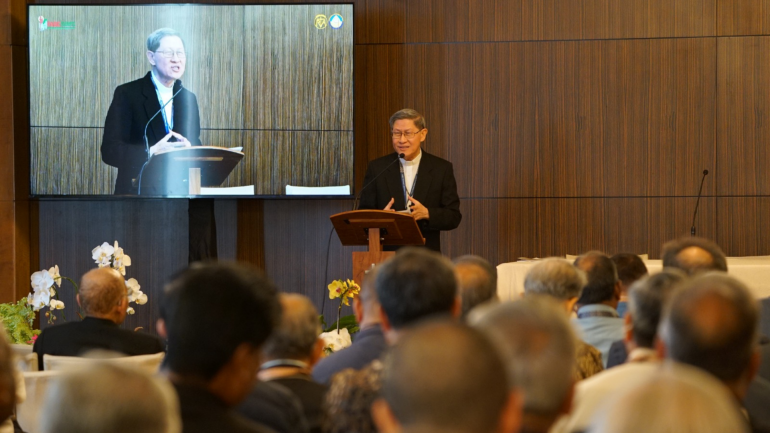
"The Word through whom creation came into being entered creation itself," he said, explaining that the Incarnation reveals a God who does not remain distant but embraces humanity from within.
"Jesus is God's way of showing us who God truly is," he said. "And Jesus is also the human way of showing us how to be fully human."
Returning to the image of Jacob's ladder, Cardinal Tagle said Christ unites the vertical relationship between God and humanity with the horizontal relationship among people and with creation.
"To be with God is not to be far from humanity and creation," he said.
He also challenged attitudes that can emerge in pastoral ministry, warning against approaches that place Church leaders above the people they serve. Referring to the common expression of adapting preaching to the "level" of the faithful, he cautioned against language that suggests superiority.
"That's not incarnation. That's not kenosis," he said, pointing instead to Christ's self-emptying love described in the Letter to the Philippians. Jesus' coming into the world, he explained, was not an act of condescension but of love for "his own."
Unlike the previous days, which focused on reports, interventions, and plenary discussions, the Day of Prayer and Recollection centered on silent prayer, meditation, and Conversation in the Spirit—the discernment method that has become a hallmark of the Church's synodal journey.
Cardinal Tagle encouraged participants to pray with biblical images rather than abstract concepts, suggesting that symbols such as bridges, ladders, walking together, and open heavens can reveal deeper dimensions of God's mystery.
His reflection also laid the spiritual foundation for the Assembly's discussions in the days ahead. In a continent marked by extraordinary cultural diversity, ancient religious traditions, and complex social challenges, he said the Church's mission of bridge-building must begin with a renewed encounter with Christ.
"Maybe before we strategize how to be bridges and bridge-builders, we can again look at Jesus, touch him, see him, behold him, and learn from him," he said.
Following the conference, delegates entered an extended period of silent prayer and personal reflection, underscoring the Assembly's conviction that authentic synodal conversion begins not with programs or structures, but with listening to the Holy Spirit and deepening one's relationship with Christ, the bridge who unites heaven and earth.
Radio Veritas Asia (RVA), a media platform of the Catholic Church, aims to share Christ. RVA started in 1969 as a continental Catholic radio station to serve Asian countries in their respective local language, thus earning the tag “the Voice of Asian Christianity.” Responding to the emerging context, RVA embraced media platforms to connect with the global Asian audience via its 21 language websites and various social media platforms.
Comments
Latest News



- Reply
Permalink