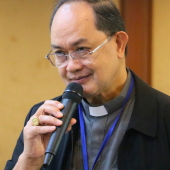
National and diocesan synod teams have a key role in helping local Churches turn the vision of synodality into concrete practices, Fr. Enrico Emmanuel Ayo, associate secretary of the Federation of Asian Bishops’ Conferences (FABC), told participants at a synod formation session in Bangkok.
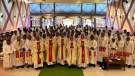
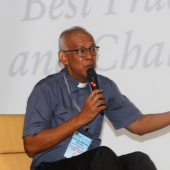
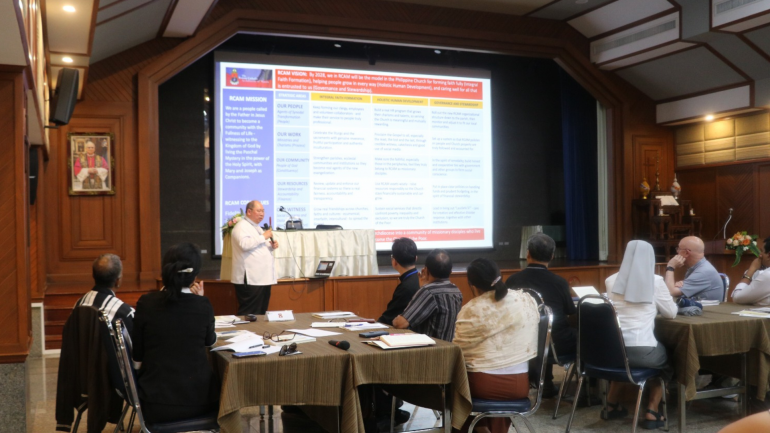
Fr. Ayo spoke on Sept. 1 during the afternoon session on “The Role of National and Diocesan Synodal Teams” at the Joseph Nittayo Conference Hall of the Baan Phu Waan Pastoral Training Center. The session was attended by 61 delegates from 21 countries across Asia.
Presenting the role of synodal teams during the implementation phase of the Synod on Synodality, Fr. Ayo described the Church as a “synodal missionary Church” on pilgrimage, walking together with Christ and toward the Kingdom of God.
Drawing on Pope Francis’ reflections during the Synod, he emphasized that the Holy Spirit, rather than human interests or ideological agendas, must remain at the center of the synodal journey.
“The Holy Spirit is the protagonist of the Synod,” Pope Francis said in 2023, warning that without the Spirit, a synodal gathering could become merely a parliamentary meeting.
Fr. Ayo highlighted the need for the implementation phase to be a period of “learning by doing.” Local Churches are encouraged to examine new practices and structures that can make Church life more synodal and support the mission of evangelization.
This includes theological and canonical study, discerning what is appropriate in different local contexts, creating opportunities for the People of God to walk and reflect together, and developing formation pathways that lead to tangible synodal conversion.
A significant part of the presentation focused on the role of diocesan and eparchial bishops. Fr. Ayo emphasized their responsibility to encourage and support the participation of all members of the Church — including those who are enthusiastic, hesitant or resistant to the synodal process.
Priests and deacons, together with diocesan participatory bodies and synodal teams, should be seen as co-responsible for the Church’s ministerial service.
At the same time, Fr. Ayo highlighted clericalism as a major obstacle to communion and participation. The presentation stressed the importance of transparency and accountability, particularly in areas involving abuse, pastoral leadership, planning, evangelization and respect for human dignity.
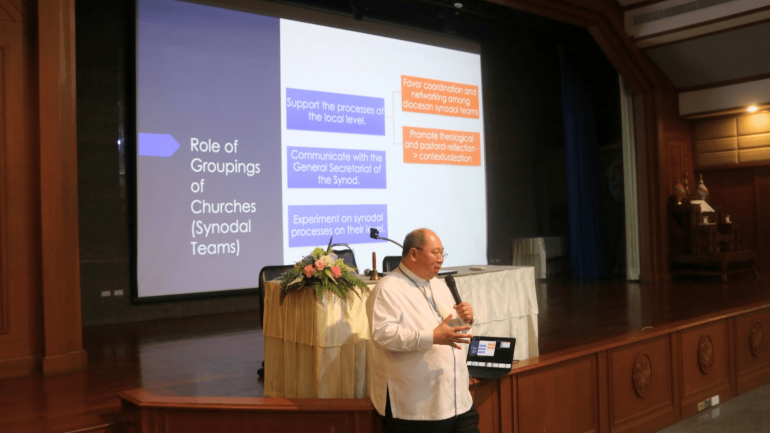
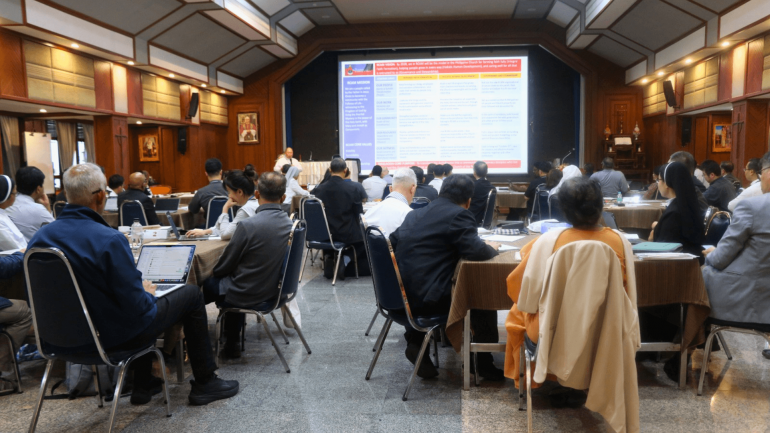
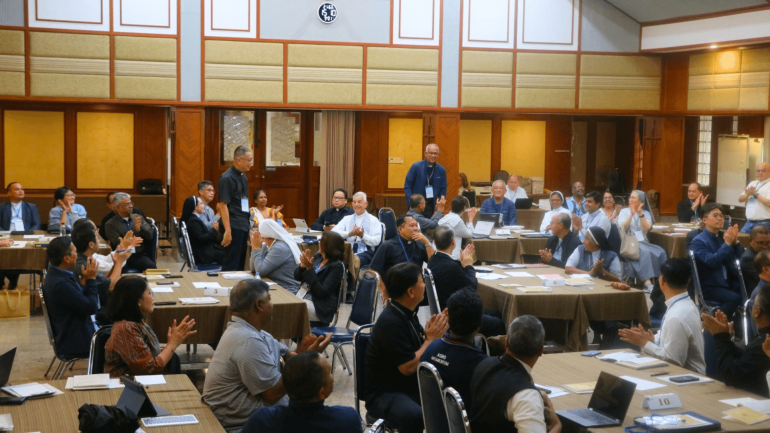
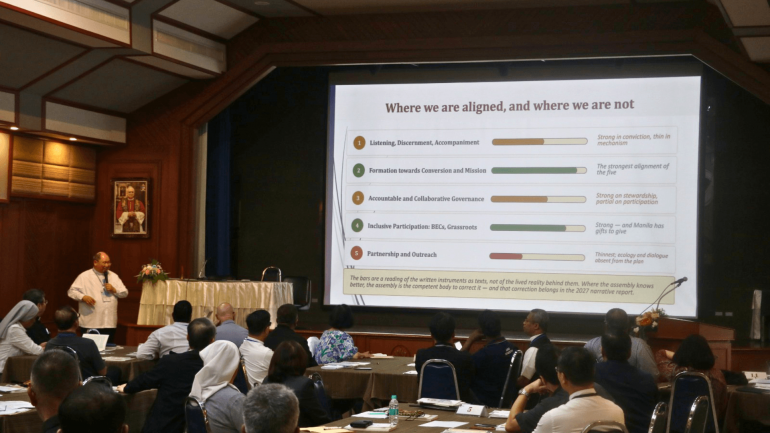
He described diocesan synodal teams as “laboratories of synodality” where the dynamics of listening, discernment, participation and co-responsibility can be practiced and tested in concrete local situations.
Their tasks include promoting synodal dynamism, developing formation tools and methodologies, connecting synodal teams across ecclesial contexts, coordinating facilitators and gathering the fruits of local implementation.
Fr. Ayo also distinguished synodal teams from existing diocesan participatory bodies. While synodal teams contribute to implementing the Synod through discernment of pastoral priorities and renewal of structures and decision-making processes, participatory bodies carry out their consultative and proactive responsibilities under canon law. Regular coordination is therefore needed to avoid duplication and confusion.
The presentation encouraged dioceses to form diverse synodal teams comprising lay women and men, priests and deacons, and consecrated women and men, representing different ministries, charisms, ages, cultures and formation backgrounds.
Looking ahead, Fr. Ayo outlined the four-stage journey toward the 2028 Ecclesial Assembly: recollecting at the local Church level in the first half of 2027, interpreting at the national and regional levels in the second half, orienting at the continental level in early 2028, and celebrating with the universal Church in October 2028.
For the Asian Churches, the presentation placed national and diocesan synod teams at the center of this continuing journey, helping translate synodal discernment into practices suited to the diverse pastoral realities of the continent.
Radio Veritas Asia (RVA), a media platform of the Catholic Church, aims to share Christ. RVA started in 1969 as a continental Catholic radio station to serve Asian countries in their respective local language, thus earning the tag “the Voice of Asian Christianity.” Responding to the emerging context, RVA embraced media platforms to connect with the global Asian audience via its 21 language websites and various social media platforms.
Latest News