

Mongolia’s Young Catholic Church Sees Synodality as Opportunity to Build from the Ground Up


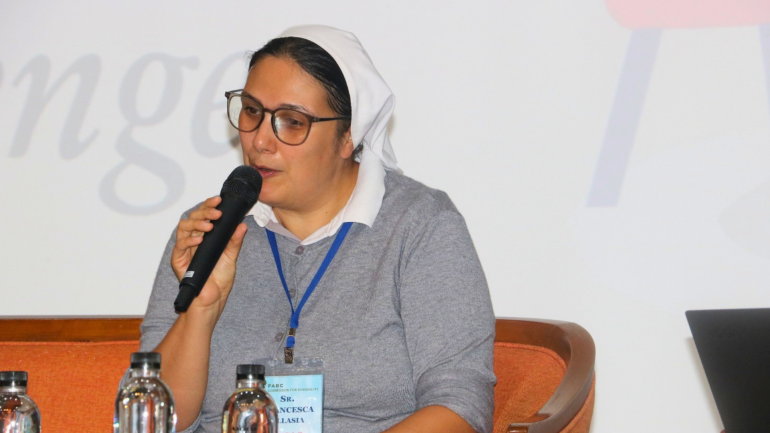
The Catholic Church in Mongolia sees its small size and relatively young structures as an opportunity to build a culture of synodality from the ground up, according to Sr. Francesca Allasia, a Consolata Missionary serving in the country.
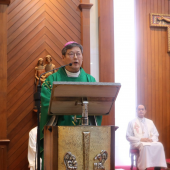
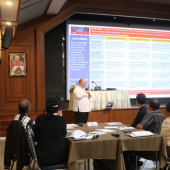
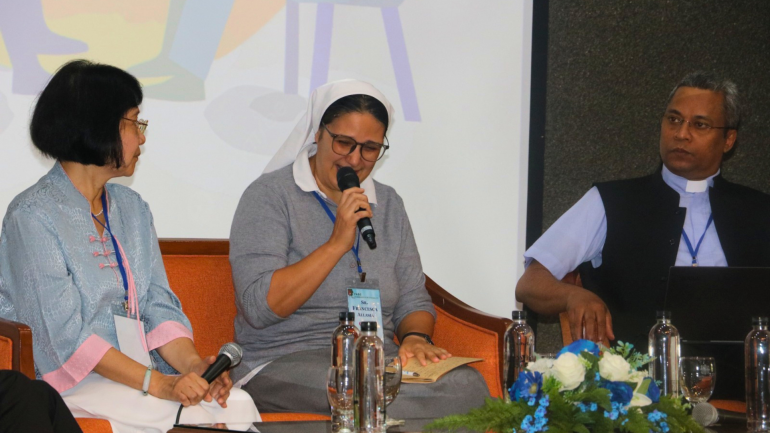
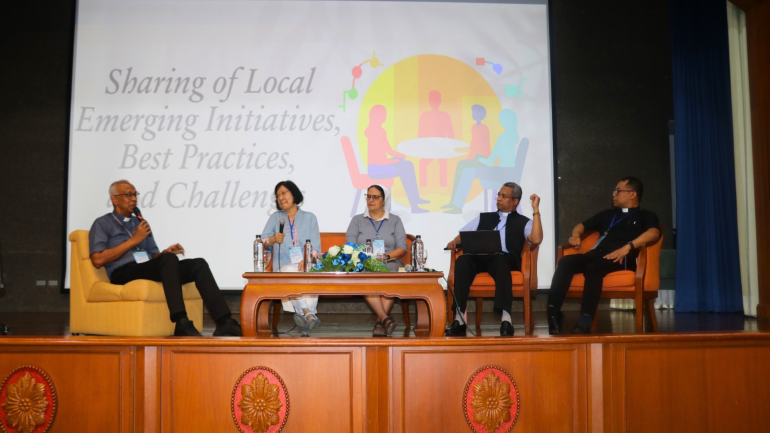
Sr. Francesca was among four panelists in a discussion titled “Sharing of Local Emerging Initiatives: Best Practices and Challenges” during the three-day National Synodal Teams meeting at Baan Phu Waan in Bangkok.
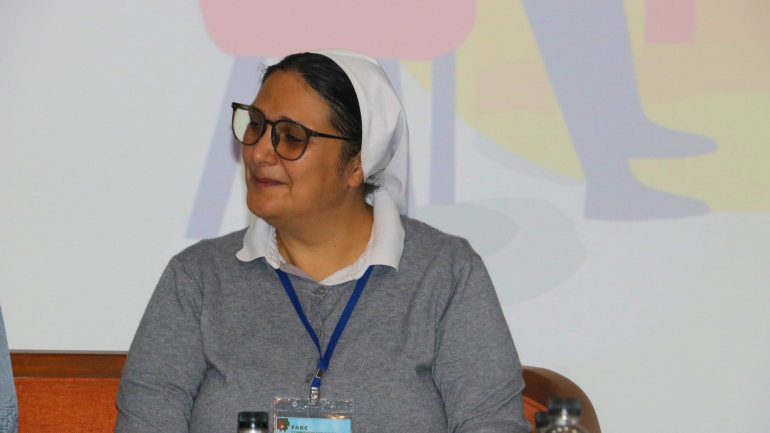
The session, held Sept. 2 at Joseph Nattaya Conference Hall, was moderated by Fr. Clarence Devadass, executive secretary of the Commission for Synodality.
Born in 1988, Sr. Francesca has served as a missionary in Mongolia since September 2022. She is a member of the Mongolian synodal team under the leadership of Cardinal Giorgio Marengo, and is involved in developing a synodal pastoral plan for the country. She also participates in interreligious and ecumenical dialogue.
Mongolia has a population of more than 3.5 million but only about 1,700 registered Catholics. The Catholic Church is organized as an apostolic prefecture rather than a diocese.
The small community is served by 78 missionaries from 29 countries, representing 10 religious congregations, as well as three fidei donum priests from Korea and one Mongolian priest. Two laywomen also serve in the prefecture, while the Church has nine parishes across the country.
Despite its small numbers, Sr. Francesca said synodality has been part of the Church’s experience from its beginnings.
When three missionaries arrived in Mongolia in 1992 to help reestablish the Catholic Church following decades of communist rule, they had to discern together where to go and how to begin their mission.
“They were a small synodal group,” she said, describing their experience as an early expression of walking together.
Today, the Church is seeking to make that experience more systematic through a synodal pastoral plan now being developed for Mongolia.
With assistance from Fr. Giacomo Costa, a consultant to the General Secretariat of the Synod who has visited Mongolia twice, the Church has used the Conversation in the Spirit methodology to discern a shared pastoral vision.
The plan was still being drafted at the time of the meeting, with approval expected before the end of the year.


For Sr. Francesca, Mongolia’s circumstances present a particular advantage.
Because the local Church is young and its structures are still developing, it has an opportunity to establish participatory and collaborative practices without having to first change deeply established structures.
She also highlighted the House of Mercy, a humanitarian center established by the apostolic prefecture to serve people and families experiencing homelessness, poverty and illness.
Established in 2022 and inaugurated by Pope Francis in 2023, the center brings together parish volunteers, young people, professionals, religious communities, local authorities and people of goodwill, including people from different religious backgrounds.
Sr. Francesca described the center as a practical expression of synodality, where people with different backgrounds and gifts work together to identify needs and respond to them.
Yet Mongolia also faces a distinctive challenge in developing a synodal culture: language.
Sr. Francesca noted that Mongolian does not have a single word that fully conveys the Catholic understanding of “community.” Mongolian society places strong value on family and individual independence, while broader forms of collaborative decision-making can be less familiar.
This presents both a challenge and an opportunity, she said.
Rather than simply translating the word “synodality,” the Church must help people experience what it means to listen, discern and act together. The richness of the Mongolian language can then help express that experience in culturally meaningful ways.
Her experience, she said, points to a wider lesson for the Church in Asia: synodality cannot always be transferred directly from one culture or language to another.
It must be lived, discerned and expressed within the particular realities of each local Church.
For Mongolia’s small but growing Catholic community, that process is already underway.
Radio Veritas Asia (RVA), a media platform of the Catholic Church, aims to share Christ. RVA started in 1969 as a continental Catholic radio station to serve Asian countries in their respective local language, thus earning the tag “the Voice of Asian Christianity.” Responding to the emerging context, RVA embraced media platforms to connect with the global Asian audience via its 21 language websites and various social media platforms.
Latest News