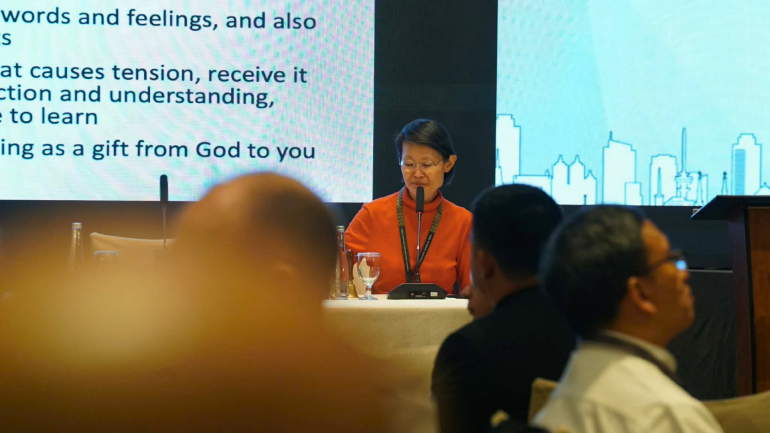
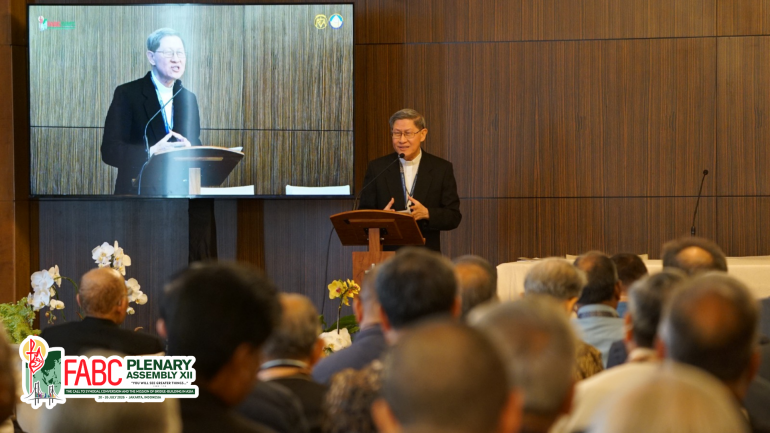
The one-day retreat led by Cardinal Luis Antonio Tagle for participants of the 12th Plenary Assembly of the Federation of Asian Bishops' Conferences (FABC) on July 22 extended beyond the customary spiritual conference into a distinctive synodal practice known as Conversation in the Spirit, a prayerful process of listening, silence, and discernment.
Held in the Vanda Room of Holy Mulia, Jakarta, the hour-and-a-half session followed Cardinal Tagle's conference, which invited participants to reflect on becoming disciples formed by the Word of God and called to serve as "bridges" for mission and communion.
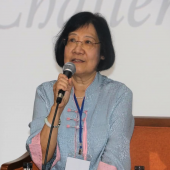
The Conversation in the Spirit was facilitated by Dr. Christina Kheng, a member of the FABC Commission for Synodality, who described the process as "communal prayer" rather than a discussion or debate.
From the beginning, participants entered into silence. Kheng invited them to "remove their sandals" spiritually before God and one another, recalling Moses' encounter with God at the burning bush. The gesture symbolized entering holy ground, recognizing God's presence among the assembly and in the experiences of fellow participants.
She explained that Conversation in the Spirit is a shared journey in which participants do not arrive with fixed conclusions but remain open to the guidance of the Holy Spirit through listening, prayer, and reflection.
The session built directly on Cardinal Tagle's retreat, asking participants to reflect on two questions: What challenges and opportunities have they experienced in becoming bridges? And what do they hope to learn from Jesus about being bridges for mission and communion?
The process unfolded in three rounds.
During the first round, each participant shared the fruits of personal prayer. Others listened attentively without interrupting, commenting, or responding. The emphasis was not on presenting arguments but on honestly expressing what had emerged in prayer.
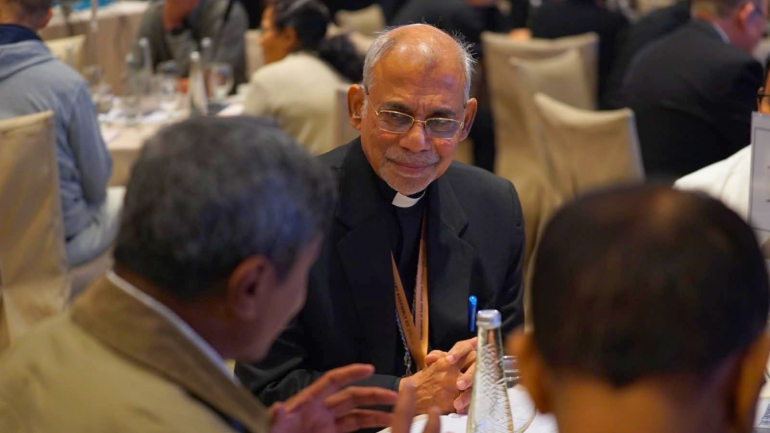
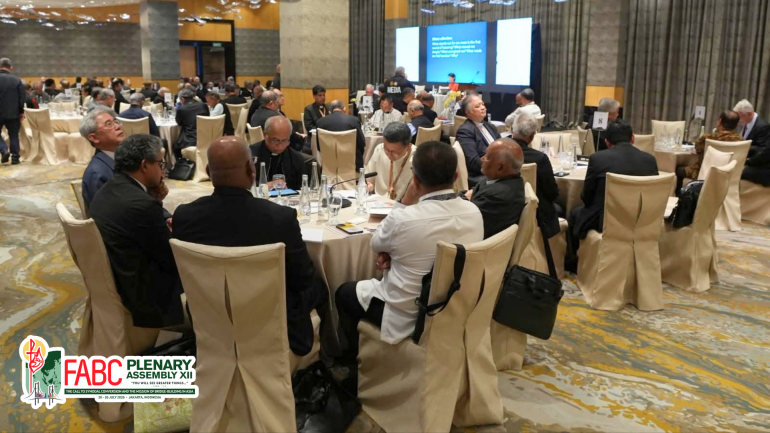
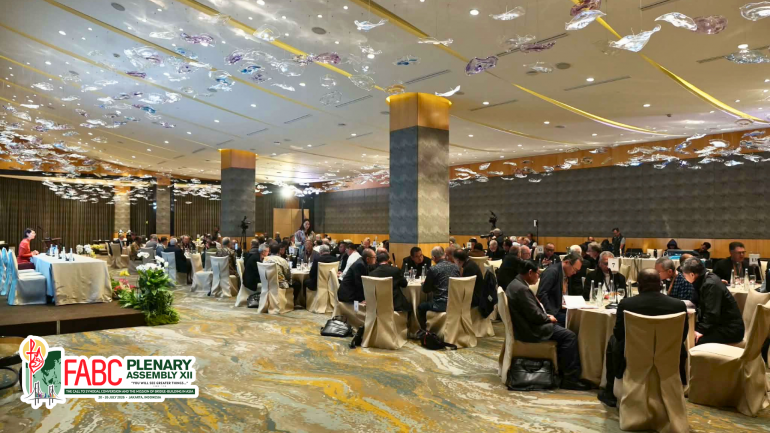
Listening formed the heart of the exercise. Participants were encouraged to hear not only another person's words but also the emotions and spiritual movements behind them. Even when different perspectives created tension, they were invited to receive them with openness, charity, curiosity, and a willingness to learn.
Each round of sharing was followed by silence. Rather than immediately reacting, participants reflected on what had touched their hearts, what inspired or challenged them, and how well they had listened.
In the second round, participants did not repeat or expand their own ideas. Instead, they shared how they had been moved by listening to others. The focus shifted from expressing personal opinions to recognizing how the Holy Spirit was working through the experiences of fellow participants.
A further period of silent reflection prepared the third and final round, during which participants identified the movements they believed the Holy Spirit was revealing within the group. Together, they reviewed the experience and highlighted the common insights that had emerged.
The method is intended to cultivate the culture of listening that characterizes a synodal Church. Rather than seeking consensus through debate or majority vote, participants discern God's will together through prayer, silence, attentive listening, and mutual respect.
By placing Conversation in the Spirit immediately after Cardinal Tagle's retreat, the organizers enabled participants to put the morning's message into practice. Having reflected on the call to become bridges for mission and communion, bishops, clergy, religious, and lay delegates lived out that invitation by listening deeply to one another in prayer, allowing the Holy Spirit to guide their shared discernment as the FABC assembly continues.
Radio Veritas Asia (RVA), a media platform of the Catholic Church, aims to share Christ. RVA started in 1969 as a continental Catholic radio station to serve Asian countries in their respective local language, thus earning the tag “the Voice of Asian Christianity.” Responding to the emerging context, RVA embraced media platforms to connect with the global Asian audience via its 21 language websites and various social media platforms.
Latest News