


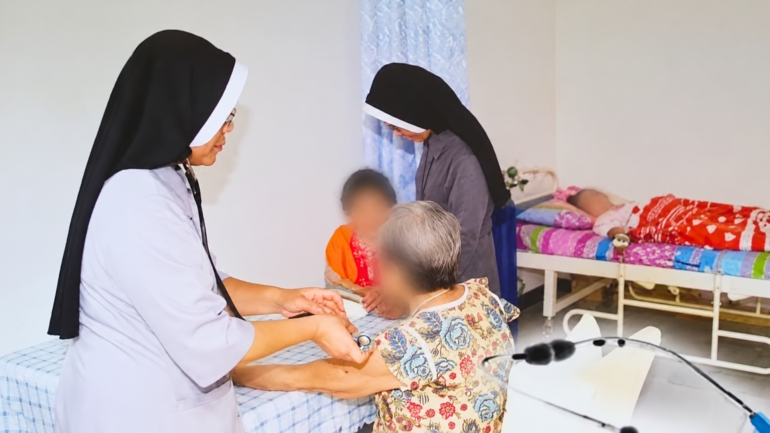
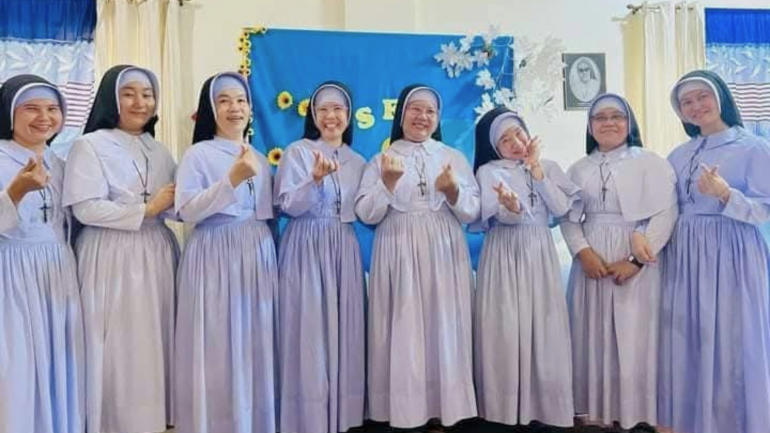
Filipino and Myanmar Sisters of St. Francis Xavier care for neglected elderly women at the Mary Mother of Mercy Home for the Elderly and Abandoned in San Pedro, Laguna, south of Manila, offering them shelter, companionship and a sense of family. The sisters have been providing shelter and care to neglected elderly women since 2002.
The facility currently houses 15 women, down from 25 in previous years, said Sr. Venus Marie Pegar, moderator for the congregation’s Philippine mission. She noted that cases of elderly abandonment have declined in recent years.
Sr. Pegar, the Filipino sister with the longest vocation in the Philippine mission, took a Bachelor of Science in Social Work at the Asian Social Institute in Manila to better serve people in need, particularly the poor and vulnerable.
Her training has proved useful in her work with the elderly, whom the sisters shelter and care for regardless of their religious belief or background.
The sisters welcome elderly women regardless of their religious beliefs or personal backgrounds, offering them shelter and care without discrimination.
In the past, some residents were eventually claimed by their families and taken back home.
The Myanmar sisters are generally reserved and reluctant to speak in interviews, but they are always ready with a smile.
The Myanmar sisters speak a little English and Tagalog, allowing them to communicate with the elderly despite the language barrier, she said.
“The Myanmar sisters also prepare their native food for the Filipino residents, such as sticky rice cakes made with ripe bananas,” Sr. Pegar added.
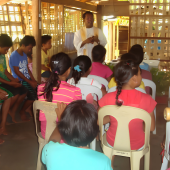
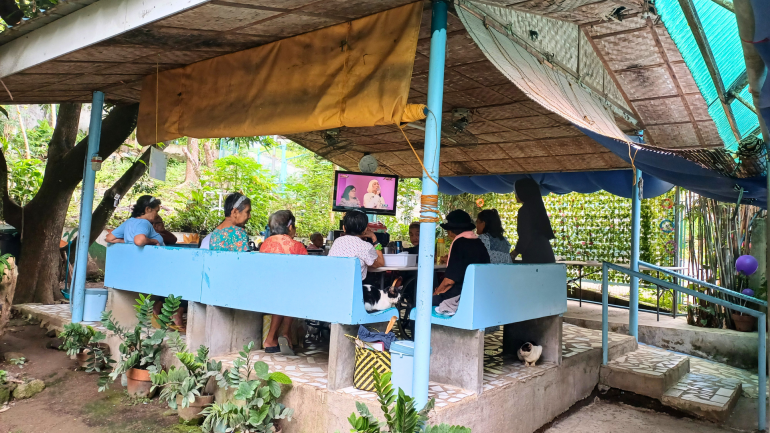
The sisters serve breakfast, usually bread and coffee, at 6:30 a.m. Afterward, the residents gather in an open hut for stretching exercises. Sometimes, the sisters play music to encourage them to dance.
“We encourage them to take a short walk outside,” Sr. Pegar said.
The sisters also wash the residents’ clothes daily, Sr. Pegar added.
The residents, however, also help with household chores. They wash the dishes after meals, while some are still able to do their own laundry.
Women from an economically disadvantaged community near the home for the aged also help the sisters bathe the residents. The women, who receive food assistance from the nuns, volunteer their time to care for the elderly.
“It started when a woman came to ask for some rice,” Sr. Pegar said. “She was grateful and wanted to give something back, so she volunteered to help the sisters bathe the residents. Other women from the community followed her example.”
The women from the nearby community also help ease the sisters’ workload, assisting with the care of the elderly residents.
“The elderly are always provided for. Visitors usually come with food and supplies,” Sr. Pegar said.
Some visitors also celebrate their birthdays at the home for the aged, sharing the occasion with the residents.
“The facility at Mary Mother of Mercy Home for the Elderly and Abandoned has improved, and we recently celebrated the 32nd anniversary of our home for the elderly. During the celebration on Sept. 19, we gave Certificates of Appreciation to 32 benefactors who have continuously supported our lolas financially, spiritually and socially.”
One elderly resident said she was grateful that the shelter exists, expressing her appreciation to the sisters for providing care and food.
At times, Sr. Pegar takes the elderly women on drives around the city, giving them an opportunity to get out of the home and see the world beyond its walls.
“They love the experience every time,” she said.
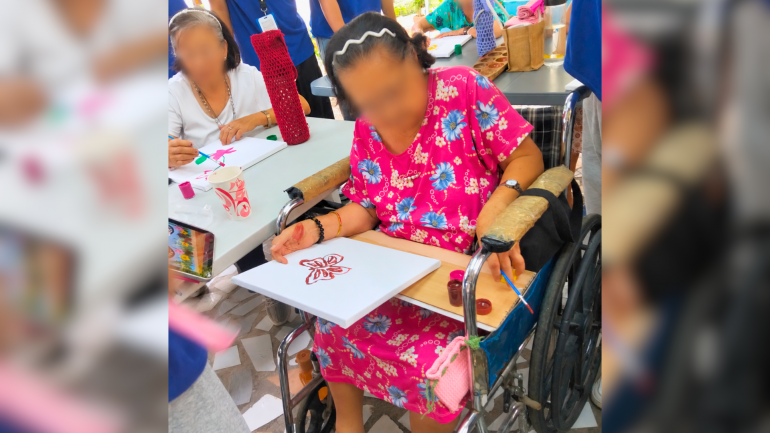
Sr. Pegar, who is an artist, encourages the elderly residents to discover the joy of painting. “The elderly enjoy painting,” she said.
The activity gives the residents an opportunity to express themselves and spend time together, with volunteers sometimes joining them.
For the sisters, caring for the elderly goes beyond providing a roof, food and daily necessities. It is also about making them feel remembered and valued. With help from neighbors, visitors and volunteers, the home has become a place where the elderly can find not only shelter, but also companionship, dignity and a sense of belonging.
Radio Veritas Asia (RVA), a media platform of the Catholic Church, aims to share Christ. RVA started in 1969 as a continental Catholic radio station to serve Asian countries in their respective local language, thus earning the tag “the Voice of Asian Christianity.” Responding to the emerging context, RVA embraced media platforms to connect with the global Asian audience via its 21 language websites and various social media platforms.
Latest News