


At the Twelfth Plenary Assembly of the Federation of Asian Bishops’ Conferences (FABC), to be held from July 20 to 26, 2026, bishops from across Asia will gather under the theme, “The Call to Synodal Conversion and the Mission to Be Bridges and Bridge-Builders in Asia.” The assembly will reflect on how the Church can become an increasingly credible witness of dialogue, communion, and hope in a continent marked by extraordinary diversity.
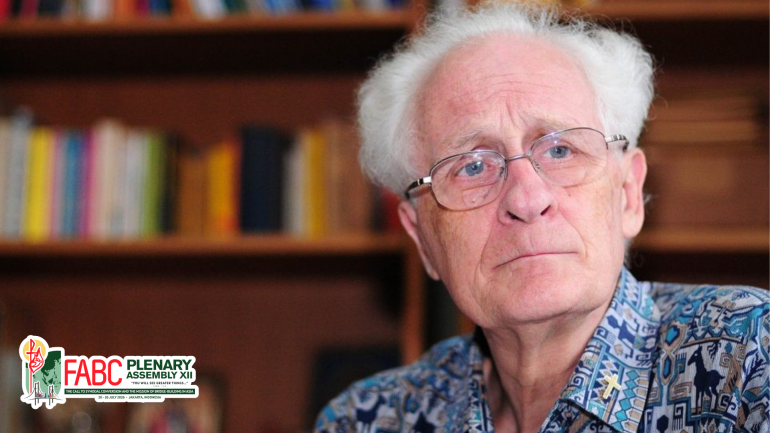
For more than five decades, German-born Jesuit priest Fr. Franz Magnis-Suseno, SJ, who later became an Indonesian citizen, has quietly embodied the very spirit that the FABC seeks to place at the heart of its pastoral vision.
Fr. Magnis is widely recognized as one of Indonesia's foremost philosophers, theologians, and ethicists. Yet beyond his academic achievements, Fr. Magnis has earned enduring respect as a bridge-builder—linking the Church and society, faith and public life, religious communities and civic institutions, while consistently promoting dialogue, justice, and the dignity of every human person.
Through his teaching, writings, and active participation in interreligious initiatives, Fr. Magnis has demonstrated that building bridges is not simply a pastoral strategy. It is an essential expression of the Gospel in a pluralistic society.
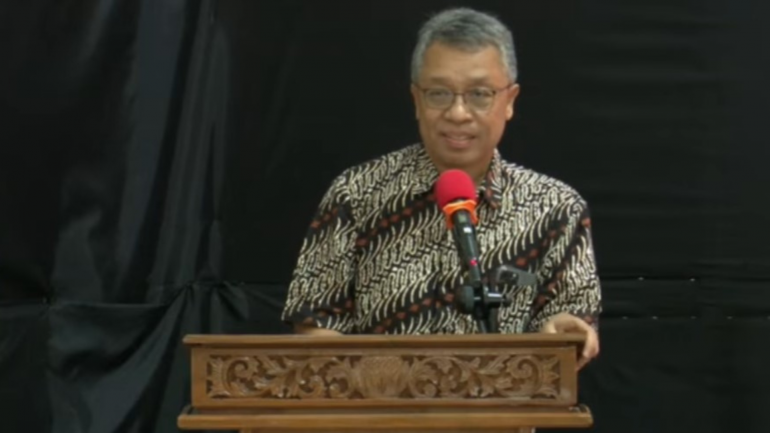
Bishop Adrianus Sunarko, OFM of Pangkalpinang, southeastern Indonesia, believes one of Fr. Magnis' greatest contributions to the Church lies in his profound understanding of the renewal initiated by the Second Vatican Council. Rather than treating the Council as a historical milestone, Fr. Magnis sees it as an ongoing invitation for the Church to renew itself while remaining firmly rooted in the Gospel.
According to Bishop Sunarko, Fr. Magnis has long welcomed the Church's openness to the modern world—its commitment to human rights, religious freedom, democracy, scientific progress, and dialogue with other faiths. At the same time, his appreciation has never prevented him from offering thoughtful criticism when necessary.
"His criticism has always come from love for the Church," Bishop Sunarko observes. Fr. Magnis has consistently warned against clericalism, encouraged greater participation of the laity, highlighted the indispensable role of women in the life of the Church, and urged Catholics to remain open to the Holy Spirit's continuing work of renewal.
Fr. Magnis' commitment to building bridges extends well beyond the life of the Church. For decades, he has also been one of Indonesia's most respected voices in interreligious dialogue.
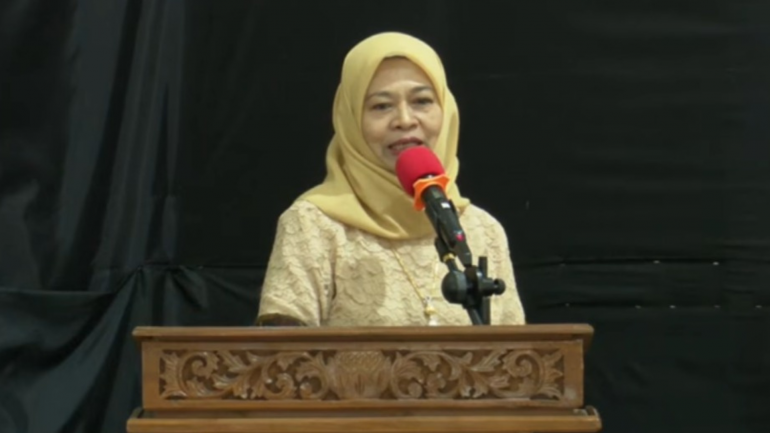
Prof. Dr. Siti Musdah Mulia, lecturer in Islamic Political Thought at the Graduate School of Syarif Hidayatullah State Islamic University Jakarta, says Fr. Magnis has made a distinctive contribution by providing a strong ethical foundation for dialogue among religions. Drawing on years of collaboration with him, she notes that he has never viewed dialogue merely as a practical tool for preventing conflict. Rather, he sees it as a moral imperative rooted in the equal dignity of every human being.
Dr. Musdah regards Fr. Magnis as one of Indonesia's leading thinkers on interreligious dialogue. While the late Nurcholish Madjid is remembered for advancing theological pluralism and former Indonesian President Abdurrahman Wahid for embodying pluralism through social and cultural leadership, Fr. Magnis offers a philosophical and ethical framework that presents dialogue as a moral responsibility shared by every citizen in a pluralistic society.
His vision speaks directly to the mission of the Church in Asia.
Home to the world's major religions and an extraordinary mosaic of cultures and peoples, Asia challenges the Church to proclaim the Gospel through encounter rather than confrontation. Since its establishment in 1970, the FABC has consistently emphasized that the future of the Church in Asia depends on dialogue—with cultures, religions, the poor, and all people of goodwill.
Long before "bridge-building" became the central theme of the 2026 Plenary Assembly, Fr. Magnis had already lived that vision.
His life demonstrates that fidelity to the Gospel is never opposed to openness toward the modern world. Rather, profound faith inspires the courage to listen, engage in dialogue, defend human dignity, promote justice, and work tirelessly for peace.
In a world increasingly marked by polarization, religious extremism, and social fragmentation, the witness of Fr. Franz Magnis-Suseno, SJ, reminds the Church that its credibility grows not by building walls, but by building bridges.
As the bishops of Asia gather in Jakarta to discern the future of the Church on the continent, the life of Fr. Magnis stands as a compelling testimony that becoming a bridge-builder is not merely an aspiration. It is a daily vocation—one lived through dialogue, humility, friendship, and the unwavering commitment to encounter others in the spirit of Christ.
Radio Veritas Asia (RVA), a media platform of the Catholic Church, aims to share Christ. RVA started in 1969 as a continental Catholic radio station to serve Asian countries in their respective local language, thus earning the tag “the Voice of Asian Christianity.” Responding to the emerging context, RVA embraced media platforms to connect with the global Asian audience via its 21 language websites and various social media platforms.
Latest News