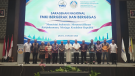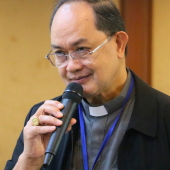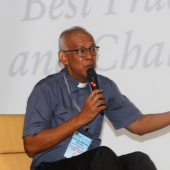



Church leaders from the Vatican, Africa, Europe, the Middle East, Oceania, the United States, and the wider ecumenical community joined the 12th Plenary Assembly of the Federation of Asian Bishops' Conferences (FABC), affirming that the Church's synodal journey offers a path toward reconciliation in an increasingly divided world.
Addressing delegates on July 21 at Hotel Mulia in Jakarta following the Assembly's opening ceremony, representatives from outside the FABC region reflected on the challenges facing the Church in their respective continents. Despite their diverse contexts, they shared a common message: synodality must become a way of life.
Representing the Holy See, Cardinal Mario Grech, Secretary General of the Synod of Bishops, said he came to the Assembly "to listen, to share, and to learn."
He said the central challenge before the Church is discerning what the Holy Spirit is saying to the local Churches amid rapid global change, emphasizing that the synodal path calls Catholics to deepen communion and missionary engagement.
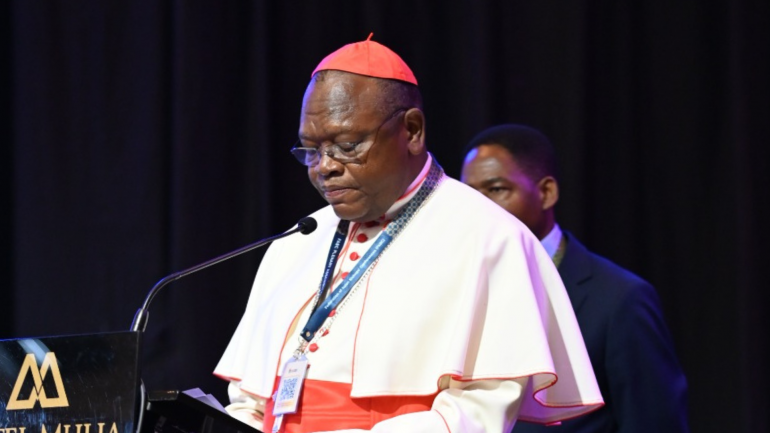
From Africa, Cardinal Fridolin Ambongo Besungu, OFM Cap., president of the Symposium of Episcopal Conferences of Africa and Madagascar (SECAM), described Africa and Asia as "sister continents" facing many of the same realities, including poverty, inequality, migration, armed conflict, and climate change.
Calling synodality "a way of being Church," he urged greater cooperation between the Churches of Asia and Africa in evangelization, interreligious dialogue, youth ministry, and the promotion of justice, peace, and care for creation.
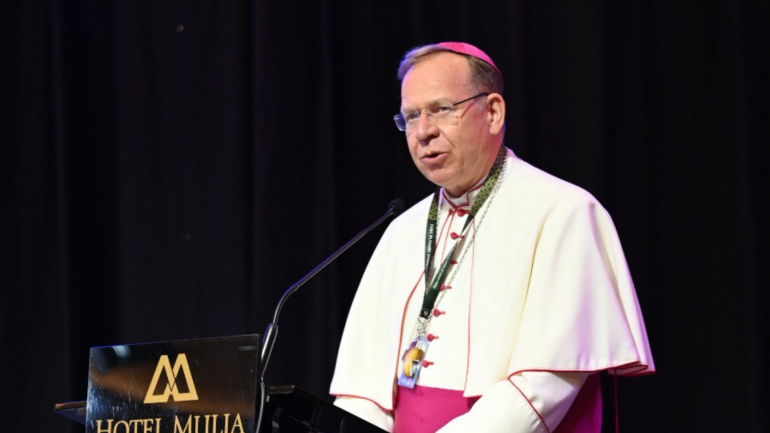
Representing the Council of European Bishops' Conferences (CCEE), Archbishop Gintaras Linas Grušas said the recent Synod in Rome demonstrated that diversity strengthens rather than weakens the Church.
He said Christians must resist the temptation to build walls in a polarized world, adding that the Church is called to become "the bridge that reconciles humanity with God and people with one another."
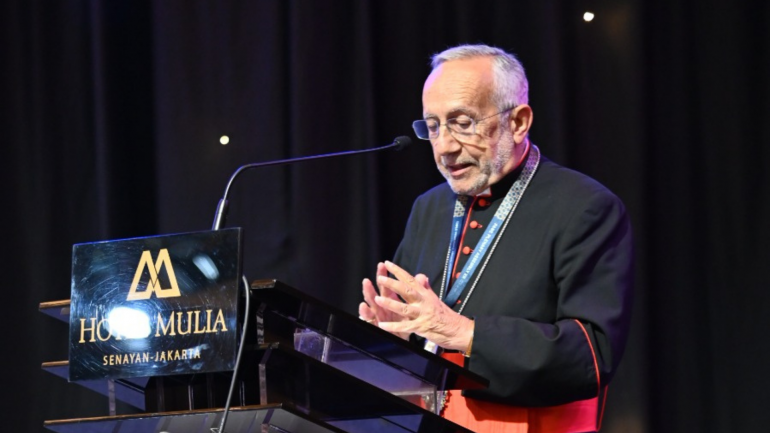
Speaking on behalf of the Council of Eastern Catholic Patriarchs, Patriarch Raphael Bedros XXI Minassian highlighted three priorities drawn from the Synod's Final Document: spiritual conversion through discernment, greater transparency and accountability in Church structures, and unity that embraces different traditions and cultures.
"The unity of the Church is a harmony of differences rather than uniformity," he said.
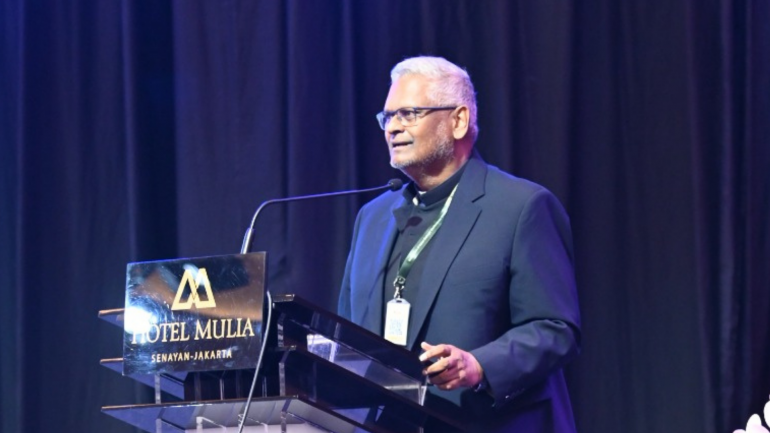
Fr. Christopher de Souza, Secretary General of the Federation of Catholic Bishops Conferences of Oceania (FCBCO), said Oceania was participating in an FABC Plenary Assembly for the first time.
He said the Church in Oceania had come "to listen and to learn," noting that while Indigenous communities have long practiced forms of communal discernment, the region could benefit from Asia's experience of synodality.
The Assembly also welcomed ecumenical participation.
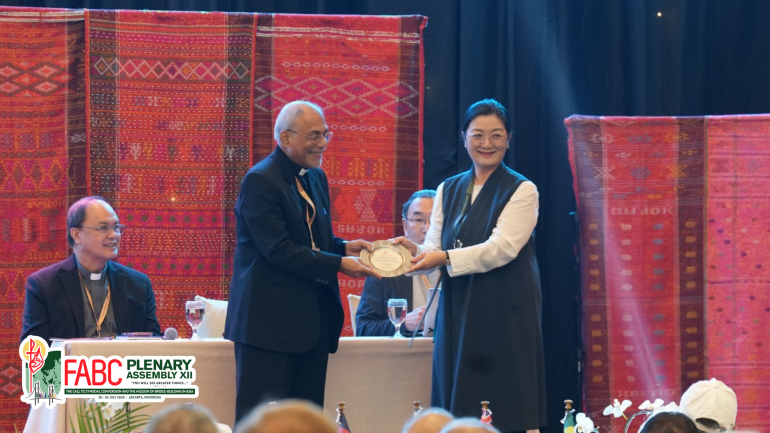
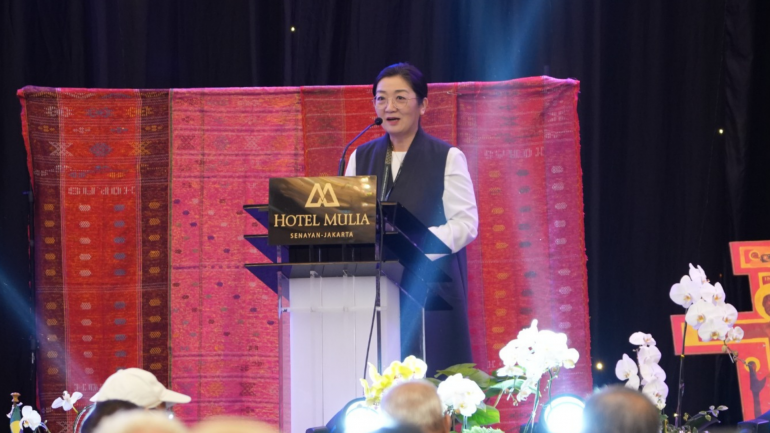
Representing the Christian Conference of Asia (CCA), General Secretary Jung Eun Grace Moon highlighted the longstanding partnership between CCA and FABC in promoting dialogue and cooperation across the region.
She praised FABC for embracing synodality not simply as a pastoral method but as a spirituality rooted in prayer, listening, and discernment. She said Asia's integration of the synodal method with its contemplative traditions offers a distinctive contribution to the universal Church.
"In a region as diverse, complex, and challenging as Asia, the synodal process is not only relevant—it is truly necessary," she said, assuring participants of the prayers of the wider ecumenical community.
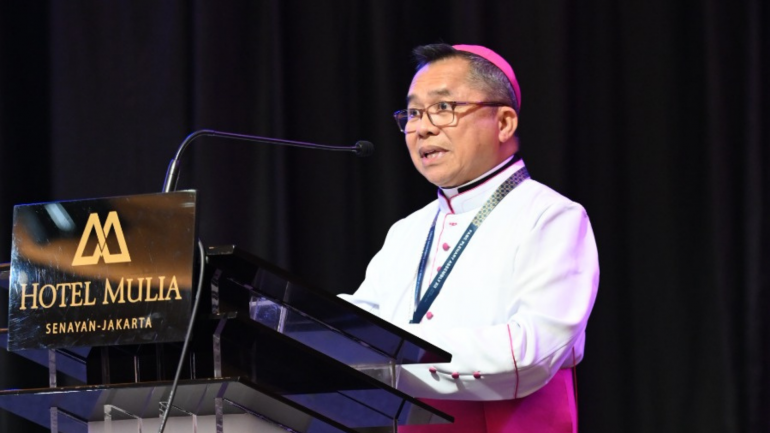
Representing the United States Conference of Catholic Bishops (USCCB), Bishop Reynaldo Bersabal, Auxiliary Bishop of Sacramento, said he came as "a fellow pilgrim" eager to learn from the Churches of Asia.
He said authentic ecclesial renewal requires more than structural reform, calling instead for a Church that walks together in humility, attentive listening, and trust in the Holy Spirit. He also acknowledged the significant contribution of Asian Catholics to the life and mission of the Church in the United States.
Although they came from different continents and ecclesial traditions, the visiting delegates echoed a shared conviction: the Church must become a bridge-builder in a fractured world.
Their reflections reinforced the Assembly's theme of synodal conversion and bridge-building, highlighting Asia's experience as a gift not only for the region but also for the universal Church.
Radio Veritas Asia (RVA), a media platform of the Catholic Church, aims to share Christ. RVA started in 1969 as a continental Catholic radio station to serve Asian countries in their respective local language, thus earning the tag “the Voice of Asian Christianity.” Responding to the emerging context, RVA embraced media platforms to connect with the global Asian audience via its 21 language websites and various social media platforms.
Latest News