Not Another Document, but Genuine Synodal Experience is the Way to Engage Bishops, Says FABC Vice President

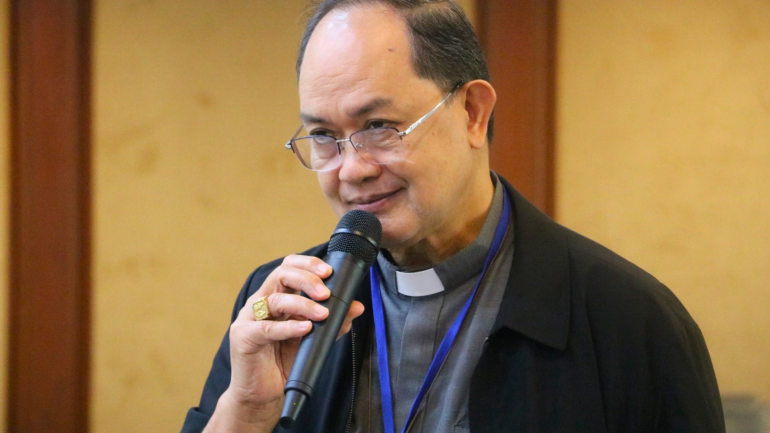
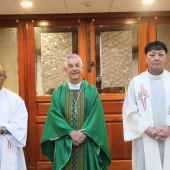
Bishops are more likely to embrace synodality by experiencing a genuinely synodal process than by receiving another document explaining its principles, said Pablo Virgilio Cardinal David, Vice President of the Federation of Asian Bishops’ Conferences (FABC).
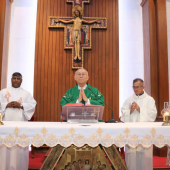
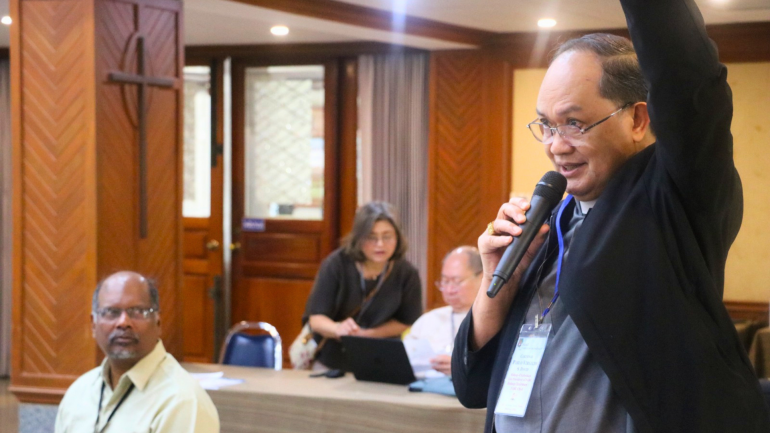
Cardinal David made the observation during a session on strengthening synodal leadership in the Asian Church, where he focused particularly on how bishops can be encouraged to take ownership of synodality rather than regard it as another Church program to implement.
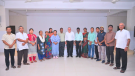
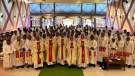
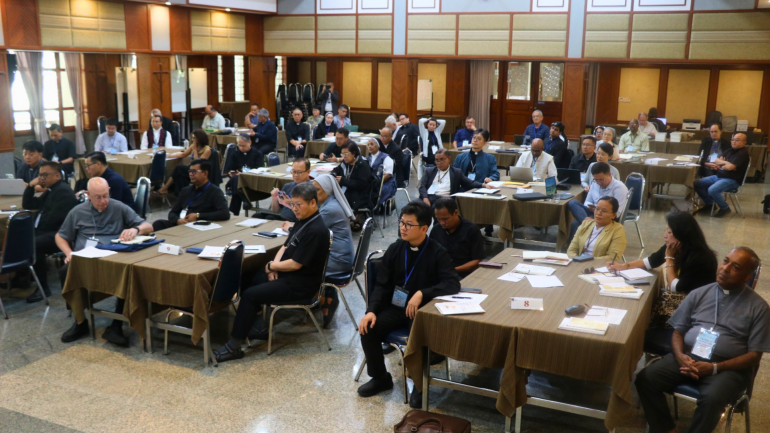
The presentation was part of the second session on the second day, Sept. 2, of a three-day National Synodal Teams meeting at Baan Phu Waan in Bangkok. Held at the Joseph Nattaya Conference Hall, the session was titled “Strengthening Synodal Leadership: Engaging Bishops, Clergy, and Pastoral Councils.” It was led by Cardinal David and Fr. Clarence Devadass, executive secretary of the Commission for Synodality.
Cardinal David said the central challenge is to help bishops become protagonists of the synodal process, rather than simply recipients of initiatives originating from Rome, bishops’ conferences or national synodal teams.
“If synodality is perceived simply as another program coming from Rome, from the bishops’ conference, or even from the national synodal team,” people may comply with its requirements and then move on to the next program, he said.
For Cardinal David, the deeper issue is therefore not how to produce more documents about synodality, but how to create opportunities for bishops and other Church leaders to experience its method of listening, discernment, participation and shared responsibility.
Such an experience can show concretely that synodality is not a competing model of governance or a limitation on episcopal authority, but a way of exercising leadership that listens more deeply to the local Church.
Cardinal David stressed that synodal leadership does not diminish the authority of bishops. Rather, it calls them to pay greater attention to the ecclesial process through which decisions are reached.
This means asking who has been listened to, whose voices remain unheard, whether people have prayed and discerned together, and whether the Church has created space for the Holy Spirit to speak through people who are not ordinarily consulted.
He connected this approach with the three dimensions of synodality — communion, participation and mission.
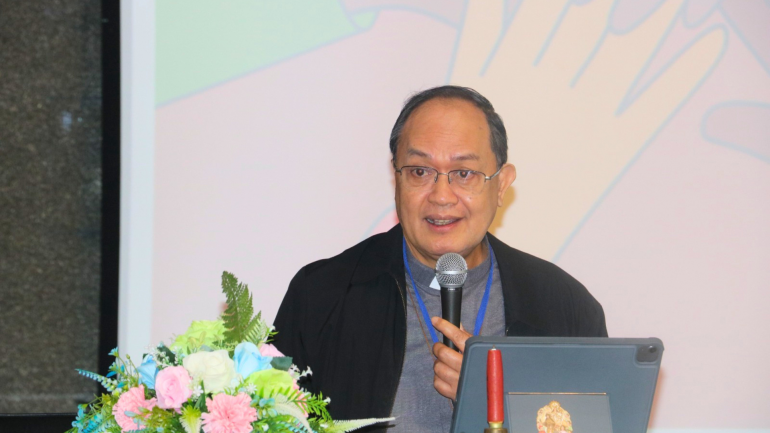
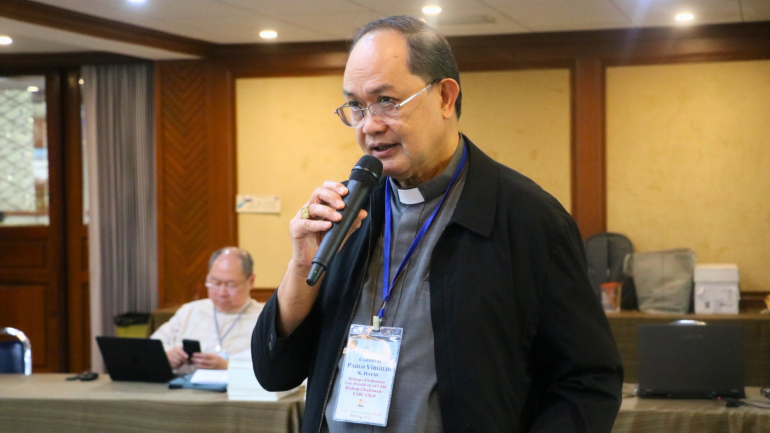
The Church cannot move directly to mission without first building communion and genuine participation, he said. Mission is not the responsibility of a select group but a shared responsibility of the whole Church.
Cardinal David identified diocesan synodal teams as an important means of helping bishops engage more deeply in this process. Their role, he said, is not to take over the responsibilities of bishops, run dioceses or monitor whether Church communities are “synodal enough.”
Instead, synodal teams should animate, facilitate and accompany the Church, helping synodality become part of ordinary ecclesial life.
A particular challenge arises when a bishop is not personally enthusiastic about synodality, Cardinal David acknowledged.
Because bishops have the authority to convene ecclesial assemblies, their support is important. At the same time, the synodal life of a diocese should not depend entirely on the enthusiasm of one bishop.
Bishops are transferred, retire and are succeeded by others with different priorities. What needs to endure, he said, is a Church that has learned to live synodally.
The task, therefore, is to help bishops recognize that synodality can strengthen rather than compete with their ministry.
A genuinely synodal process enables a bishop to listen more deeply to the local Church, including people and communities whose experiences might otherwise remain unheard.
Cardinal David also emphasized that bishops have a particular charism of leadership, but the Church cannot be understood only in terms of its leaders. Bishops and other Church leaders are also called to recognize and encourage the diverse charisms given by the Holy Spirit to the baptized.
“No one has a monopoly of mission,” he said, emphasizing that the Church’s mission belongs to the whole People of God.
Cardinal David’s central message was that synodality is best understood not only through explanations but through participation in the process itself.
When bishops experience a Church that listens, discerns and makes room for the contributions of its members, he suggested, they can see for themselves how synodality can enrich episcopal leadership and help the Church pursue its mission more effectively.
Radio Veritas Asia (RVA), a media platform of the Catholic Church, aims to share Christ. RVA started in 1969 as a continental Catholic radio station to serve Asian countries in their respective local language, thus earning the tag “the Voice of Asian Christianity.” Responding to the emerging context, RVA embraced media platforms to connect with the global Asian audience via its 21 language websites and various social media platforms.
Latest News