


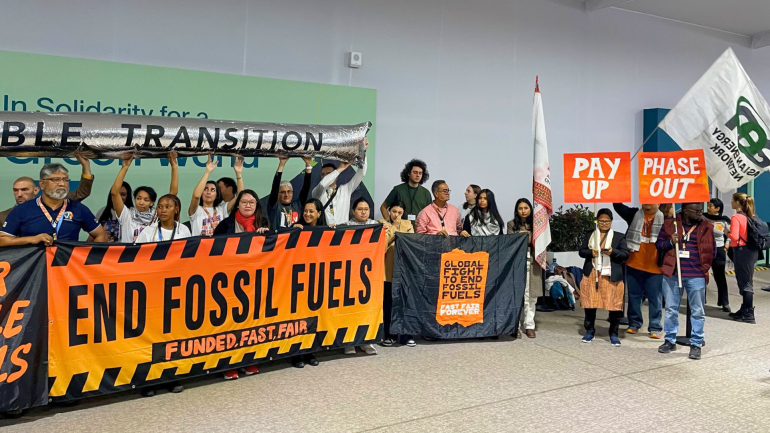
Catholic bishops from the Global South have issued a strong call for a global treaty to phase out fossil fuels, warning that continued dependence on coal, oil, and gas threatens both the planet and the world’s poorest communities.
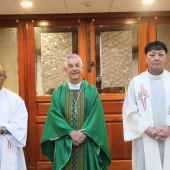
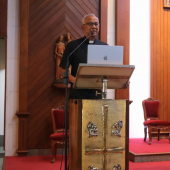
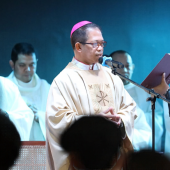
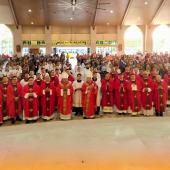
The appeal was made in a manifesto titled “Towards Peace with Creation: An Urgent Call for a Just Transition Beyond Fossil Fuels,” released in Bangkok on March 16 by Catholic episcopal bodies from Africa, Asia, and Latin America, together with Church representatives from Europe and Oceania.
The document urges governments worldwide to adopt a legally binding Fossil Fuel Non-Proliferation Treaty to halt the expansion of fossil fuel production and guide a just transition toward renewable energy.
“We raise our voices at this pivotal moment in history,” the bishops said, warning that the world is approaching “a breaking point” as climate change accelerates.
Fossil Fuel Treaty
The bishops argue that while the Paris Agreement remains a key framework for global climate action, it does not explicitly address the root cause of the crisis, the continued production and burning of fossil fuels.
They expressed support for the proposed treaty, which aims to stop new fossil fuel projects, manage the phase-out of existing production, and ensure a fair and inclusive transition to clean energy.
“The science is clear,” the manifesto states, noting that the burning of coal, oil, and gas has accounted for the vast majority of global carbon dioxide emissions in recent years.
The bishops stressed that authorizing new fossil fuel infrastructure would lock countries into outdated and harmful energy systems.
Climate crisis and social injustice
Church leaders emphasized that climate change is not only an environmental issue but also a moral and social crisis.
“As pilgrim Churches in Africa, Latin America, the Caribbean, and Asia, we witness that climate change is also a social, cultural, and spiritual crisis that threatens human dignity and peace,” the document said.
They pointed to unsustainable patterns of production and consumption, especially in wealthier nations, as key drivers of ecological destruction and widening inequality.
Principles for a just transition
The manifesto outlines guiding principles for a just energy transition, including reducing excessive consumption, ensuring universal access to clean energy, and rejecting “false solutions” such as greenwashing and exploitative extraction of critical minerals in poorer regions.
The bishops also stressed that wealthier countries, whose development has relied heavily on fossil fuels, must take the lead by providing financial support and technology transfer to developing nations.
They further called for stronger participation of indigenous peoples and vulnerable communities in environmental decision-making.
Looking ahead to global climate talks
The bishops issued their appeal ahead of upcoming international climate negotiations, including the next United Nations climate summit scheduled in Antalya, Türkiye, in November 2026.
They urged governments to include clear fossil fuel phase-out targets in national climate plans and to join a growing global coalition supporting a fossil fuel treaty.
Signatories from across continents
The manifesto was signed by leading Church figures from across the Global South, including Cardinal Jaime Spengler, president of the Latin American and Caribbean Episcopal Council (CELAM); Cardinal Fridolin Ambongo, president of the Symposium of Episcopal Conferences of Africa and Madagascar (SECAM); and Cardinal Felipe Neri Ferrão, president of the Federation of Asian Bishops’ Conferences (FABC).
They were joined by accompanying signatories, including Cardinal Ladislav Nemet of the Council of Bishops’ Conferences of Europe (CCEE) and Msgr. Ryan Pagante Jiménez of the Federation of Catholic Bishops’ Conferences of Oceania (FCBCO).
Protecting creation
The Church leaders concluded by reaffirming the Christian responsibility to care for the Earth and defend the dignity of vulnerable communities.
“We invite all people of goodwill to join a historic coalition between North and South to protect our common home,” the manifesto said.
“A world free of fossil fuels, just and at peace, is possible and necessary.”
To read the full document: Manifesto of the Churches of the Global South for Our Common Home
Radio Veritas Asia (RVA), a media platform of the Catholic Church, aims to share Christ. RVA started in 1969 as a continental Catholic radio station to serve Asian countries in their respective local language, thus earning the tag “the Voice of Asian Christianity.” Responding to the emerging context, RVA embraced media platforms to connect with the global Asian audience via its 21 language websites and various social media platforms.
Latest News