Philippines: Cebu Archbishop proposes Miyawaki Forests as Model for ‘Listening Church’

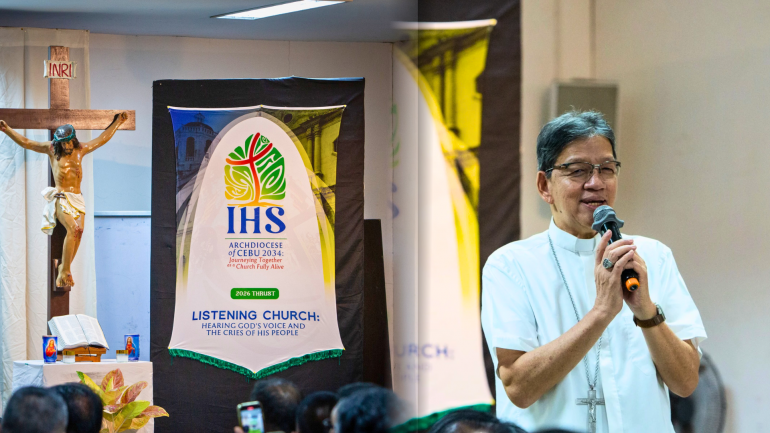
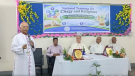
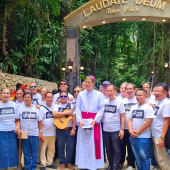
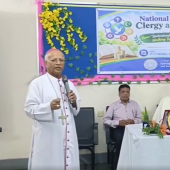
At a recent gathering of district formators, Archbishop Alberto “Abet” Uy of Cebu, central Phillipines, proposed the establishment of Miyawaki pocket forests, not only as a response to environmental concerns, but as a living image of what a “listening Church” should become.
In the Miyawaki method, native trees are planted close together. The density encourages faster growth, deeper roots, and mutual support among the plants. No tree grows in isolation; each contributes to the strength of the whole.
The initiative forms part of the archdiocese’s 2026 pastoral thrust, “Listening Church,” as it prepares for the 2034 centenary of Cebu’s elevation as an archdiocese.
But rather than remaining an abstract call to dialogue, the vision takes root in something concrete: soil, trees, and shared effort.
For Archbishop Uy, this offers a compelling parallel to the Church’s synodal journey.
“A tree that stands alone is easily toppled. But when trees grow together, they endure,” he said in Cebuano, emphasizing that unity gives strength even in hardship. Synodality, he added, is not lived by bishops, priests, or laypeople alone, but by all, together.
The image challenges a Church often accustomed to hierarchy and structure. A listening Church, in this light, is not simply one that hears more voices, but one that grows through closeness, interdependence, and shared responsibility.
It also grounds spirituality in ecological action. In encouraging communities to plant pocket forests, the archdiocese links care for creation with the practice of communion, suggesting that listening is not only an attitude, but something that must take visible form.
As Cebu journeys toward 2034, the question is no longer just how the Church will listen, but how it will grow.
Like a forest, it may depend on how closely its people are willing to stand with one another.
Located in the central Philippines, Cebu is the country’s largest archdiocese, serving about five million Catholics. It is also where Christianity first took root in the country in terms of conversions.
Archbishop Uy invited everyone to join in the shared mission.
“Let us involve each other in this journey together,” Archbishop Uy said.
Radio Veritas Asia (RVA), a media platform of the Catholic Church, aims to share Christ. RVA started in 1969 as a continental Catholic radio station to serve Asian countries in their respective local language, thus earning the tag “the Voice of Asian Christianity.” Responding to the emerging context, RVA embraced media platforms to connect with the global Asian audience via its 21 language websites and various social media platforms.
Latest News