Philippines: Fisherfolk Groups and Church Leaders Call for Fuel Aid, Renewable Energy as Costs Surge

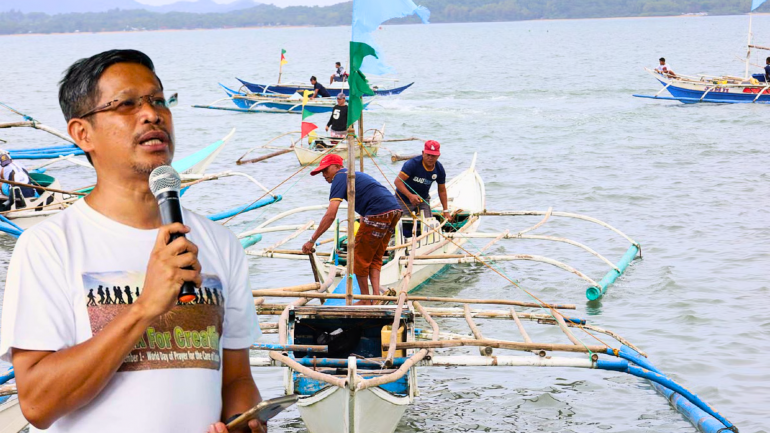
Fisherfolk and environmental groups in Oriental Mindoro, Philippines, have appealed to the national government to extend urgent assistance and promote renewable energy solutions as rising fuel prices continue to threaten coastal livelihoods and food security.
In a statement released April 1, advocates expressed concern that small-scale fishers are bearing the brunt of escalating fuel costs, placing them at risk of deeper poverty.
“It is troubling to see our fisherfolk face the risk of being pushed further into poverty as the cost of fuel continues to rise,” said Fr. Edwin Gariguez, a priest of the Diocese of Calapan and lead convenor of Protect Verde Island Passage (VIP), an advocacy movement aimed at safeguarding the critically important marine corridoe. “We urge the government not to turn a blind eye to their struggles and to provide immediate and adequate subsidies.”
Fuel prices are expected to climb sharply this week, with diesel projected to exceed P130 per liter and gasoline surpassing P100 per liter—adding pressure on fisherfolk who depend on fuel to reach fishing grounds.
Fishing communities in Batangas also reported declining fish catch, which they link to environmental degradation and industrial activities affecting the biodiversity-rich Verde Island Passage.
“Our earnings as fisherfolk are already very small, and they are further reduced now by the continuing rise in diesel prices,” said Benito De Castro, president of the Bukluran ng Mangingisda sa Batangas. “We are barely earning anything because we have to go farther out to sea.”
He stressed that the P3,000 annual fuel subsidy provided by the government is not enough to meet their needs.
“The ₱3,000 subsidy per year is not enough. It amounts to only about ₱8 a day, far from enough to support a family,” he added.
The call comes amid warnings from the Department of Agriculture that prices of basic goods such as rice, pork, and chicken may rise significantly in the coming months.
Church and environmental advocates also emphasized the moral responsibility to care for both people and the environment, especially during the Lenten season.
Fr. Gariguez urged leaders to act with compassion and solidarity.
“This Holy Week, we call on the government to embody compassion and prioritize those most affected by the crisis. Our fisherfolk communities must not be left to carry this burden alone,” he said.
Meanwhile, the Center for Energy, Ecology, and Development (CEED) highlighted the country’s untapped renewable energy potential, noting that Mindoro alone could generate up to 34 gigawatts from solar and wind sources.
Gerry Arances, CEED executive director, said shifting to renewable energy would not only protect marine ecosystems like the Verde Island Passage but also shield communities from volatile fossil fuel prices.
The groups renewed their call for both immediate relief and long-term solutions, including sustainable energy alternatives for coastal communities.
Radio Veritas Asia (RVA), a media platform of the Catholic Church, aims to share Christ. RVA started in 1969 as a continental Catholic radio station to serve Asian countries in their respective local language, thus earning the tag “the Voice of Asian Christianity.” Responding to the emerging context, RVA embraced media platforms to connect with the global Asian audience via its 21 language websites and various social media platforms.
Latest News