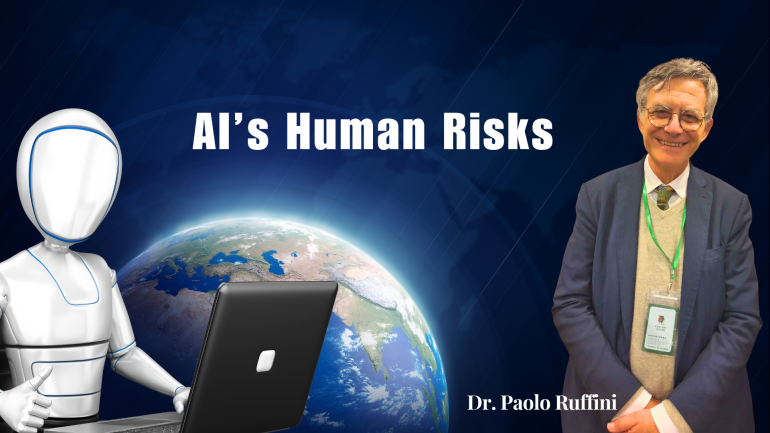
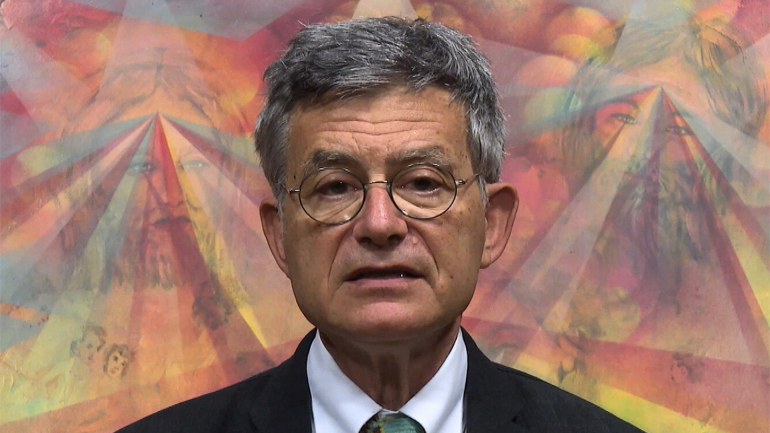
At the Bishops’ Meet 2025, currently underway in Hong Kong, Dr. Paolo Ruffini, Prefect of the Vatican Dicastery for Communication, delivered a deeply reflective and thought-provoking keynote address on the opportunities and challenges brought by artificial intelligence (AI). Speaking on December 10 at St. Francis University, Ruffini encouraged the Church in Asia to approach AI not with fear, but with a clear Christian vision rooted in human dignity, truth, and discernment.
Organized by the Office of Social Communications of the Federation of Asian Bishops’ Conferences (FABC-OSC), the three-day gathering (December 10–12) brings together bishops, priests, theologians, media practitioners, and communication leaders from across Asia to reflect on the theme “Artificial Intelligence and Pastoral Challenges in Asia.” The meeting seeks to help the Church understand how to navigate the rapid evolution of digital technologies while remaining faithful to its mission of evangelization and service.
Speaking on the theme of AI and the Church, Ruffini began by insisting that any meaningful reflection must start from “what we are and where we are in the history of mankind.” As a communion of baptized missionary disciples, he said, the Church now faces “a great opportunity and a tremendous responsibility” as AI continues to reshape culture, communication, and human relationships.
“Intelligence cannot be artificial.”
Ruffini warned strongly against the illusion that AI can replace the human mind or spirit. While acknowledging that AI can help with reasoning, context, summarizing, research, and translation, he stressed that “true wisdom cannot come from machines and algorithms.” The danger, he added, lies in believing that AI can offer omniscience or total knowledge, which risks leading humanity into the same temptation as the original sin, “to be like God.”
He emphasized that intelligence itself “cannot be artificial,” and that what is commonly called AI is in fact “calculation” or “a statistical gamble,” powerful but limited, and capable of hiding its errors and the interests of its owners behind an appearance of neutrality.
Human Responsibility
Ruffini underscored that the real risks of AI come not from the machines but from “those who own them, those who programme them and those who use them.” All the pitfalls of the digital age, he said, ultimately point back to human choices.
Citing computer scientist Ken Thompson, he noted the difficulty even experts have in trusting code they did not entirely create. This, he said, highlights the need for discernment and ethical oversight to ensure that AI becomes “an extraordinary opportunity and not its exact opposite.”
Need for Human Encounter
Ruffini urged the audience to balance speed with reflection and to preserve the difference between what is true and false, right and wrong, between chronos and kairos. He warned that AI-generated texts, images, art, or music risk collapsing the intrinsic value of relationships and the human experience that need time.
Artificial intelligence, he said, can isolate individuals and limit their ability to truly encounter the “other.” He emphasized the need to understand slowness as a source of depth and meaning, recalling Cardinal Martini’s teaching that divine communication unfolds gradually and historically.
Concerns
Ruffini raised concerns about deepfakes, unverifiable sources, algorithmic filtering, and the lack of transparency in how digital platforms determine what users see. The danger, he said, is that individuals may become prisoners of “filter bubbles” shaped not by truth but by commercial or ideological interests.
He stressed that dominant AI models shift focus from quality to speed and from real knowledge to attention-grabbing content. This, he warned, threatens both freedom of thought and the integrity of information.
Discernment and Education
Echoing Pope Francis’ message for the World Day of Peace 2024, Ruffini insisted that education, especially media and AI literacy, is essential. Critical thinking, discernment, and the ability to evaluate content are key to preventing “the human heart itself” from becoming artificial.
He noted that Pope Leo XIV has repeatedly warned young people not to let the algorithm “write their story,” calling them instead to humanize the digital world, cultivate moral discernment, and avoid becoming dependent on technologies that diminish freedom.
Remaining Human
Throughout the address, Ruffini returned to a single fundamental issue: the need to remain fully human in an age when technology can shape thinking, history, and behavior. Artificial intelligence, he said, must never be allowed to “replace us” or dictate human destiny.
Quoting Romano Guardini, he said the world needs a new attitude, one proportionate to the power of technology, honest about its dangers, and rooted in freedom, conscience, and responsibility.
Ruffini concluded that the Church must repair its networks, cultivate an ecosystem of safe and truthful communication, and provide a Christian interpretation of the digital world. The challenge, he said, is not to reject calculation but to prevent it from claiming the place of prophecy and wisdom.
True efficiency, he said, is not doing more in less time, but drawing out the deepest human meaning from the time we are given, calling for the Church to be “salt and leaven”, not passive consumers but active builders of a communication environment that serves humanity and honors human dignity.