India: Catholic Bishops Urge Withdrawal or Revision of Maharashtra’s Anti-Conversion Law

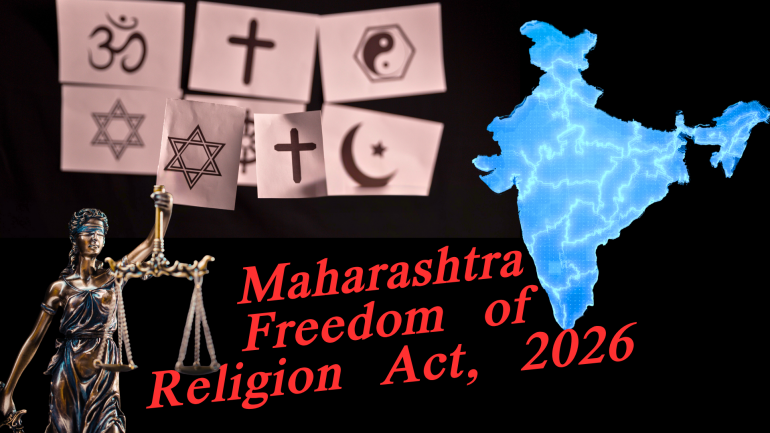
Catholic bishops in the western Indian state of Maharashtra have strongly opposed the newly passed Maharashtra Freedom of Religion Act, 2026, expressing “deep disappointment and strong protest.” They said the law undermines the fundamental rights guaranteed under the Constitution of India.
The bishops warned that provisions such as mandatory prior notice and police inquiry into religious conversions violate personal conscience and the right to privacy. They also raised concerns that the law could criminalize legitimate Church practices such as the Rite of Christian Initiation of Adults (RCIA).
While reiterating their opposition to forced conversions, the Church leaders criticized the lack of consultation in framing the legislation and warned of its possible misuse against minority communities.
“We strongly oppose this Act in its current form and call for its immediate withdrawal or substantial revision. Religious freedom is not a concession granted by the State; it is a fundamental right,” the bishops said in a statement released on March 19.
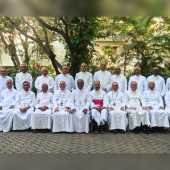
The statement was signed by Archbishop Elias Gonsalves, Archbishop John Rodrigues, Archbishop Thomas Dabre, Bishop Thomas D’Souza, Bishop Lancy Pinto, Bishop Simon Almeida, Bishop Ephrem Nariculam, Bishop Malcolm Sequeira, Bishop Matthews Mar Pothanamuzhy, and Bishop Agnelo Pinheiro, along with auxiliary bishops Savio Fernandes, Stephen Fernandes, and Allwyn D’Souza of Bombay.
As of now, similar anti-conversion laws, often referred to as “Freedom of Religion Acts”, have been enacted in about 10 to 12 states across India, including Odisha (one of the earliest, in 1967), Madhya Pradesh, Chhattisgarh, Gujarat, Himachal Pradesh, Jharkhand, Uttarakhand, Uttar Pradesh, Karnataka, Haryana, and now Maharashtra.
These laws are officially intended to prevent forced conversions through coercion or threats, prohibit fraudulent conversions based on misrepresentation, and restrict conversions through inducement or allurement such as money, employment, or marriage.
However, the Church in India has repeatedly pointed out that such laws use vague terms like “allurement” and “inducement,” which can be misinterpreted and misused against Christians and other minority groups. The bishops warned that these provisions may lead to harassment, false accusations, and even arrests.
The Church has consistently emphasized that the Constitution of India guarantees freedom of religion under Article 25, including the right to choose, practice, and propagate one’s faith. While firmly opposing forced conversions, Church leaders maintain that any law restricting genuine religious freedom or targeting minorities is unacceptable.
Radio Veritas Asia (RVA), a media platform of the Catholic Church, aims to share Christ. RVA started in 1969 as a continental Catholic radio station to serve Asian countries in their respective local language, thus earning the tag “the Voice of Asian Christianity.” Responding to the emerging context, RVA embraced media platforms to connect with the global Asian audience via its 21 language websites and various social media platforms.
Latest News