India: Telugu Churches Call for Greater Christian Unity, Cooperation in Southern India

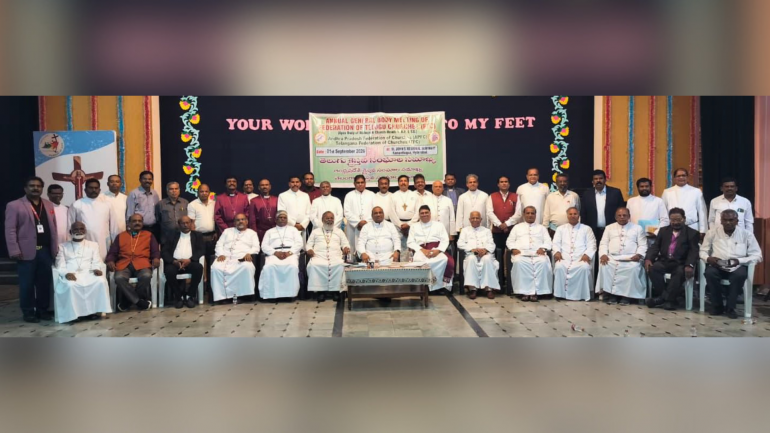
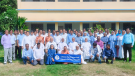
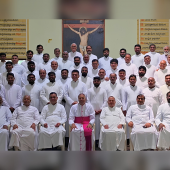
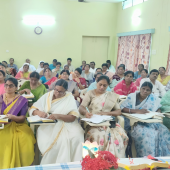
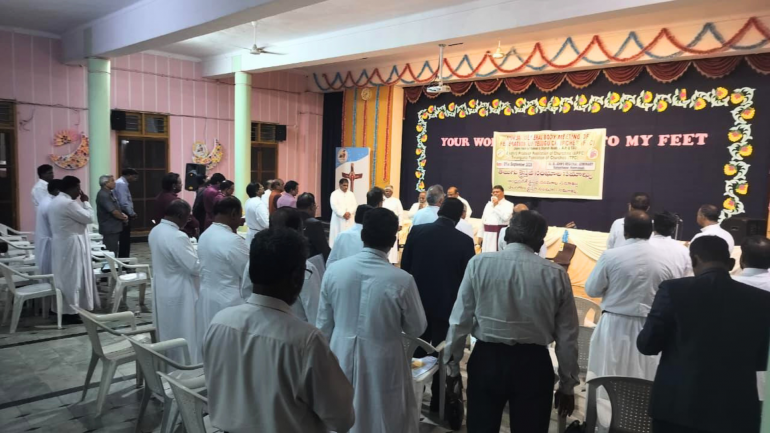
The Federation of Telugu Churches (FTC) brought together about 50 bishops, Church leaders, representatives and special invitees for its Annual General Body Meeting on September 1 at St. John’s Regional Seminary in Ramanthapur, Hyderabad, the capital of Telangana in southern India.
The gathering opened with an Ecumenical Prayer Service for Christian Unity, using resources from the Week of Prayer for Christian Unity 2026 and reflecting on the theme, “Light from Light for light.”
The prayer service set the tone for discussions centered on Christian unity, ecumenical cooperation and issues of common concern affecting the Christian community.
Participants also observed moments of silence in memory of two recently deceased Church leaders: Sri Matta Rajakar Rao, general secretary of the Church of Bangladesh National Council of Churches (CBCNC), and Most Rev. Archbishop Mallavarapu Prakash, Archbishop Emeritus of Visakhapatnam in Andhra Pradesh.
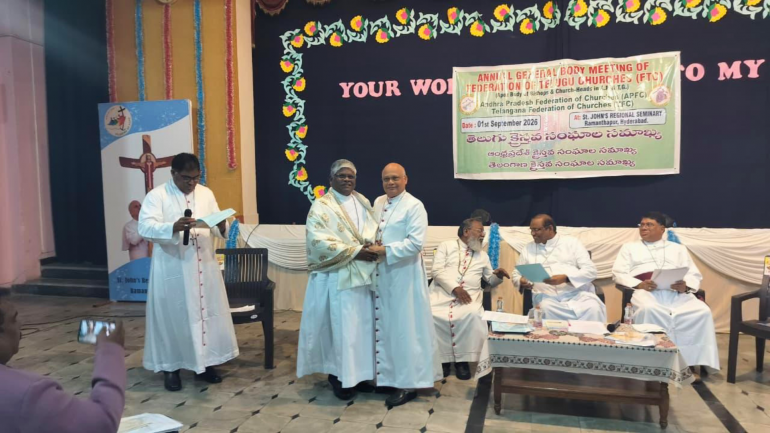
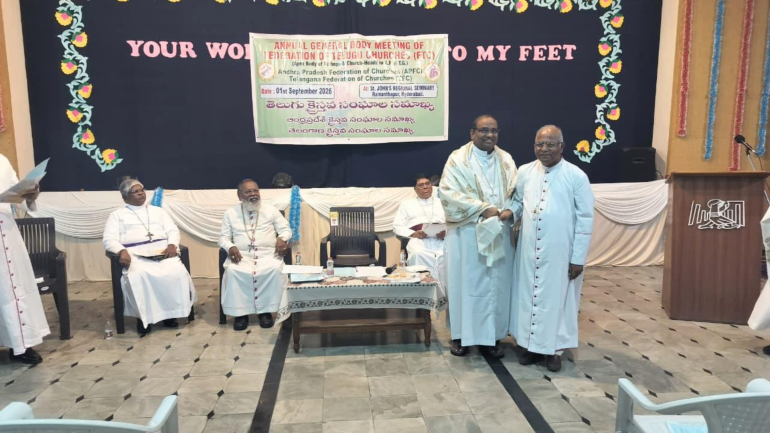
The FTC felicitated Rt. Rev. Kora Senam Raj following his recent consecration as bishop of the Church of South India (CSI) Diocese of Dornakal.
The gathering also honored His Eminence Cardinal Poola Anthony following his election as president of the Catholic Bishops’ Conference of India (CBCI) and convenor of the National Federation of Churches in India (NFCI). Archbishop Joseph D’Souza of the Good Shepherd Church was also congratulated on his election as convenor of the NFCI.
Welcoming the participants, Most Rev. Anthony Das, chairman of the FTC, expressed gratitude for the commitment and active participation of the member Churches.
Reflecting on Christ’s prayer, “that they may all be one,” Archbishop Das called for a deeper commitment to “unity in truth, unity in spirit and unity in witness.”
He said Christian unity should go beyond expressions of fellowship and lead Churches to support one another, cooperate on matters of common concern and work together for the common good and the promotion of the Kingdom of God.
The General Body approved the minutes of its previous meeting and received annual reports from the FTC and its state-level bodies, the Andhra Pradesh Federation of Churches and the Telangana Federation of Churches. Financial statements from the respective bodies were also presented.
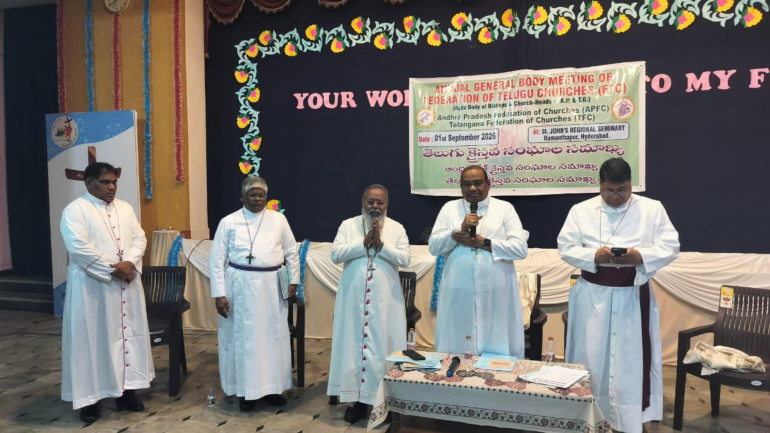
A significant portion of the meeting focused on the proposed amendment to India’s Foreign Contribution Regulation Act (FCRA), which has been referred to a Joint Parliamentary Committee.
Archbishop Joseph D’Souza outlined possible implications of the proposed legislation for Christian organizations and the wider Christian community and called for a united and responsible response from the Churches.
He emphasized the need for Christians to combine prayer with constructive engagement, particularly in safeguarding the constitutional rights and legitimate interests of religious minorities.
Several members participated in the discussion and expressed support for greater cooperation and collective engagement on issues affecting the Christian community.
The General Body also discussed the continuing issue of the legal status of Christians belonging to Scheduled Caste communities.
Bishop Jaya Rao Polimera of Eluru briefed participants on ongoing discussions and developments concerning the matter.
The meeting concluded with a renewed commitment to Christian unity and ecumenical collaboration, encouraging Churches in the Telugu-speaking regions of southern India to work together on issues of common concern and in service of the wider society.
The discussions also reflected a broader concern shared by Christian communities across Asia: strengthening cooperation among Churches while responding constructively to social, legal and pastoral challenges facing religious minorities.
Radio Veritas Asia (RVA), a media platform of the Catholic Church, aims to share Christ. RVA started in 1969 as a continental Catholic radio station to serve Asian countries in their respective local language, thus earning the tag “the Voice of Asian Christianity.” Responding to the emerging context, RVA embraced media platforms to connect with the global Asian audience via its 21 language websites and various social media platforms.
Latest News