

Indian Church Leaders in Agra Region Seek Practical Ways to Strengthen Interfaith Dialogue

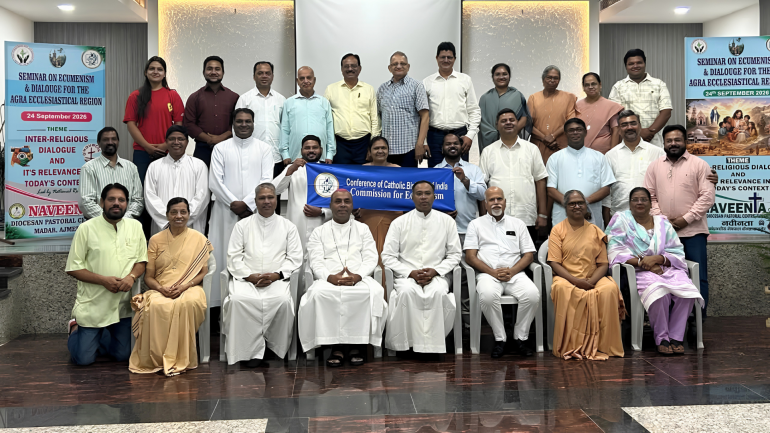
Indian Church leaders from nine dioceses in northern India gathered for a seminar on ecumenism and dialogue, focusing on practical ways to strengthen relations with people of other religions and promote Christian unity at the regional and diocesan levels.
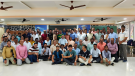
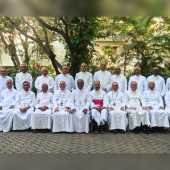
The September 24 seminar was held at the Naveenta Diocesan Pastoral and Communication Centre in Madar, Ajmer, Rajasthan, and brought together about 30 bishops, priests, religious and lay leaders from the Agra Ecclesiastical Region. The region covers dioceses in northern India, including areas of Uttar Pradesh and Rajasthan.
The seminar was jointly organized by the Agra Ecclesiastical Regional Commission for Ecumenism and Dialogue and the Conference of Catholic Bishops of India (CCBI) Commission for Ecumenism.
The gathering opened with a prayer led by Fr. Samson Macwana. Fr. Elias Niranjan, director of Ecumenism and regional secretary for Ecumenism and Dialogue, welcomed the participants and encouraged them to use the seminar for reflection, sharing and developing practical approaches to dialogue.
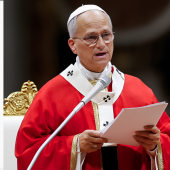
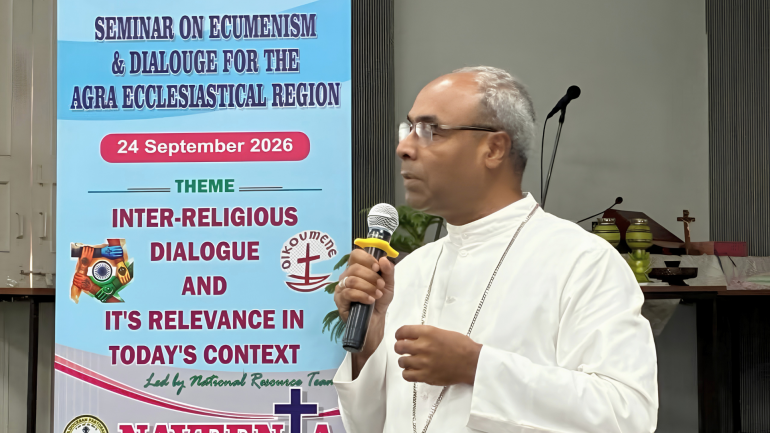
Bishop John Carvalho of Ajmer, chairman of the Agra Regional Commission for Ecumenism, delivered the keynote address. He emphasized the importance of ecumenical and interreligious dialogue in the Indian context, particularly in the diverse social and religious setting of the Agra region.
“Dialogue is not an option but a way of life,” Bishop Carvalho said, encouraging participants to build relationships with people of other religions while working to promote Christian unity.
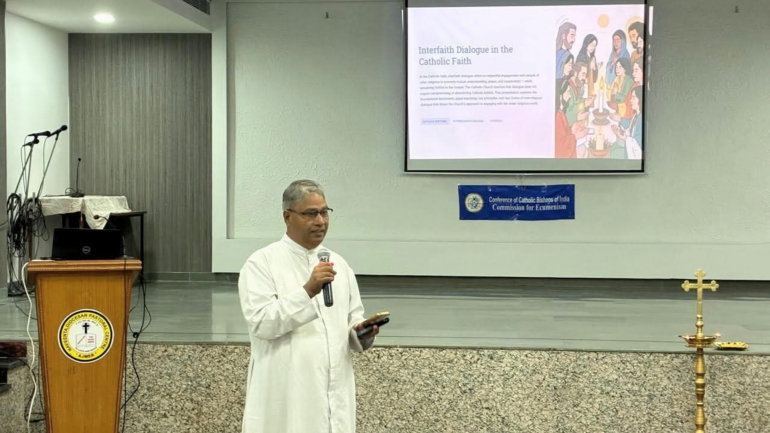
Fr. Norbert Herman, SVD, a national council member of the CCBI Commission for Ecumenism, served as the resource person. He reflected on the need and relevance of ecumenism and interreligious dialogue in contemporary India, drawing on Church teaching and his pastoral experience.
Fr. Herman encouraged participants to move beyond discussing dialogue as a Church principle and to become actively involved in it through their pastoral work. He presented practical examples and urged them to promote Christian unity and dialogue as an essential part of the Church’s mission.
Fr. K. Anthaiah, executive secretary of the CCBI Commission for Ecumenism, presented the CCBI Pastoral Plan for Ecumenism. He emphasized the need to implement the plan at the regional and diocesan levels, while adapting it to local circumstances.
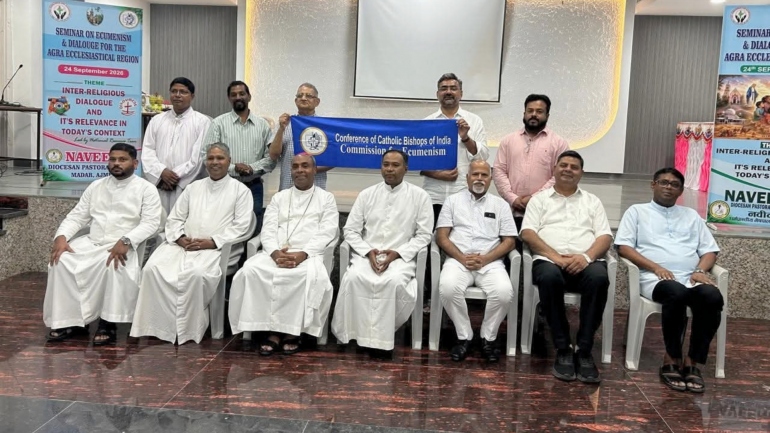
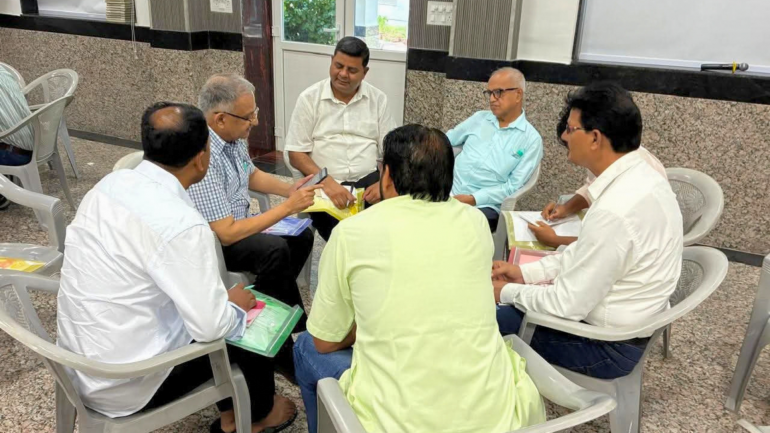
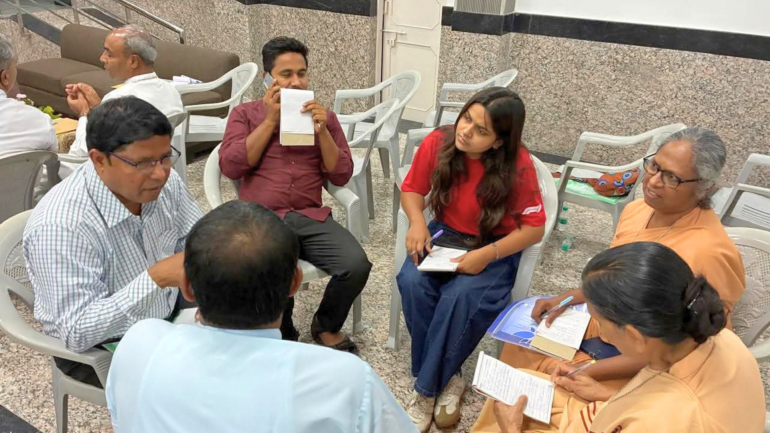
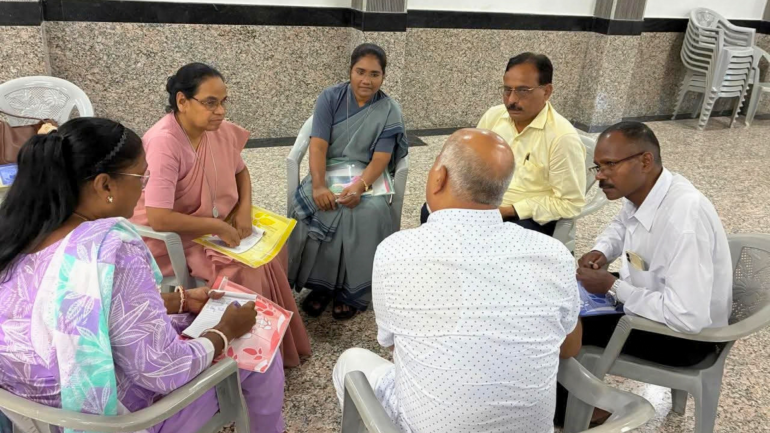
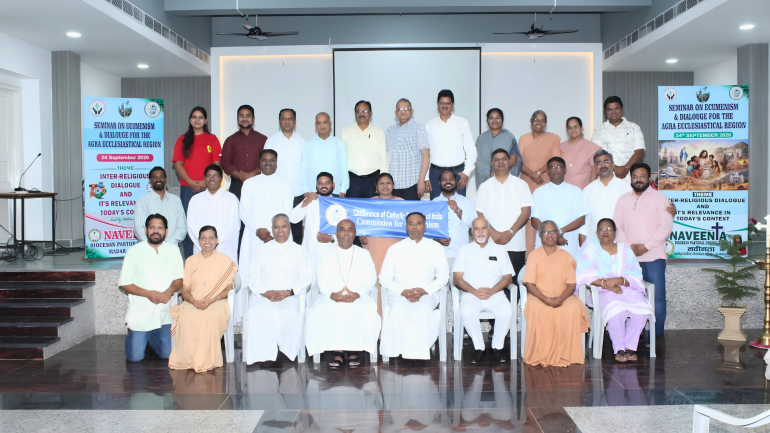
A group discussion and open session allowed participants to share experiences, raise questions and suggest concrete ways to strengthen dialogue in their respective dioceses. The discussion also focused on how the CCBI pastoral plan could be applied in local pastoral settings.
The seminar included the celebration of the Eucharist, presided over by Bishop Carvalho. In his homily, he urged participants to continue the mission of unity and dialogue initiated by Jesus Christ and to make it part of their regular pastoral ministry.
At the conclusion, Fr. Anthaiah thanked Bishop Carvalho, Fr. Niranjan, Fr. Herman and others involved in organizing the seminar. He also thanked the participants for their active participation and contributions.
The gathering ended with a renewed commitment to strengthening interfaith relationships, promoting Christian unity and putting the CCBI Pastoral Plan for Ecumenism into practice across the dioceses of the Agra Ecclesiastical Region.
Radio Veritas Asia (RVA), a media platform of the Catholic Church, aims to share Christ. RVA started in 1969 as a continental Catholic radio station to serve Asian countries in their respective local language, thus earning the tag “the Voice of Asian Christianity.” Responding to the emerging context, RVA embraced media platforms to connect with the global Asian audience via its 21 language websites and various social media platforms.
Latest News