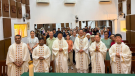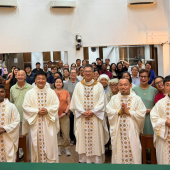



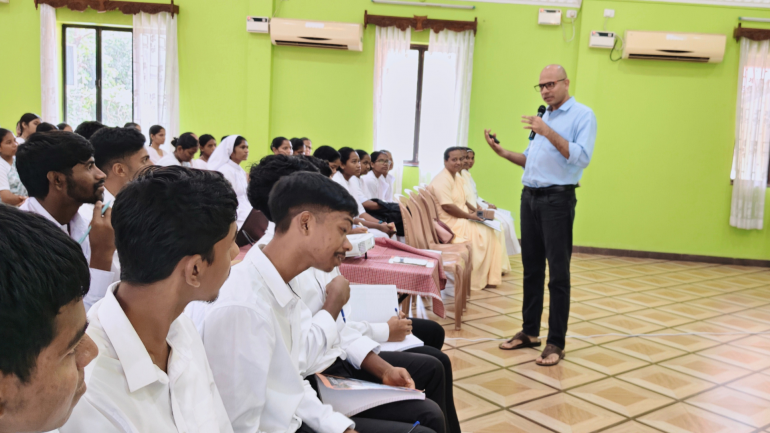
Religious formators and members in initial formation gathered in western India for a seminar organized by the Conference of Religious India (CRI), Goa and Daman, to reflect on how abiding in Christ can shape religious formation, community life and mission in a changing Asian context.
The seminar, held at Padre Pio Friary in Modi, Navelim, South Goa, focused on the theme “Abide in Me: Walking Together in Formation and Mission.” It was inspired by the 2026–27 pastoral letter Abide in Me of Cardinal Filipe Neri Ferrão, Archbishop of Goa and Daman.
The gathering brought together formators and formees from different religious congregations for prayer, reflection, discussion and interactive sessions on formation and mission.
Jesuit priest and retreat director Fr. Shannon Pereira, SJ, delivered the keynote address. He is director of Xavier Retreat House in Baga, Bardez, North Goa.
Fr. Pereira focused on the relationship between “abiding” in Christ and “walking” with others, saying that remaining in Christ should lead Christians toward engagement and mission rather than withdrawal.
“True abiding in Christ does not make Christians stationary but gives them the direction, courage and freedom to walk with others in mission,” he said.
He illustrated this through the Gospel account of the risen Jesus’ encounter with two disciples on the road to Emmaus. Although the disciples asked Jesus to “stay with us,” their encounter with him eventually led them back to Jerusalem to share what they had experienced.
“His staying makes them move,” Fr. Pereira said, connecting the Emmaus story with the call to remain in Christ while journeying with others.
He invited participants to examine the deeper meaning of “abide” in the Gospel of John. Abiding, he said, referred not simply to where a person lived physically but also to where a person dwelled inwardly.
A person could be active and committed outwardly while inwardly remaining in resentment, anxiety, comparison, control or past wounds. Formation, therefore, should help people recognize these inner movements and learn to live from Christ.
“Formation is not first learning to do for Christ,” he said, emphasizing the need to learn to “live from Christ.”
During an interactive exercise using emojis to represent different emotions, participants were invited to identify and share what they were experiencing. Fr. Pereira connected the exercise with discernment, saying emotions should neither simply be obeyed nor ignored but could help reveal what was happening within a person.
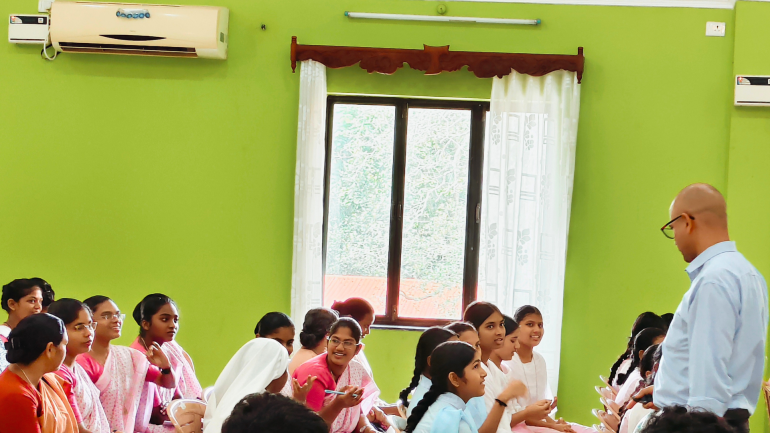
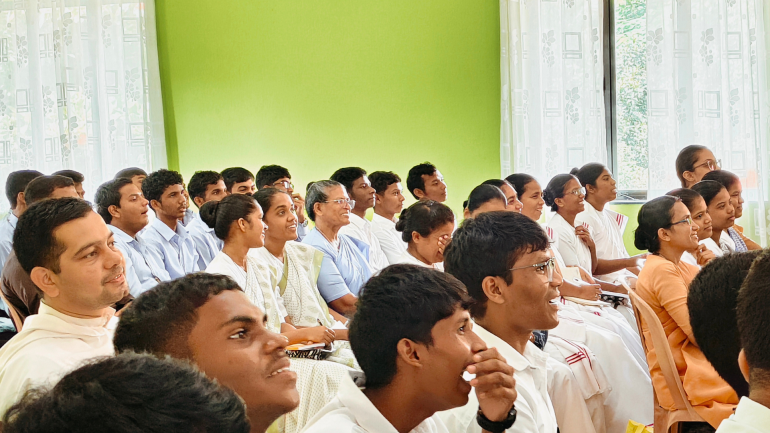
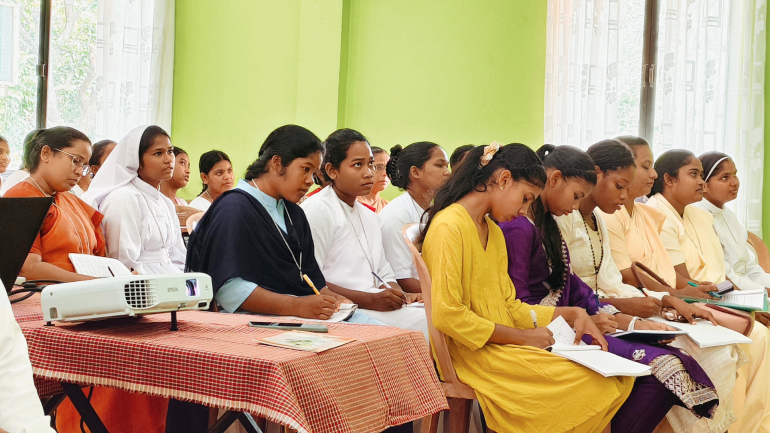
He also emphasized listening and accompaniment in formation, drawing lessons from the Emmaus encounter. Jesus joined the disciples, listened to them, interpreted their experience, stayed with them, broke bread with them and eventually disappeared.
For formators, this final movement carried an important lesson, he said. The purpose of formation was not to make formees permanently dependent on their formators but to help them increasingly recognize and follow Christ themselves.
Fr. Pereira also challenged the idea that formation must be completed before mission begins. Jesus called his disciples both to be with him and to be sent, he noted, suggesting that mission itself could become a place of formation.
“Community forms us. Failure forms us. Culture forms us. People who disagree with us form us,” he said.
He linked this approach to synodality, saying it should not be understood merely as another Church program but as “another way of being Church” based on listening, encounter and walking together.
The keynote session included questions, visual exercises and opportunities for personal sharing.
Separate sessions for formators and formees followed, led by Fr. Canute Tauro OCD and Fr. Cranston Vaz SVD, respectively. Formees from different religious congregations also presented reflections on the seminar theme.
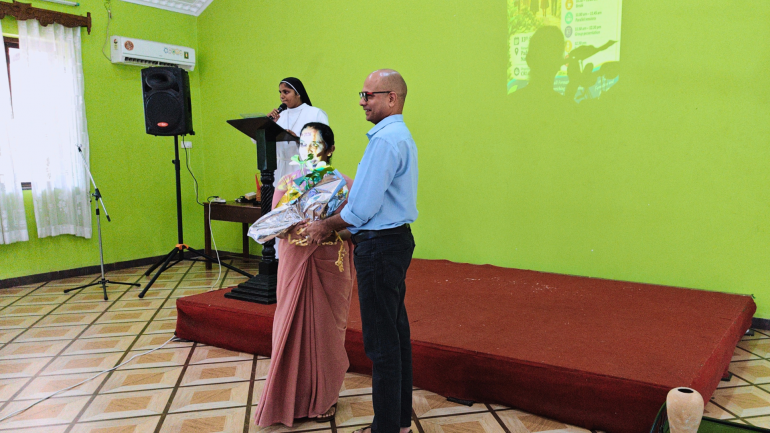
Sr. Livia Nunes SFN, vice president of CRI Goa and Daman, welcomed the participants, while Sr. Leena Nazareth SHM, secretary of CRI Goa and Daman, proposed the vote of thanks.
The seminar concluded with a Eucharistic celebration presided over by Fr Alden Faleiro OFM Cap, treasurer of CRI, followed by lunch.
Radio Veritas Asia (RVA), a media platform of the Catholic Church, aims to share Christ. RVA started in 1969 as a continental Catholic radio station to serve Asian countries in their respective local language, thus earning the tag “the Voice of Asian Christianity.” Responding to the emerging context, RVA embraced media platforms to connect with the global Asian audience via its 21 language websites and various social media platforms.
Latest News