Indonesia: Capuchin Friars Lead Humanitarian Response After Devastating Floods in North Sumatra

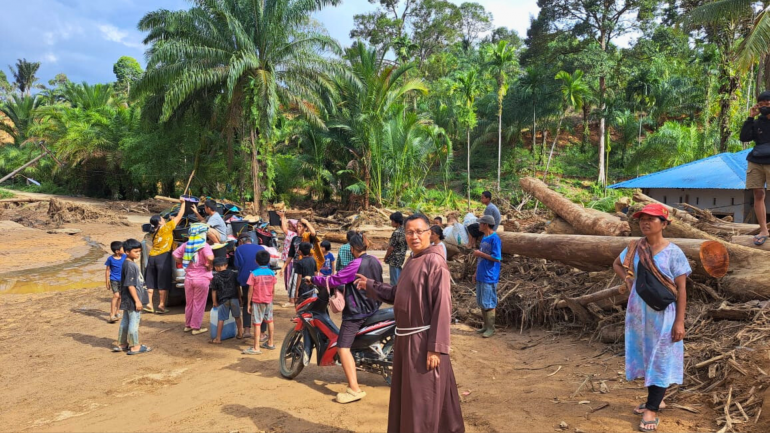
In late November, when flash floods swept away residential areas across parts of South Tapanuli Regency, including the city of Sibolga in North Sumatra Province, Indonesia, members of the Order of Friars Minor Capuchin were among the first to reach the affected areas, bringing aid and relief to the victims.
Two of the worst-hit areas were the villages of Bair and Aloban. “All houses in both villages were completely wiped out and flattened to the ground,” said Fr. Adrianus Simatupang, OFMCap, speaking to RVA.
The flash floods, accompanied by landslides, not only destroyed homes but also cut off transportation routes and communication access in many areas.
Remarkably, amid the devastation, the Capuchins’ Motherhouse in the heart of Sibolga and the Capuchin Novitiate, located about 36 kilometres from the city, were largely spared. What many described as a “miracle of nature” turned these two Capuchin houses into immediate centres of humanitarian operations.
Donations of food supplies and other essential items were sent to these locations, from where the Capuchins, together with volunteers, fanned out to reach clusters of displaced residents.
“All our novices were mobilized for this humanitarian mission,” Fr. Adrianus said on December 16 from Sibolga. Alongside volunteers, the Capuchins went directly into the field to reach evacuation sites scattered across hard-to-access areas.
Carrying Basic Necessities on Their Shoulders
Accounts from the field reveal the scale of the challenges faced. In the first weeks following the late-November floods and landslides, nearly all main access roads to Sibolga were cut off.
Donor convoys traveling from Medan, for example, had to spend an entire day and night traveling via Singkil in Aceh Province just to reach Sibolga. “Even then, they had to deal with collapsed roads, destroyed bridges, total darkness at night, and the absence of phone signals,” the young Capuchin priest explained.
Under such conditions, the Capuchins had no choice but to carry food and basic necessities on their shoulders from the main humanitarian posts at the Capuchin Motherhouse and the Capuchin Novitiate in Hamente Hamlet, Badiri District, Central Tapanuli Regency, to various locations where evacuees had gathered.
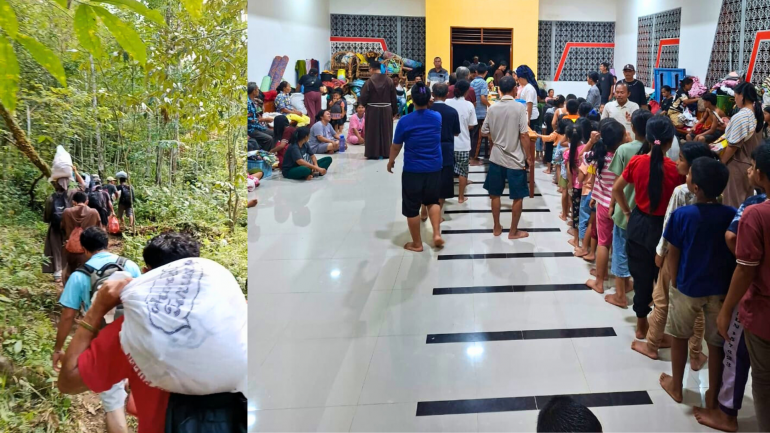
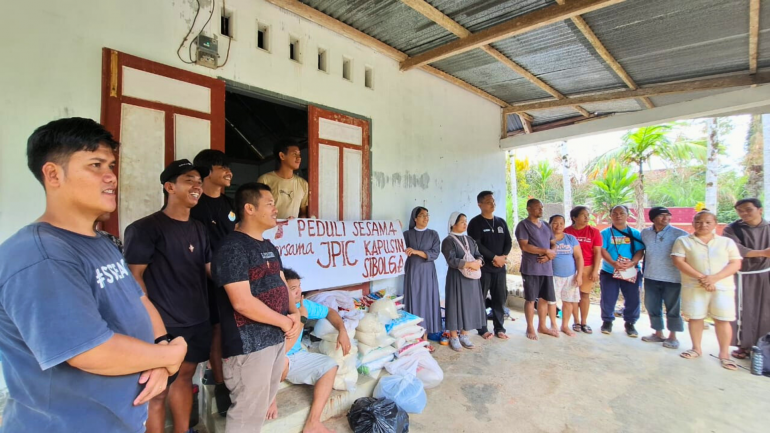
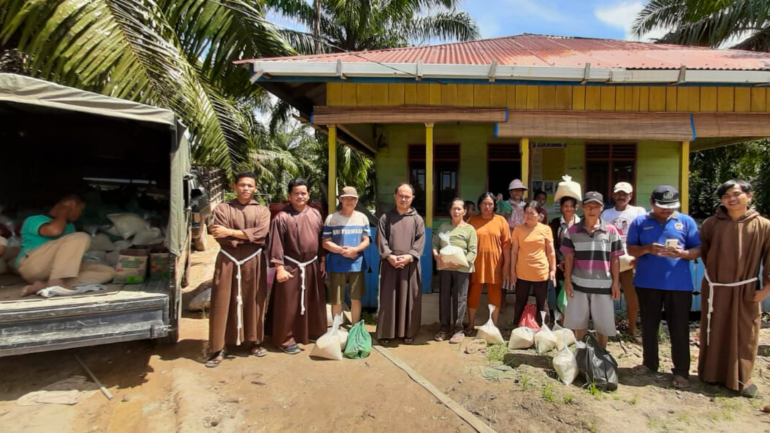
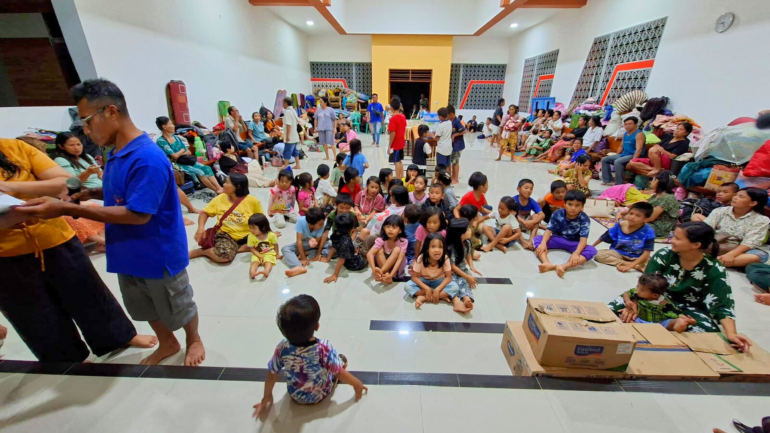
These journeys often required walking dozens of kilometres, taking four to five hours, while pushing through formidable natural obstacles.
“It was both physically and mentally exhausting. Without a spirituality of selfless service to those who are suffering, it would have been easy to give up,” said Fr. Adrianus, who served as the on-site coordinator of the Capuchin Province of Sibolga’s humanitarian mission.
He added that it was precisely their spirit of joyful service to brothers and sisters affected by the disaster that enabled the Capuchins to persevere, working hand in hand with volunteers.
This was affirmed by the Provincial Minister of the Capuchin Province of Sibolga, Fr. Joseph Sinaga, OFMCap, who closely monitored the humanitarian efforts of his confreres.
He noted that in the first days after the disaster, the Capuchin Novitiate in Hamente was immediately transformed into an evacuation centre, complete with a public kitchen.
“Thousands of people came every day, willing to queue just to receive food and drink prepared by our Capuchin colleagues at the Novitiate,” Fr. Joseph Sinaga told RVA earlier this week.
Amid severe limitations and treacherous terrain, the hands of the Capuchins became a tangible sign of solidarity and compassion for those most affected. In Sibolga and its surrounding areas, they brought not only material aid but also hope, affirming that even in the midst of disaster, humanity endures.
Radio Veritas Asia (RVA), a media platform of the Catholic Church, aims to share Christ. RVA started in 1969 as a continental Catholic radio station to serve Asian countries in their respective local language, thus earning the tag “the Voice of Asian Christianity.” Responding to the emerging context, RVA embraced media platforms to connect with the global Asian audience via its 21 language websites and various social media platforms.
Latest News