Indonesian Bishop Warns Clergy Against Refusing Sacraments and Using Harsh Language in Homilies

A Catholic bishop in Indonesia has expressed concern after a family left the Church, citing a priest’s failure to administer the Anointing of the Sick to a dying relative.
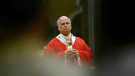
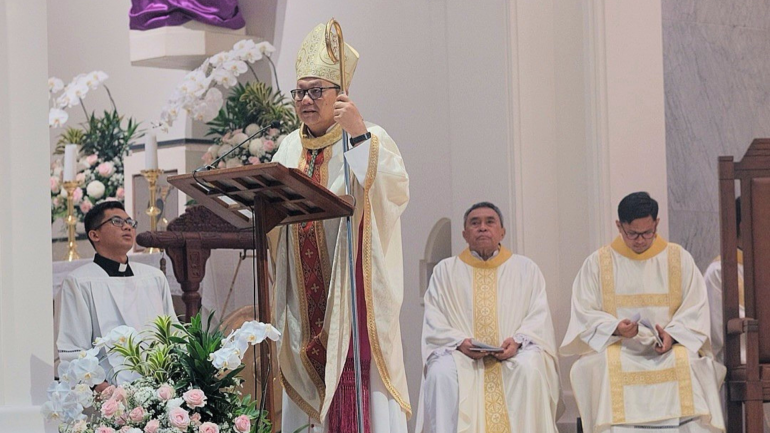
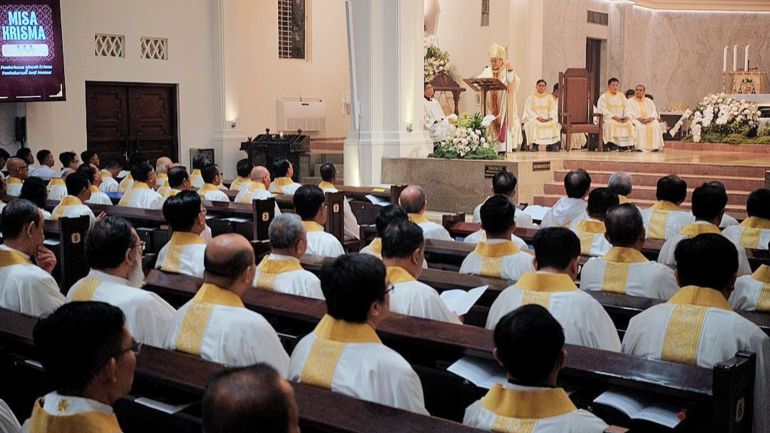
Delivering the homily at the Chrism Mass at Sacred Heart Cathedral in Surabaya, western Indonesia, on March 31, Bishop Agustinus Tri Budi Utomo described the case as a serious pastoral failure and a wake-up call for clergy.
According to the bishop, the family had repeatedly requested that a priest visit their gravely ill relative to administer the last rites. The request went unanswered, and the patient died without receiving the sacrament.
The incident prompted the family to formally withdraw from the Catholic Church. “We are all shaken by this,” the bishop said, calling it a stark reminder of the Church’s core mission. “A priest is ordained first and foremost to serve the sacraments. Failing to respond to such an urgent need raises serious questions.”
The bishop used the occasion, one of the most important liturgical celebrations of the year, to urge priests to return to their fundamental identity as ministers of the sacraments.
He warned against delays or refusals in administering the Anointing of the Sick, describing such actions as serious failures in priestly responsibility. “Never delay or refuse the faithful who ask for this sacrament,” he said. “Through it, they encounter God’s mercy, especially at the most critical moments of life.”
Beyond sacramental ministry, the bishop encouraged priests to foster fraternity among themselves and to remain visibly present in the Eucharistic life of their communities, even when not presiding at Mass.
He also stressed the importance of catechesis, particularly for those preparing to enter the Church, describing catechumens as “special guests” who must be welcomed with care and attention.
At the same time, he cautioned clergy against harsh or divisive language in homilies, urging them to avoid rhetoric that could wound or alienate the faithful.
In a pointed message, the bishop highlighted what he described as a growing temptation among clergy to prioritize comfort and lifestyle over pastoral duty.
“Priesthood is not about improving one’s social or economic status,” he said. “It is about the salvation of souls.”
He also warned against the influence of “flexing” culture, a term commonly used to describe displays of wealth or status, calling instead for a return to simplicity as a credible witness of faith.
Addressing lay Catholics, the bishop acknowledged the human frailty of priests and urged the faithful to respond with prayer rather than public criticism.
“Do not shame them publicly,” he said. “Pray for them, speak to them personally, and offer fraternal correction with charity.”
He concluded by asking for prayers for vocations and for his own ministry as bishop. “Pray for me as well,” he said, “that I may shepherd God’s people according to Christ, the Good Shepherd.”
Radio Veritas Asia (RVA), a media platform of the Catholic Church, aims to share Christ. RVA started in 1969 as a continental Catholic radio station to serve Asian countries in their respective local language, thus earning the tag “the Voice of Asian Christianity.” Responding to the emerging context, RVA embraced media platforms to connect with the global Asian audience via its 21 language websites and various social media platforms.
Latest News