

Indonesia's Church Highlights Bridge-Building Mission Ahead of FABC Plenary Assembly

As Catholic bishops from across Asia prepare to gather in Jakarta for the Federation of Asian Bishops' Conferences (FABC) Plenary Assembly from July 20 to 26, the Catholic Church in Indonesia is reaffirming its commitment to dialogue, synodality, and bridge-building in one of the world's most religiously and culturally diverse nations.
The assembly, to be held under the theme, "Synodal Conversion and the Mission to Be Bridges and Bridge-Builders in Asia," will bring together Church leaders from across the continent to reflect on the Church's mission amid Asia's rapidly changing social, cultural, and religious realities.
For the Catholic Church in Indonesia, hosting the continental gathering is more than a matter of national pride. It offers an opportunity to share with the wider Asian Church its experience of proclaiming the Gospel in a country where dialogue across religious, ethnic, and cultural boundaries has become an essential part of Catholic identity and mission.
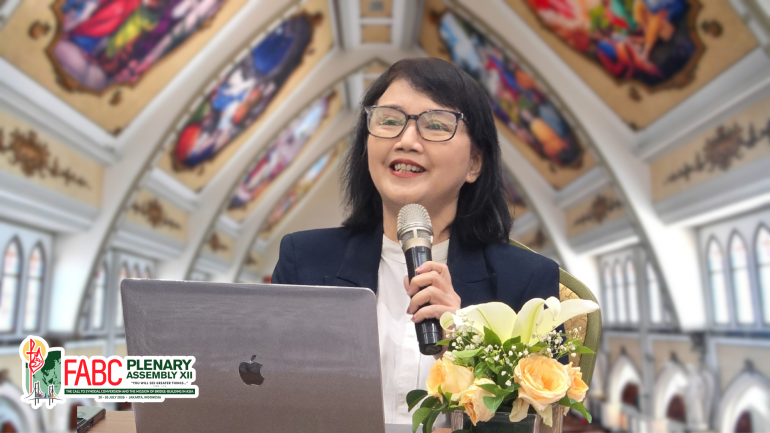
Dr. Maria Puspitasari, a lecturer at the Graduate School of Sustainable Development, Universitas Indonesia, Jakarta, says the Indonesian Church has developed distinctive pastoral strengths that can contribute meaningfully to the wider Church in Asia, even as it continues to face challenges that require ongoing renewal.
Dr. Puspitasari has also served in the Commission for the Lay Apostolate and the Commission for Social Communications of the archdiocese of Jakarta, focusing on lay participation, pastoral communication, and evangelization.
According to her, one of Indonesia's greatest contributions to the Church in Asia is its experience of embracing diversity as a source of encounter rather than division.
Living as a minority in the world's largest Muslim-majority nation has encouraged the Catholic Church to cultivate dialogue as a way of life rather than merely an occasional pastoral activity. Supported by Indonesia's national ideology, Pancasila, which upholds religious freedom, mutual respect, and national unity, Catholics have worked alongside people of other faiths to promote peace, social harmony, and human dignity.
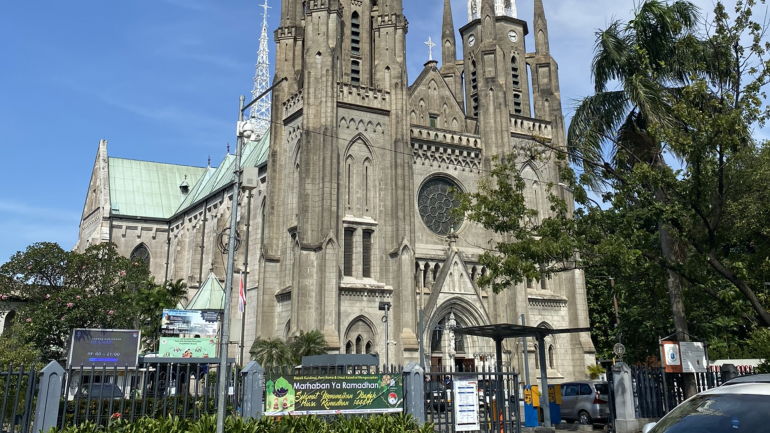
"This experience closely reflects the vision of the FABC," she notes, referring to the federation's long-standing emphasis on dialogue with religions, cultures, and peoples as the defining characteristic of the Church in Asia.
Dr. Puspitasari believes authentic interreligious dialogue extends beyond theological discussions. It becomes meaningful when communities collaborate in responding to poverty, environmental degradation, humanitarian crises, and other shared social concerns. In such situations, dialogue is expressed through common action and solidarity with those most in need.
She also sees synodality as central to the Church's future. Indonesia has fostered this spirit through the Sidang Agung Gereja Katolik Indonesia (SAGKI), which has provided a national forum for pastoral discernment and planning since 1995. Yet she argues that synodality must increasingly become part of everyday parish and diocesan life through listening, participation, and shared responsibility among bishops, clergy, religious, and lay faithful.
Indonesia also offers valuable pastoral experience through its tradition of inculturation. Local languages, traditional music, indigenous art, and cultural symbols have been integrated into the Church's liturgy and pastoral life, demonstrating that the Gospel can take root within local cultures while remaining faithful to the universal Church.
Equally significant are the Church's ministries in education, healthcare, and social services. Catholic schools, hospitals, and charitable institutions have long served Indonesians regardless of religion or ethnicity, becoming visible expressions of Christian witness and helping strengthen trust among different communities.
At the same time, Dr. Puspitasari acknowledges that the Church continues to face important challenges. Declining priestly and religious vocations, unequal pastoral resources between urban and remote regions, and practical difficulties related to places of worship require ongoing pastoral creativity and collaboration.
The digital age also presents both opportunities and risks. While digital media have expanded possibilities for evangelization and pastoral outreach, they have also intensified misinformation, polarization, and fragmented public discourse. Drawing on her experience in social communications, Dr. Puspitasari stresses the importance of strengthening digital literacy, ethical communication, and credible public witness so that technology becomes a bridge for dialogue rather than a source of division.
As bishops from across Asia gather in Jakarta, Indonesia's Catholic Church hopes its experience will contribute to the wider conversations on synodality and mission. More than offering hospitality, it seeks to share a lived experience of building bridges through dialogue, service, cultural openness, and collaboration with people of different faiths.
For Dr. Maria Puspitasari, the upcoming FABC Plenary Assembly represents an opportunity for the Church in Asia to renew its commitment to walking together as one People of God while responding creatively to the challenges of an increasingly pluralistic and interconnected world. Her combination of ecclesial experience, academic expertise, and commitment to the common good reflects the kind of lay leadership that can enrich the Church's theological and pastoral reflection as it continues its mission of bridge-building throughout Asia.
Radio Veritas Asia (RVA), a media platform of the Catholic Church, aims to share Christ. RVA started in 1969 as a continental Catholic radio station to serve Asian countries in their respective local language, thus earning the tag “the Voice of Asian Christianity.” Responding to the emerging context, RVA embraced media platforms to connect with the global Asian audience via its 21 language websites and various social media platforms.
Latest News