The wartime witness of Sybil Kathigasu, a Catholic nurse who endured torture rather than betray resistance fighters during the Japanese occupation of Malaysia, is being highlighted as part of efforts to promote her Cause for beatification and canonization.
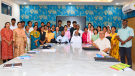
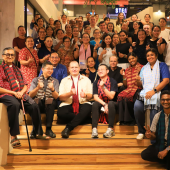
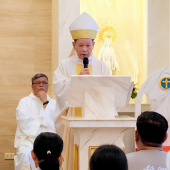
Brigadier-General (Rtd) Fitzgerald Augustin presented Sybil’s story at St. Ignatius Church in Petaling Jaya, in the Archdiocese of Kuala Lumpur, on August 15, emphasizing how her faith in Christ gave her the strength to endure imprisonment, torture and threats against her family.
The parish formation program was the eighth session in Augustin’s ongoing roadshow on Sybil’s life and spirituality. He has also presented the story during clergy recollections as part of a wider effort to increase awareness of her Cause.
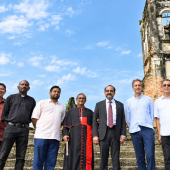
Archbishop Julian Leow of Kuala Lumpur entrusted Augustin with the roadshow and has asked him to gather further information, including testimonies and possible miracles attributed to Sybil’s intercession, which could assist the Cause.
Cardinal Sebastian Francis of Penang, who formally opened the Cause in July 2024, has encouraged Catholics to reflect on Sybil’s witness of faith, courage and selflessness and to pray for her recognition as a Servant of God.
Sybil and her husband, Dr. Abdon Clement Kathigasu, operated clinics in Ipoh and Papan during the Japanese occupation. They treated and sheltered members of the Malayan People’s Anti-Japanese Army while also caring for civilians.
When Japanese forces intensified their search for those aiding the resistance, Sybil repeatedly refused opportunities to escape if doing so would place others at risk. After her arrest in 1943, she also rejected an attempt by resistance fighters to rescue her, fearing that it would expose and endanger others.
Her imprisonment lasted until the Japanese surrender in August 1945. During that period, she was subjected to severe torture by the Kempeitai, the Japanese military police. She nevertheless refused to reveal information about those she had helped.
One of the most traumatic episodes came on Nov. 17, 1943, when her six-year-old daughter, Dawn, was threatened with death to force Sybil to disclose information about resistance fighters. Sybil prayed to the Virgin Mary for her daughter, while Dawn encouraged her mother to remain brave and not betray others.
Augustin also highlighted Sybil’s life of prayer. In prison, she prayed the Rosary, recited the Stations of the Cross and gathered fellow prisoners of different religious backgrounds for prayer. Her memoir, No Dram of Mercy, records how prayer became a source of strength during her confinement.
Sybil died in June 1948 at the age of 49 from septicemia linked to injuries suffered during her imprisonment. She had undergone several operations and treatment in England but never fully recovered from the wounds inflicted by her torturers.
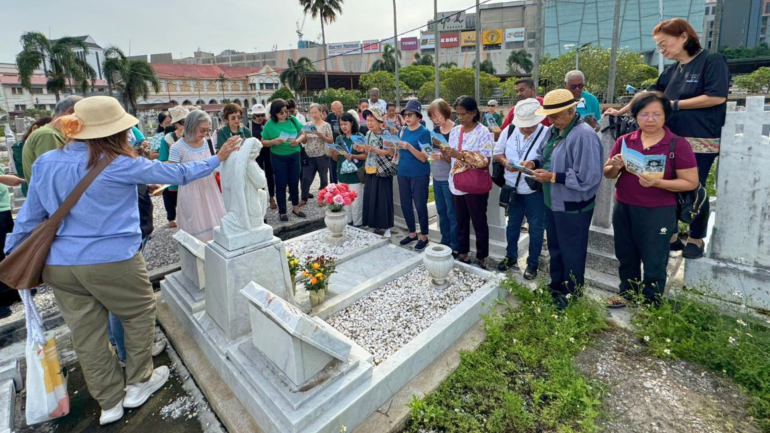
Her courage had already been recognized when she received the George Medal in 1947. She is buried at St. Michael’s Church cemetery in Ipoh, where a prayer group has gathered at her gravesite on the 12th of every month since January 2025.
The monthly observance has become an opportunity for Catholics to pray for her Cause and to reflect on her example of faith and self-giving.
Sybil’s witness continues to be remembered not simply for the suffering she endured, but for the choice she made to protect others at great personal cost. Her life, church leaders say, points to a Christian understanding of sacrifice rooted in love of God and neighbor.
Radio Veritas Asia (RVA), a media platform of the Catholic Church, aims to share Christ. RVA started in 1969 as a continental Catholic radio station to serve Asian countries in their respective local language, thus earning the tag “the Voice of Asian Christianity.” Responding to the emerging context, RVA embraced media platforms to connect with the global Asian audience via its 21 language websites and various social media platforms.
Latest News