Minority Participation Emerges as Key Issue as Bangladesh Enters Election Campaign Phase

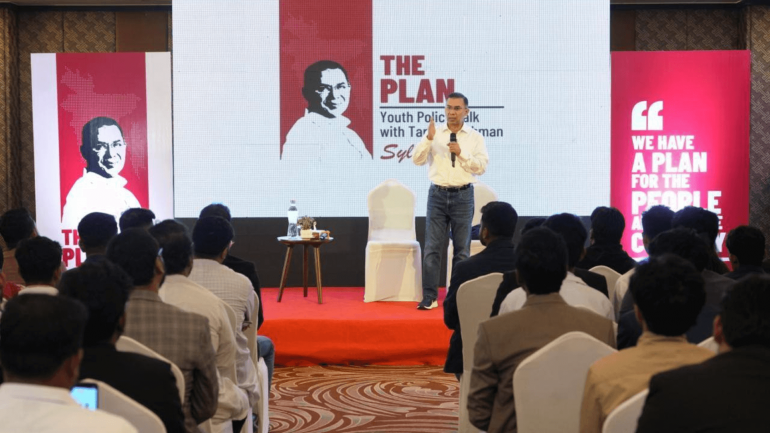
As Bangladesh enters the campaign phase of its upcoming national parliamentary elections, minority participation has emerged as a significant issue amid political uncertainty, heightened rhetoric, and growing concerns over violence.
According to data from the Election Commission, 80 candidates from religious and ethnic minority communities are contesting the polls. Initially, 88 minority candidates filed nomination papers, but five nominations were cancelled and three candidates withdrew, leaving 80 candidates in the final race.
Of these, 68 minority candidates have been nominated by 22 political parties, including several Islamic parties. The remaining 12 are independent candidates, while 10 of the total contenders are women, indicating modest but noteworthy representation. Bangladesh currently has 60 registered political parties with the Election Commission. However, the registration of the Awami League remains suspended, and its political activities are banned.
The Communist Party of Bangladesh (CPB) has fielded the highest number of minority candidates, with 17 nominees, followed by a mix of mainstream and smaller political parties.
Speaking to Radio Veritas Asia (RVA), Nirmol Rozario, president of the Bangladesh Hindu Buddhist Christian Unity Council, emphasized that symbolic representation alone is insufficient.
“Until minority communities are able to participate meaningfully in political decision-making and exercise real influence, it will not be possible to protect their rights, development, or even their existence,” Rozario said. “Minorities must be more involved in politics and elections—not only as voters, but also as leaders.”
Rozario also reflected on long-standing voting trends among Christian communities. “A large section of Christians traditionally supports the Awami League,” he noted. “Those who support BNP or other parties are very few, and as a result, they often remain unrepresented in parliament.” Despite this, he expressed hope that Christians would still find representation in the next National Parliament.
The Bangladesh Nationalist Party (BNP) has nominated six minority candidates, including two senior figures: Standing Committee member Gayeshwar Chandra Roy (Dhaka-3) and Vice Chairman Nitai Roy Chowdhury (Magura-2).
In a first for national parliamentary elections, Jamaat-e-Islami has nominated a minority candidate. Krishna Nandi, a Hindu businessman and president of Jamaat’s Hindu committee in Dumuria upazila, is contesting from Khulna-1, a Hindu-majority constituency covering Dakop and Batiaghata upazilas. Nandi is a resident of Chuknagar in Dumuria.
The National Citizens Party (NCP) has also fielded a minority candidate. Pritam Das, caretaker of the party’s Sylhet region, is contesting from Moulvibazar-4. Meanwhile, four minority candidates are running under the banner of the Jatiya Party.
Official election campaigning began on Thursday, January 22, with rival parties BNP and Jamaat-e-Islami holding separate rallies marked by sharp, indirect criticism of one another.
BNP Acting Chairman Tarique Rahman launched his party’s campaign at a rally at the Alia Madrasa ground in Sylhet. He alleged that people’s votes had been “stolen” over the past 15 to 16 years and warned of a new political conspiracy. In remarks with religious overtones, he criticized parties that invoke divine authority during elections, calling such claims misleading.
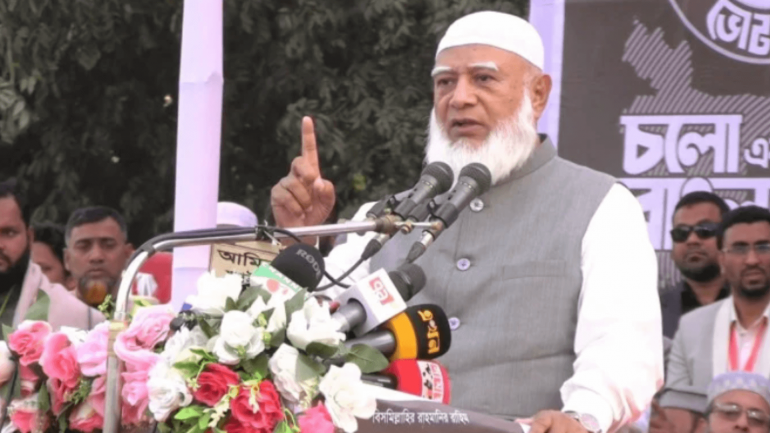
On the same day, Jamaat Ameer Shafiqur Rahman inaugurated his campaign in Dhaka-15 at a rally held at the Adarsh High School ground in Mirpur-10. While avoiding direct criticism, he warned against the return of “vote robbers” and “fascism in a new guise,” alluding to past electoral violence.
Amid the intensifying campaign, fears over minority safety are mounting. At least eight members of minority communities have been killed in the past month, although the government has described these incidents as isolated crimes rather than communal violence.
The Bangladesh Hindu Buddhist Christian Unity Council rejects this assessment. Its acting general secretary, Manindra Kumar, told RVA that attacks on minorities before and after elections have become a recurring pattern.
“This time is no exception. The attacks have already begun,” Kumar said. “We are worried about whether we will be able to go to polling stations without fear. Law enforcement agencies have not been visible in recent incidents despite our repeated appeals. We believe these attacks are being planned.”
As Bangladesh moves closer to election day, minority leaders stress that meaningful political inclusion, along with effective security measures, will be essential to ensuring a credible, peaceful, and inclusive democratic process.