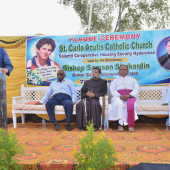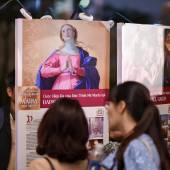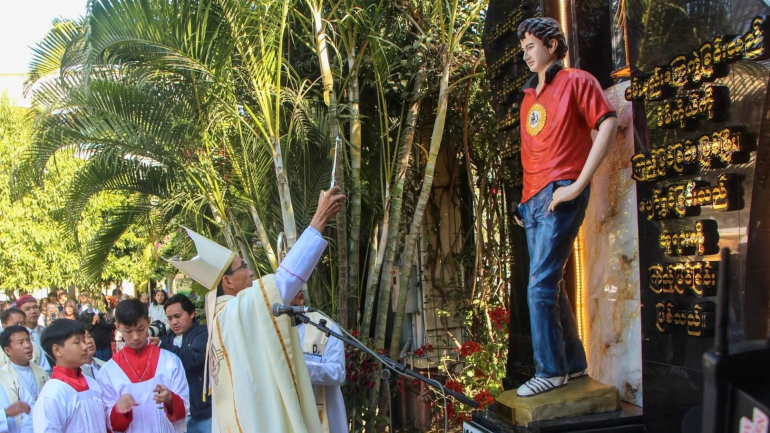
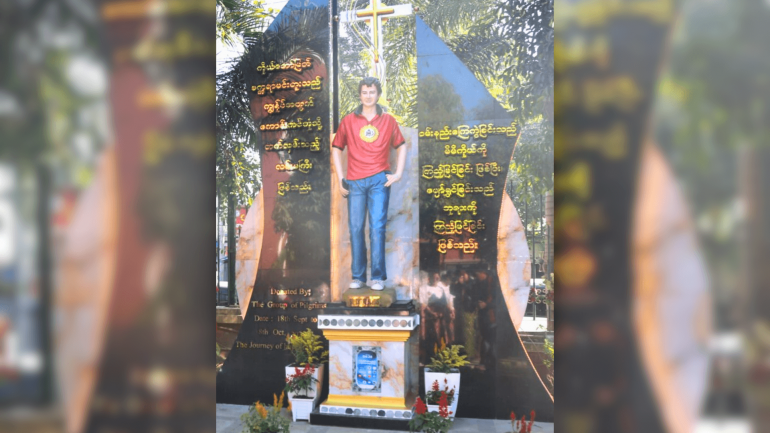
Amid Myanmar’s protracted civil conflict, the local Catholic Church has offered a powerful sign of hope for young people by erecting a statue of St. Carlo Acutis at the Cathedral of St. Columbanus in the Diocese of Myitkyina, capital of Kachin State.
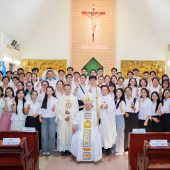
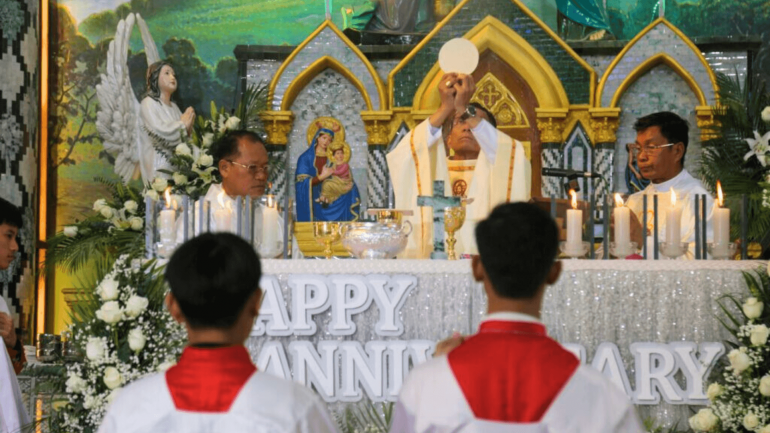
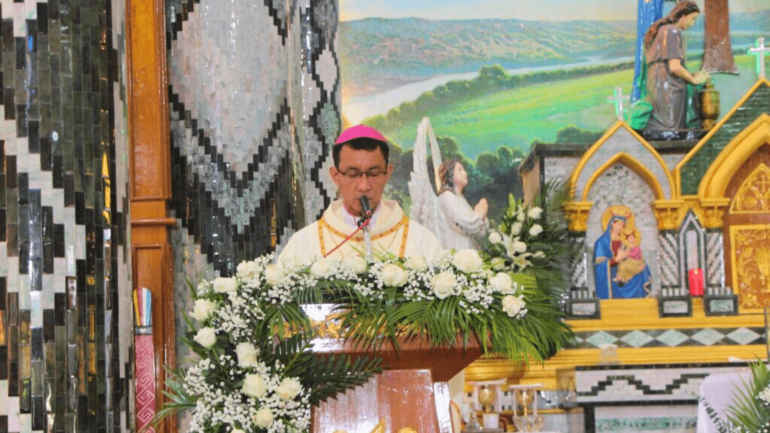
According to Vatican News, the statue—believed to be the first dedicated to the young Italian saint in Myanmar—was inaugurated during celebrations marking the 10th anniversary of priesthood and the first anniversary of episcopal ordination of Bishop John La Sam of Myitkyina.
A witness of faith in a time of trial
Explaining the significance of the initiative, Fr. John Aung Htoi, a diocesan priest, said the statue of St. Carlo Acutis is meant to inspire young people to remain faithful in the midst of hardship.
“St. Carlo Acutis teaches young people how to bear witness to the faith in their daily lives, even in times of trial, especially during this difficult period the nation is experiencing,” Fr. Htoi told Vatican News.
He added that the saint, often called the “saint in sneakers” and known as the patron of the internet, offers a compelling model for Myanmar’s youth. “He is an example for young people who must navigate and survive a crisis in a country torn apart by civil war,” Fr. Htoi said.
The priest explained that the statue also serves as a reminder of the responsible use of the internet and social media, which strongly influence young people’s lives today. He noted that Myanmar’s youth face “serious social and moral threats,” including violence, crime, drugs, the breakdown of family life, and the misuse of social media in a context lacking adequate legal protection.
In this fragile environment, Fr. Htoi said many young people turn to the Catholic Church for guidance and stability, seeking a faith rooted in Christ that can sustain them during uncertainty.
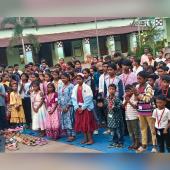
To accompany them, he told Vatican News that dioceses across the country organize youth camps, faith-formation initiatives, and educational programmes, helping young people grow in faith and responsibility.
Preventing a “lost generation”
“Young people in Myanmar today need understanding, guidance, and trust,” Fr. Htoi stressed in his interview with Vatican News. At the same time, he emphasized the importance of responsibility, saying that young people are “a vital resource for the future” and must be cared for and supported.
Across conflict-affected areas of Myanmar, young people remain among the most vulnerable. Many are homeless, orphaned, or without adequate family protection, exposing them to the risk of becoming a “lost generation.”
Addressing these challenges, the Don Bosco Youth Centre in the Archdiocese of Mandalay, founded in 2014, offers shelter and formation to about 60 young people from difficult backgrounds, many of whom are orphans or formerly lived on the streets. At the centre, they receive food, education, healthcare, and opportunities in sports, music, and cultural activities, following the Salesian charism.
Salesian priests working at the centre told Vatican News that their mission is “to accompany young people in their growth with security, dignity, and hope.”
A generation shaped by conflict
Myanmar entered a decisive chapter in its history following the military coup of 2021, which ended a fragile decade-long democratic transition. Thousands of young people initially protested peacefully for democracy before some joined armed resistance groups.
Three years later, the introduction of a mandatory conscription law forced an estimated 60,000 young people into frontline service, prompting nearly 100,000 others to flee the country—mainly to Thailand—or go into hiding.
Young people aged 15 to 35 make up roughly one-third of Myanmar’s population, with a median age of 27. As Vatican News reports, for many in this generation, the 2021 coup was not merely a political event but a deeply personal rupture that reshaped their experience of freedom and hope.
In this context of uncertainty and suffering, the statue of St. Carlo Acutis now stands at Myitkyina Cathedral as a quiet yet profound reminder that faith, rooted in Christ, can still offer light, courage, and direction to Myanmar’s youth.
Radio Veritas Asia (RVA), a media platform of the Catholic Church, aims to share Christ. RVA started in 1969 as a continental Catholic radio station to serve Asian countries in their respective local language, thus earning the tag “the Voice of Asian Christianity.” Responding to the emerging context, RVA embraced media platforms to connect with the global Asian audience via its 21 language websites and various social media platforms.
Latest News