Philippine Bishop Highlights Loneliness of Aging Clergy as Mindoro Priest Marks 50 Years of Service

A Philippine bishop has warned that loneliness and neglect remain pressing yet often overlooked challenges among aging priests, even as many continue to serve quietly in their later years.
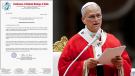
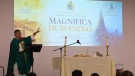
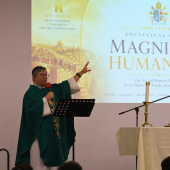
Speaking during a retreat on April 7, Bishop Julito Buhisan Cortes of the Roman Catholic Diocese of Dumaguete, located in Negros Oriental, emphasized that retired clergy still contribute in meaningful ways despite declining strength and reduced public visibility.
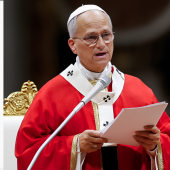
Bishop Cortes, who also serves as chairman of the Episcopal Commission for the Retired, Sick and Elderly Priests of the Catholic Bishops’ Conference of the Philippines (CBCP), stressed that care for elderly clergy must remain a pastoral priority.
Citing a reflection of Pope Leo XIV, he said that “attention to our most lonely and isolated brothers… cannot be considered less important” than pastoral care for the faithful.
He acknowledged the emotional toll of the priesthood, including “misunderstandings or loneliness,” as well as the wounds brought about by crises that have tested trust in the Church. Yet, he underscored that the priest’s mission endures: “What I do have, I give you.”
Bishop Cortes also pointed to the hidden sacrifices behind a priest’s lifelong “yes” to God. “Many will never know how much it costs you to keep saying yes to the Lord… the long journeys, the hidden sacrifices, the nights of mourning you had, but the Lord knows,” he said.
A Life of Quiet Perseverance in Mindoro
In Oriental Mindoro, that quiet perseverance finds a face in Fr. Cenon Viaña Garcia.
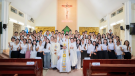
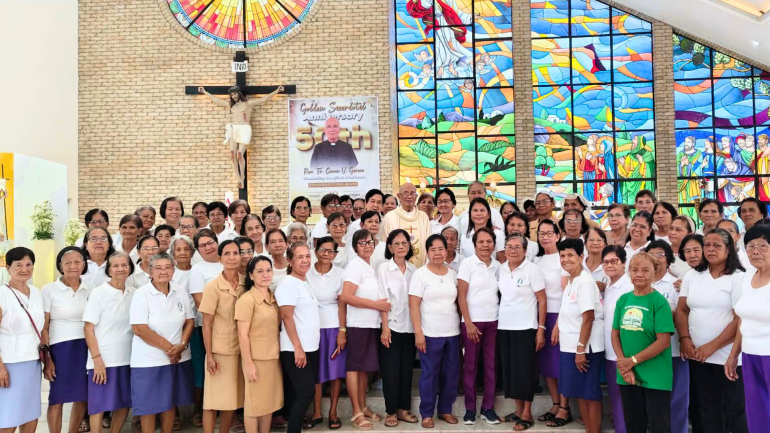
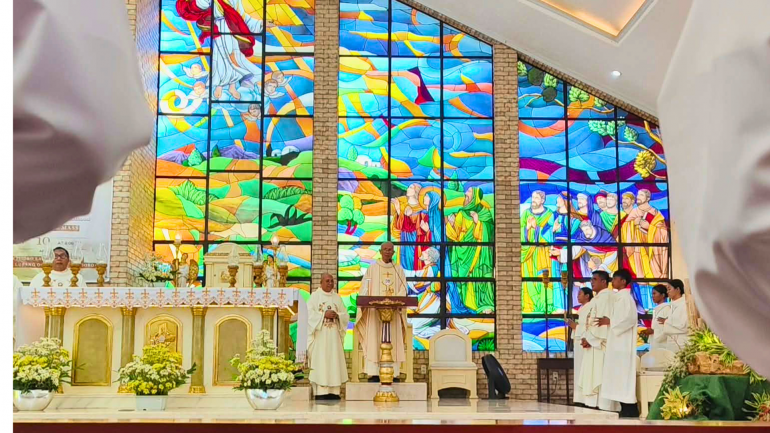
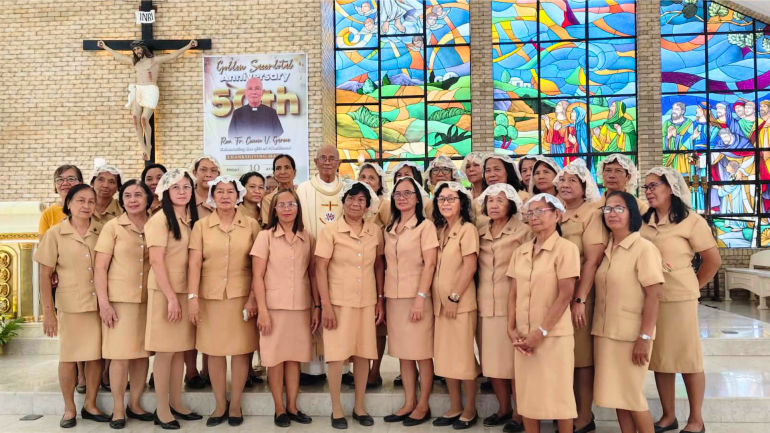
On April 10, Fr. Garcia marked 50 years in the priesthood, a golden jubilee that coincides with his 78th birthday the following day. A native of Barangay Tagbac in the island municipality of Lubang, Occidental Mindoro, his journey reflects decades of steadfast service across parishes and growing Church communities in Mindoro, a largely rural island province southwest of Manila.
Ordained in 1976 at Our Lady of the Assumption Parish in Lubang, Fr. Garcia was among the pioneering seminarians of St. Augustine Seminary in Calapan. Over the years, he served in several towns across the province, including Victoria, Naujan, Puerto Galera, Bongabong, Roxas, and Calapan City, often stepping into roles that required steady leadership during times of transition.
In Puerto Galera, a well-known coastal town and tourist destination, he made history as the first diocesan priest assigned as parish priest. He later helped nurture emerging communities such as St. Francis of Assisi in Lazareto and St. Benedict in Lalud, which have since grown into full-fledged parishes.
Rather than take a break from ministry in the early 1990s, Fr. Garcia chose to deepen his spiritual life through the Focolare Movement in Tagaytay, an experience that strengthened his commitment to unity and renewal within the Church.
Reflecting on his vocation, he said, “I never considered this a job; it is a daily response to God’s call.” He added that even in moments of difficulty, grace remains constant: “There are trials and moments of loneliness, but it is also there that I experience God’s presence.”
A Witness to Enduring Priesthood
Church leaders and parishioners describe him as a humble and steady presence, one who chose service over recognition and remained committed through decades of social and institutional change.
His life mirrors Bishop Cortes’ reminder that priesthood is “not a career to be completed, but a friendship to be lived to the end.”
For many in Lubang and across Oriental Mindoro, Fr. Garcia’s golden jubilee is more than a milestone. It is a testament to a life quietly given, marked by faith, endurance, and an unwavering “yes” that continues to echo through the communities he has served.
Radio Veritas Asia (RVA), a media platform of the Catholic Church, aims to share Christ. RVA started in 1969 as a continental Catholic radio station to serve Asian countries in their respective local language, thus earning the tag “the Voice of Asian Christianity.” Responding to the emerging context, RVA embraced media platforms to connect with the global Asian audience via its 21 language websites and various social media platforms.
Latest News