


Church leaders and environmental advocates have called on provincial officials in Quezon Province, Philippines, to immediately pass a proposed ordinance banning new coal-fired power plants, citing the urgent need for a just and people-centered energy transition.
In a statement released on April 15, bishops from the Roman Catholic Dioceses of Lucena, Gumaca and the Prelature of Infanta, together with Caritas Philippines, urged local leaders to act without delay on the governor-initiated measure.
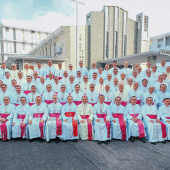
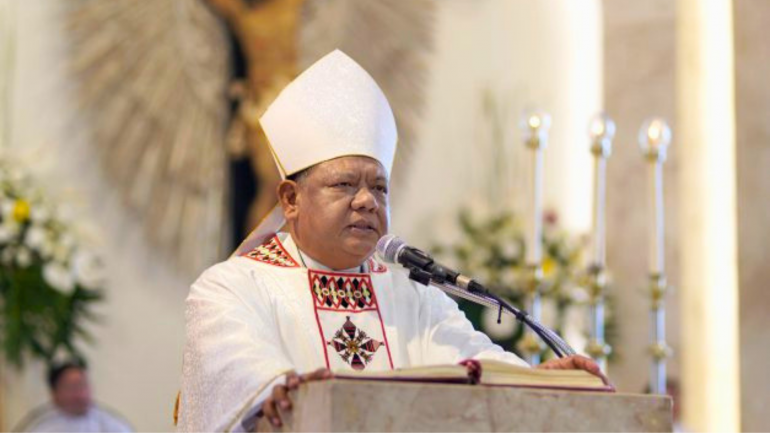
Priest-advocate Fr. Warren Puno formally submitted a letter to the governor and members of the Sangguniang Panlalawigan, bearing the signatures of Bishops Mel Rey Uy, Euginius Cañete, and Dave Dean Capucao.
In their appeal, the bishops reminded officials of their responsibility as stewards of both public trust and God’s creation, urging decisive action amid the worsening climate crisis. They noted that ongoing geopolitical tensions in the Middle East have exposed the country’s heavy reliance on fossil fuels, placing both consumers and the environment at risk.
Environmental group Quezon for Environment (QUEEN) welcomed the Church’s intervention, saying it strengthens moral leadership in the province at a time when vulnerable communities face increasing threats from environmental degradation and rising energy costs.
Long known as the country’s “coal capital,” Quezon Province hosts several coal facilities and remains the proposed site of the 1,200-megawatt Atimonan One Energy coal plant backed by Manila Electric Company (Meralco). The project received renewed endorsement from the Department of Energy in 2025 despite persistent opposition, citing economic and ecological concerns.
“For more than a decade, communities have resisted the proposed coal plant in Atimonan while witnessing the impacts of climate change and dependence on dirty energy,” said Emmanuel Villareal, a resident of Atimonan. “We pray that our moral compass now points toward genuine solutions for the future. Action is a form of learning.”
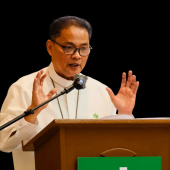
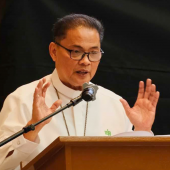
Also backing the appeal was Bishop Gerardo Alminaza, president of Caritas Philippines, who reaffirmed the Church’s commitment to work with policymakers through dialogue and collaboration in pursuit of life, justice, and sustainability.
The bishops expressed gratitude to the provincial governor for initiating the coal phase-out proposal, describing it as a “courageous and forward-looking step” to safeguard both the environment and public welfare.
Fr. Puno stressed that transitioning to clean and affordable energy is long overdue and should be treated as a top priority by both government and communities.
Echoing the spirit of the Lenten season, the bishops urged Quezon’s leaders to “move beyond deliberation toward immediate legislative action,” noting that initial multi-sectoral hearings on the proposed ordinance were already conducted in late 2025 and early 2026.
Radio Veritas Asia (RVA), a media platform of the Catholic Church, aims to share Christ. RVA started in 1969 as a continental Catholic radio station to serve Asian countries in their respective local language, thus earning the tag “the Voice of Asian Christianity.” Responding to the emerging context, RVA embraced media platforms to connect with the global Asian audience via its 21 language websites and various social media platforms.
Latest News