


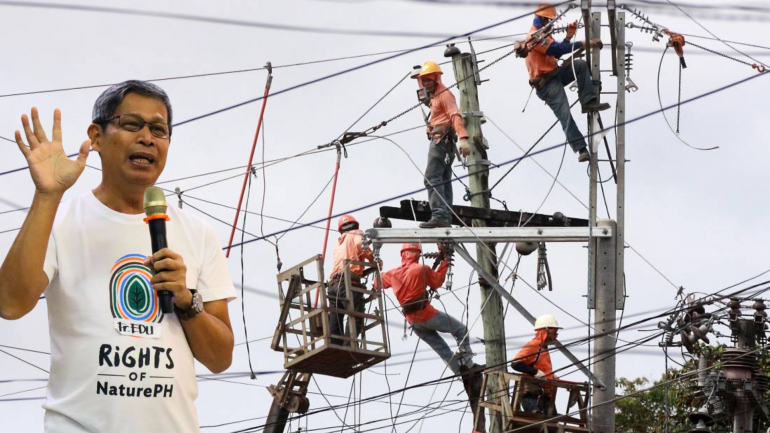
A Catholic priest on April 21 said the recurring power crisis on Mindoro in the western Philippines is the result of systemic failures, not natural causes, as the province marked Earth Day under prolonged red alert conditions and rotating brownouts.
In a statement, Fr. Edwin Gariguez of the Diocese of Calapan said the island has been “in or near a power emergency for most of April,” with confirmed Red Alert declarations extending through April 20.
“The province has been in or near a power emergency for most of April… This is not an act of God,” Fr. Gariguez said, attributing outages and rising electricity costs to “a fundamentally broken energy system.”
The Oriental Mindoro Electric Cooperative (Ormeco) reported a supply deficit of nearly seven megawatts during the April 20 afternoon peak, prompting extended outages from 11 a.m. to 10 p.m.
Fuel shortages in diesel plants and the emergency shutdown of a major generating unit on April 16 further disrupted service, affecting parts of Calapan City and Baco.
The situation has worsened amid extreme heat, reaching 42 degrees Celsius in parts of Mindoro this month, levels considered dangerous and associated with heat exhaustion or heat stroke.
“Mindoreños are enduring dangerous heat with no electricity to run a fan,” Fr. Gariguez said.
He said recurring summer outages point to structural issues, particularly the island’s dependence on diesel and bunker fuel.
“The root of the problem is dependence,” Fr. Gariguez said. “When fuel prices rise, electricity costs in isolated grids like ours rise with them. When a generating unit breaks down, or fuel deliveries are delayed, there is little margin to absorb the loss.”
While noting that wind and hydro output also declined during the dry season, Fr. Gariguez said the core issue is the lack of a diversified energy mix.
“A resilient energy system does not rely on a single source,” he said. “Renewable energy, with the right systems in place, is predictable and reliable.”
Citing a study by the Center for Energy Ecology and Development (CEED), Fr. Gariguez said Mindoro has an estimated 34 gigawatts of potential solar and wind capacity, far exceeding projected demand.
“We are sitting on an abundance of clean energy while paying some of the highest electricity rates among off-grid areas in Luzon. That is not misfortune. That is a policy failure,” he said.
Fr. Gariguez framed the issue as one of social equity, saying ordinary consumers bear the impact of outages and high costs.
“Electricity is not a luxury. It is the baseline of a dignified life, and too many Mindoreños are being denied it,” he said.
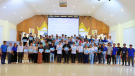
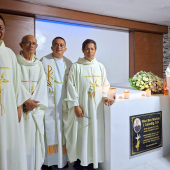
The Diocese of Calapan has also begun installing solar systems in parishes and schools as part of its 75th anniversary initiatives, responding to Pope Francis’ call for ecological action in Laudato Si'.
Ormeco is developing a 15-megawatt solar power plant in Bansud, expected to be operational by 2027.
Fr. Gariguez said such efforts remain insufficient without stronger institutional commitment. Current policies require only a one percent annual increase in renewable energy in off-grid areas.
“What Mindoro needs is not the floor, but genuine institutional commitment to a full transition,” Fr. Gariguez said.
The Diocese, together with CEED and local groups, is leading the REnew Mindoro campaign to accelerate the shift to renewable energy.
An investment summit is scheduled for April 30, followed by a public fair from May 1 to 3 in Calapan City.
“The question is whether we will allow the same fragile, expensive, and unjust system to define another generation of Mindoreños,” Fr. Gariguez said, “or whether we will finally build the energy future this island deserves.”
Radio Veritas Asia (RVA), a media platform of the Catholic Church, aims to share Christ. RVA started in 1969 as a continental Catholic radio station to serve Asian countries in their respective local language, thus earning the tag “the Voice of Asian Christianity.” Responding to the emerging context, RVA embraced media platforms to connect with the global Asian audience via its 21 language websites and various social media platforms.
Latest News