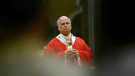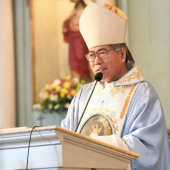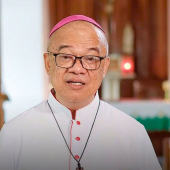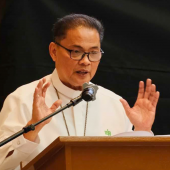
The Philippines' energy crisis is not only a problem of rising electricity costs and fossil fuel dependence but also a crisis of governance, according to Bishop Gerardo Alminaza, president of Caritas Philippines.
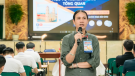
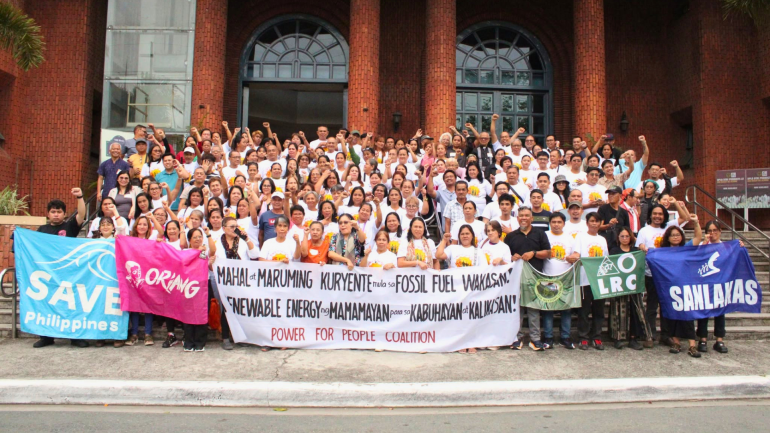
Speaking at the 4th National Convention of the Power for People Coalition on June 3, Alminaza said the country's energy challenges raise fundamental questions about accountability, justice and the common good.
"The energy crisis is also a crisis of governance," he said, pointing to persistent concerns over high electricity rates, lack of transparency and decisions that affect communities without meaningful public participation.
Bishop Alminaza said energy should not be treated merely as a technical issue left to corporations, regulators and policymakers, but as a matter that directly affects the lives and dignity of ordinary people.
The convention marked 12 years since the coalition was formed in 2014 amid growing opposition to the expansion of coal-fired power plants in the Philippines. Since then, the group has advocated for renewable energy and policies aimed at reducing the country's dependence on fossil fuels.
The bishop said recent geopolitical conflicts involving major oil-producing regions have highlighted the risks of relying on imported fossil fuels.
"A war taking place thousands of kilometers away immediately affects the lives of Filipino families," Bishop Alminaza said, noting that dependence on coal, gas and oil leaves the country vulnerable to external shocks and volatile global markets.
He called for an accelerated transition toward renewable energy systems that are clean, affordable, reliable and accessible, while emphasizing that technology alone will not solve the country's energy problems.
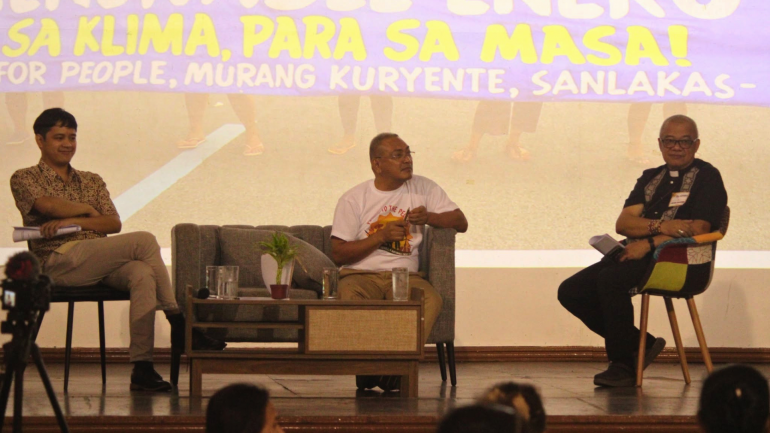
Bishop Alminza said accountability from power corporations, regulators and government institutions must be part of any serious discussion about the nation's energy future.
"Transparency is not optional. Public participation is not optional. Good governance is not optional," he said.
Drawing from the local concept of "Hayuma," which refers to mending what is broken, Bishop Alminaza compared the work of transforming the country's energy system to repairing a fisher's damaged net.
Just as a torn net requires many hands to repair, he said, addressing the country's energy and governance challenges requires solidarity and collective action.
"We are not gathered simply to respond to an energy crisis," he said. "We are gathered to help mend what has been broken."
The bishop urged communities, advocates, faith leaders and policymakers to work together toward an energy future centered on renewable energy, public accountability and the common good.
Radio Veritas Asia (RVA), a media platform of the Catholic Church, aims to share Christ. RVA started in 1969 as a continental Catholic radio station to serve Asian countries in their respective local language, thus earning the tag “the Voice of Asian Christianity.” Responding to the emerging context, RVA embraced media platforms to connect with the global Asian audience via its 21 language websites and various social media platforms.
Latest News