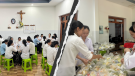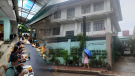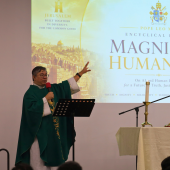




Catholic Welfare Services (CWS) Singapore held a seminar on aging, palliative care, and spiritual care on October 17, urging caregivers to look beyond residents’ physical needs and help them maintain meaningful relationships, dignity, and a sense of purpose.
About 70 staff members, caregivers, and volunteers attended the seminar at Villa Francis Home, a nursing home in Singapore, to mark Pastoral Care Week under the theme “Healing Through Presence and Grace.”
Geriatrician and palliative care physician Dr. Philip Yap said illness and increasing dependence can affect a person’s sense of purpose, belonging, and worth. Care providers should therefore help residents maintain significant relationships and valued roles alongside managing physical symptoms.
“Personhood is sustained through relationships,” Yap said.
He introduced the FICA spiritual history tool, which helps care providers explore a person’s faith, the importance of spirituality in their life, their community of support, and how spiritual concerns can be addressed.
“What gives your life meaning?” is one question caregivers can ask residents, Yap said. He also highlighted the importance of helping people reflect on their life stories and relationships.
“Reconciliation and connectedness are always very important,” he said.
CWS Chief Executive Officer Bart Lim said the organization wants pastoral care to extend beyond dedicated pastoral teams to all staff members who interact with residents.
“Pastoral care is everyone’s responsibility,” Lim said, adding that CWS plans to provide basic pastoral care training across its workforce.
CWS operates three nursing homes in Singapore: St. Joseph’s Home, St. Theresa’s Home, and Villa Francis Home. It also provides shelters, social assistance, education, and community support services. The seminar emerged from discussions within its recently established Pastoral Care Workgroup.
Lim described initiatives to strengthen residents’ family relationships, including asking whether there are relatives with whom they wish to reconcile. The homes also organize shared activities, such as meals, concerts, and craft projects, to help residents and their families spend meaningful time together.
To preserve residents’ independence, CWS has introduced pantry facilities where they can prepare breakfast or make coffee, with safety adaptations to support familiar daily routines.

The organization is also reviewing its admission process to give newcomers more time to settle in, meet staff and fellow residents, and become familiar with their surroundings. Plans include pairing new residents with an existing resident as a buddy.
“We will fit our process to their needs,” Lim said.
Lim said Catholic care providers face the challenge of preserving their pastoral mission as services expand and financial and operational pressures increase. Beyond providing food, shelter, and physical care, he said, the goal is to help people feel valued.
“We’re providing hope and love, and that is the real mission,” he said.
Radio Veritas Asia (RVA), a media platform of the Catholic Church, aims to share Christ. RVA started in 1969 as a continental Catholic radio station to serve Asian countries in their respective local language, thus earning the tag “the Voice of Asian Christianity.” Responding to the emerging context, RVA embraced media platforms to connect with the global Asian audience via its 21 language websites and various social media platforms.
Latest News