

When Hospitals Cannot Reach the Bangladeshi Poor, Runa Khan Brings Healthcare to their Doorsteps

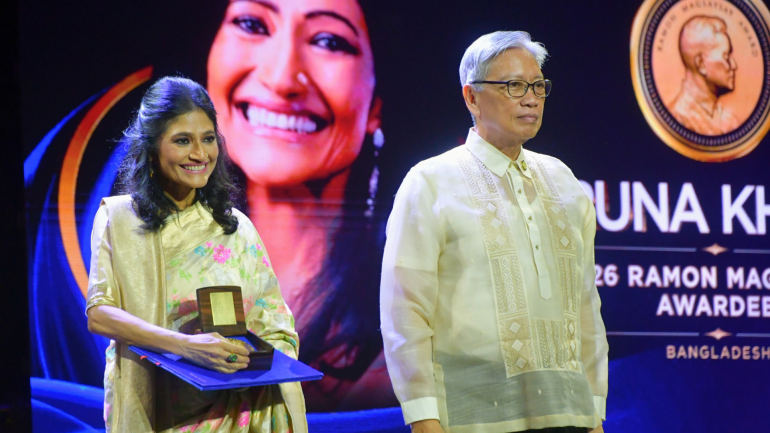
Growing up in a privileged family in Bangladesh, Runa Khan, a 2026 Ramon Magsaysay Award recipient, had access to education, security and opportunities that many people in her country could only dream of. But encounters with families living on remote river islands along the Brahmaputra eventually changed her understanding of poverty and inspired her to bring healthcare to communities beyond the reach of conventional medical facilities.
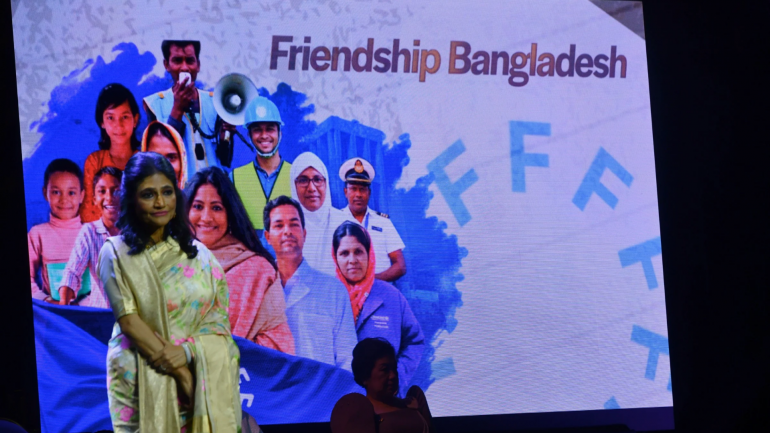
Speaking during a lecture in Manila on November 12, Khan recounted how witnessing the hardships of people living on the chars, or river islands, prompted her to establish Friendship, a Bangladesh-based humanitarian organization.
The islands are constantly reshaped by the mighty Brahmaputra, with erosion and flooding repeatedly displacing families and leaving communities vulnerable to unpredictable weather and geographical isolation.
For Khan, one encounter in particular became a turning point.
She recalled entering a humble straw hut at twilight, where a mother was putting her sick child to bed. When Khan asked why the child was being put to sleep so early, the mother explained that she could not afford the fuel needed to light a fire later in the evening.
The experience exposed a reality that had remained largely invisible to her.
Despite sharing the same language, country and citizenship, Khan realized that she and the people living in these communities inhabited vastly different worlds.
"We were living on two different planets," she said.
The experience prompted her to reconsider her understanding of poverty and her responsibility toward people whose lives were shaped by deprivation and neglect.
Khan said she learned to listen not only to what people said but also to what they left unspoken.
"I listen to what people say and also to what they don't say," she said, describing how silence can reveal suffering that statistics and conventional assessments often fail to capture.
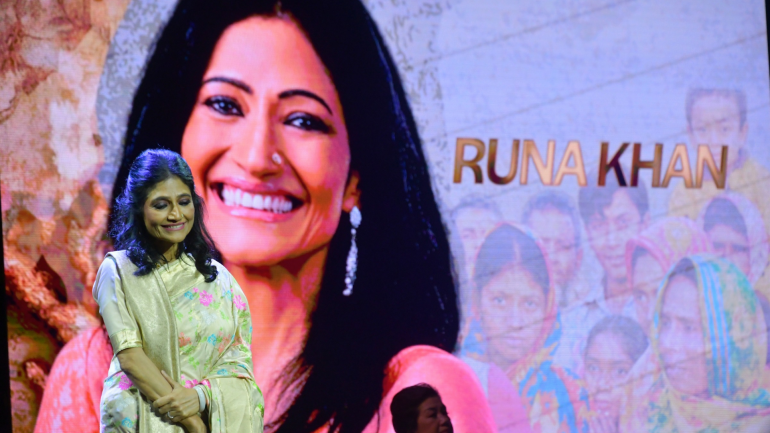
That realization eventually led her to focus on bringing healthcare directly to communities that struggled to reach medical facilities.
"If people could not reach health care, then healthcare had to reach them. For me, it was that simple," she said.
Founded in 2002, Friendship began with a river vessel converted into a floating hospital to serve isolated communities. Khan said the initiative initially aimed to reach about 12,000 people annually.
What started as one hospital ship eventually expanded into seven hospital ships, land-based hospitals and a three-tier healthcare program, according to her account during the lecture.
The expansion reflected the need to provide more than occasional medical assistance. While hospital ships could bring doctors and treatment to isolated communities, patients also needed continuing care after medical procedures and consultations.
Khan emphasized that providing healthcare required a commitment to patients beyond the initial intervention. She said she made a promise that every person reached by their work should be left better off than before.
"Every life that we would touch through our work would have to be left better than what we found it," she said.
Her approach challenges the idea that humanitarian work should be measured only by the number of people reached or services delivered. For Khan, responsibility means ensuring that assistance produces meaningful and lasting improvements in people's lives.
Her experience among Bangladesh's river-island communities also exposed the limitations of development efforts that overlook people living in geographically isolated areas. Poverty, she observed, is not simply the absence of material resources but also the absence of access, security, dignity and opportunities.
Through Friendship, Khan sought to address these barriers by bringing essential services closer to people who would otherwise struggle to access them.
Her journey from witnessing poverty at a distance to building a humanitarian organization began with a simple realization: people should not be deprived of healthcare simply because hospitals are beyond their reach.
Radio Veritas Asia (RVA), a media platform of the Catholic Church, aims to share Christ. RVA started in 1969 as a continental Catholic radio station to serve Asian countries in their respective local language, thus earning the tag “the Voice of Asian Christianity.” Responding to the emerging context, RVA embraced media platforms to connect with the global Asian audience via its 21 language websites and various social media platforms.
Latest News