



From Dialogue to Decision: Why the Church in Asia Must Close the Synodal “Praxis Gap”

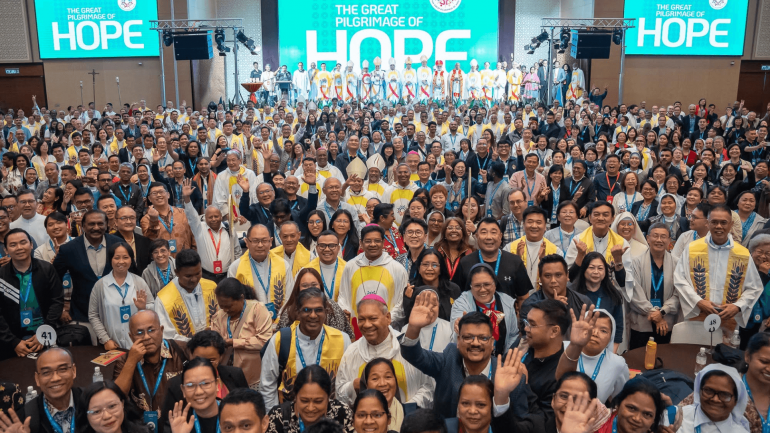
In the wake of the Asian Mission Congress (AMC) 2025, the Church in Asia finds itself at a decisive moment. The language of synodality is now firmly embedded in ecclesial discourse. The question is no longer whether the Church believes in synodality, but whether it knows how to live it.
This tension was articulated with striking clarity by Fr. Clarence Devadass, Director of the Catholic Research Centre in Kuala Lumpur, in a recent interview with Vatican News. His diagnosis was both hopeful and sobering: while awareness of synodality is growing across Asia, its concrete practice—how decisions are made, responsibilities shared, and accountability ensured—remains uneven.
In short, the Asian Church is experiencing what might be called a synodal “praxis gap”: the distance between theological conviction and pastoral execution.
Synodality: A Vision Still Searching for a Structure
Since the Second Vatican Council, especially through Lumen Gentium, the Church has recovered the vision of itself as the People of God, sharing a common dignity and mission. Pope Francis has gone further, insisting that synodality is not a temporary method or fashionable process, but a constitutive dimension of the Church itself.
Yet theology, however sound, does not automatically translate into pastoral vitality. As Fr. Devadass observes, Asia has embraced the spirit of synodality, but often struggles with its mechanics. The danger, as Pope Francis has repeatedly warned, is that synodality becomes an exercise in eloquent discussions—rich in language, poor in consequence.
The challenge, therefore, is not spiritual but structural: how can the Church move from “walking together” as an idea to “walking together” as a sustained way of governing, deciding, and acting?
Warm Communion, Weak Execution
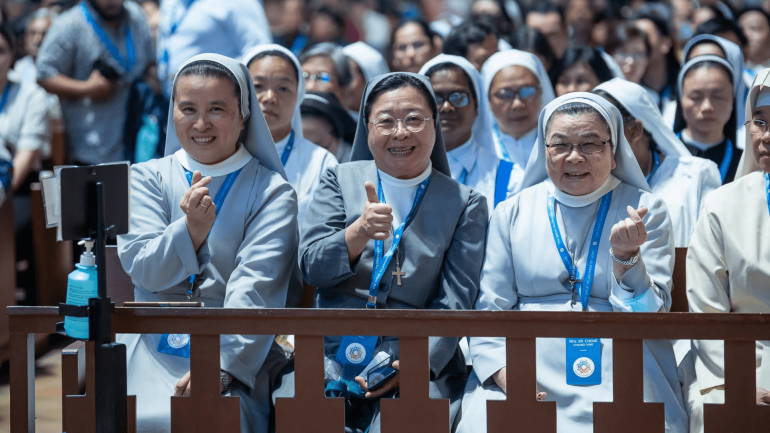
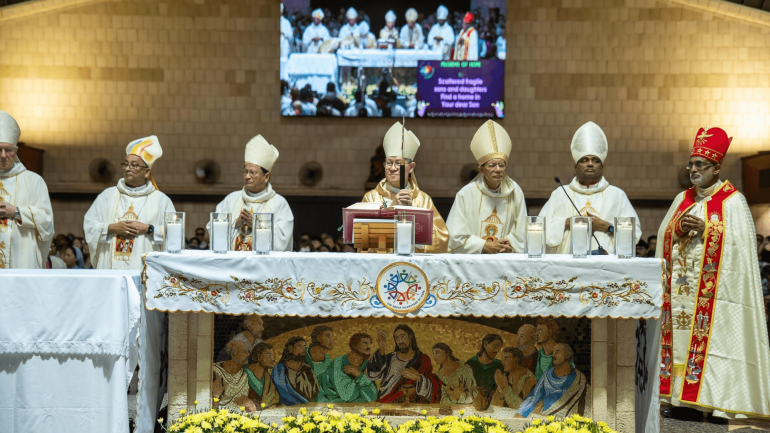
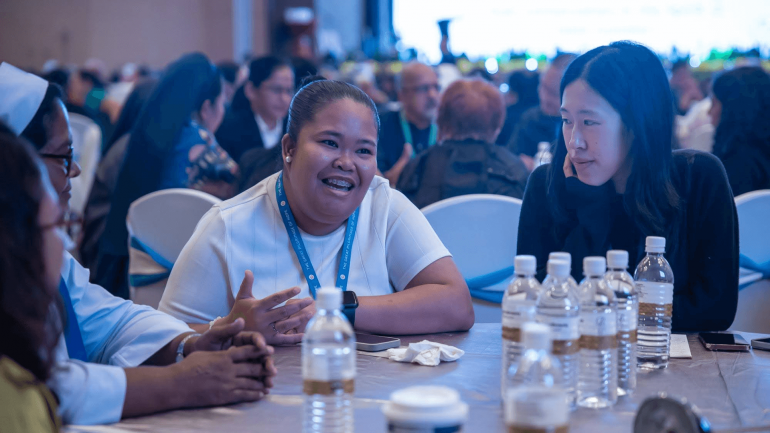
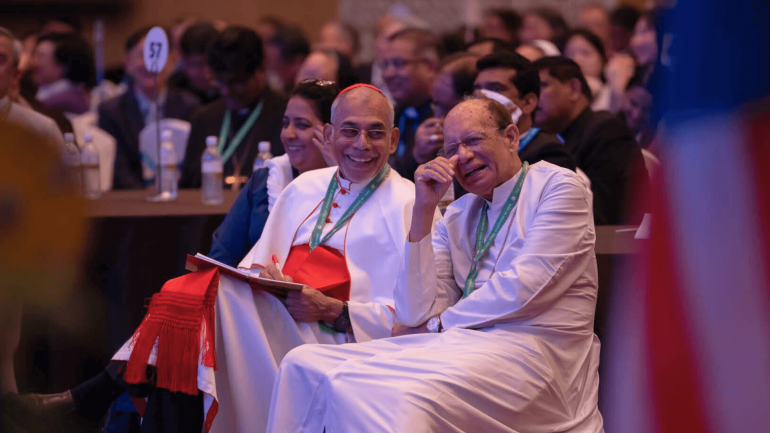
The classic theological distinction between a spirit of communion and effective shared action offers a helpful lens. Events like AMC 2025 in Penang vividly demonstrated the Asian Church’s strength in affective collegiality—warm relationships, shared prayer, and cultural richness. However, what remains fragile is the second dimension: collegial decision-making that actually shapes pastoral priorities, allocates responsibility, and evaluates outcomes.
From a contemporary perspective, this resembles what management science calls a strategy–execution gap. The Church has the strategy (synodality) and the Spirit (the Holy Spirit), but often lacks the vehicle—clear processes that connect discernment to decision, and decision to action.
Without such processes, the “Asian Mosaic,” to use Dr. Devadass’s evocative image, risks remaining a collection of beautiful but disconnected pieces.
When Structures Exist but Life Is Missing
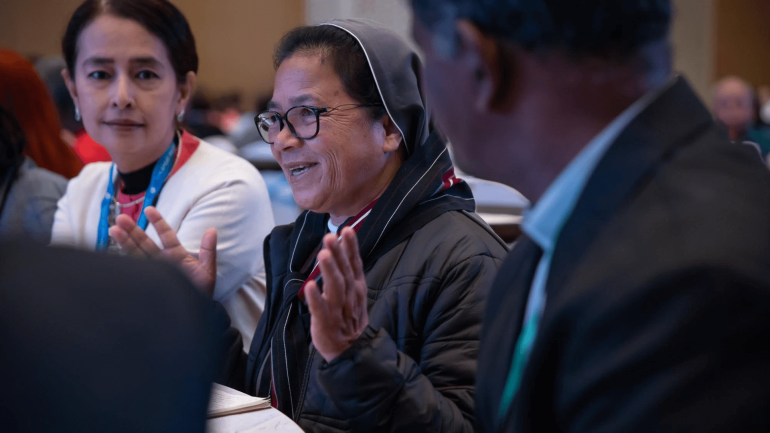
Equally concerning is another risk: the illusion of participation. Many dioceses possess pastoral councils, assemblies, and consultative bodies on paper. Yet too often, these structures are dormant in practice—meeting irregularly, lacking influence, or functioning merely to rubber-stamp decisions already taken elsewhere.
Dr. Devadass warns against what might be called structural formalism: impressive frameworks that are empty of real participation. In such settings, old command-and-control habits quietly return, and the laity are reduced to passive recipients rather than co-responsible agents of mission.
Synodality, in this context, risks becoming performative rather than transformative.
Towards “Generative Pastoral Management”
What, then, is the way forward?
One promising proposal is to integrate pastoral theology with insights from management science, not as a surrender to secular logic, but as an act of pastoral wisdom. This approach—sometimes described as Generative Pastoral Management—seeks to provide the Church with an “operating system” that supports synodality rather than undermining it.
At its core are three movements: listening, discerning, and acting.
First, listening must become institutional, not occasional.
Synodality begins with listening, but not all listening is equal. Beyond merely confirming what leaders already think, the Church needs what organizational theorists call generative listening—the capacity to hear what is emerging through the People of God. Establishing formation programmes or “schools of synodal listening” for clergy and lay leaders could help turn listening into a habit, not an event.
Second, discernment must lead to real decisions.
Synodality is not parliamentary democracy, but neither is it unilateral rule. A mature synodal process allows communities to deliberate towards spiritual consensus, which the bishop then formally ratifies. Authority remains intact, but it is exercised as confirmation of communal discernment rather than detached command—transforming obedience from passive submission into dialogical trust.
Third, accountability must be pastoral, not punitive.
Fr. Devadass rightly insists that accountability is indispensable to synodality. Borrowing from “agile” models of leadership, dioceses could adopt short pastoral cycles with regular reviews: Is this bearing fruit? Are we truly walking together? Such transparency does not weaken authority; it builds trust, which is the true currency of communion.
Preparing the Wineskins
As the Church in Asia looks toward the Ecclesial Assembly of 2028, the task ahead is clear. Repeating the language of synodality will not be enough. What is needed is the courage to reshape structures so that the Spirit’s prompting can move from conversation to conversion, from dialogue to decision.
Integrating management wisdom into pastoral life is not a concession to secular efficiency. It is, rather, an expression of pastoral charity—the careful preparation of new wineskins so that the new wine is not lost.
If the Asian Church succeeds in closing its synodal praxis gap, it will offer the universal Church not just inspiring words about walking together, but a living example of how a pilgrim people can actually move forward—together, responsibly, and with hope.
Let us know how you feel!
Comments



God bless you more.
- Reply
Permalink