




The digital world is noisy. Messages, notifications, emails, social media posts and phone calls follow us throughout the day, often demanding an immediate response.
For many of us, the mobile phone is the first thing we reach for in the morning and the last thing we look at before going to bed. We are constantly prompted to react to a WhatsApp message, a social media comment, an email, a text or a phone call.
But must every message receive an immediate response?
Often, our first reaction is not necessarily our best one. Words spoken in haste or typed in anger can have lasting consequences. In the digital world, where messages can be forwarded, copied and shared instantly, a thoughtless response can damage relationships and break bridges that are difficult to rebuild.
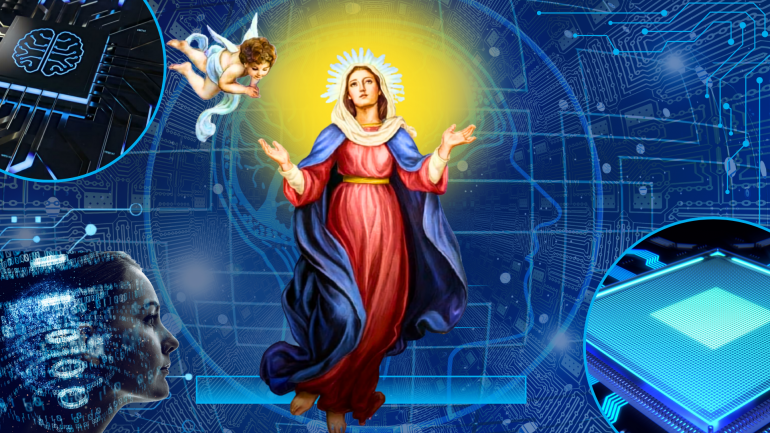
In this noisy environment, the example of Mary offers a powerful lesson in communication.
‘Mary treasured all these things’
The Gospel of Luke tells us that after the shepherds shared what they had heard about the child Jesus, “Mary treasured up all these things, pondering them in her heart” (Luke 2:19).
Mary did not respond impulsively to everything unfolding around her. She pondered. She listened. She reflected. She allowed events to sink into her heart in the presence of God.
Her example offers a simple but profound approach to communication: pause before responding.
Not every message requires an immediate answer. Not every comment deserves a reaction. And not every argument needs to be won.
Sometimes, the wisest response is to remain silent until we have had time to think, pray and understand.
This does not mean avoiding difficult conversations. Rather, it means approaching them with greater wisdom, compassion and self-control.
Communication must remain human
Pope Leo XIV offered a similar reminder in his message for the 60th World Day of Social Communications in 2026. He emphasized the need to place human persons at the heart of communication, saying, “We need faces and voices to speak for people again.”
The Pope also called for communication to remain rooted in “the deepest truth of humanity,” to which technological innovation should be directed.
Technology may transmit our words instantly, but it cannot always communicate the emotions, intentions and circumstances behind those words.
A short message can sound angry when it was not intended to be. Silence can be mistaken for indifference. A hastily written response can hurt someone more deeply than we realize.
This is why digital communication requires discernment. Before responding, we can ask: What is the person really trying to say? What might he or she be feeling? Will my response build a bridge or deepen a division?
Sometimes, no response is the best response.
Saints who used technology with purpose
The Church also offers examples of Christians who used communication and technology constructively.
St. Isidore of Seville, a seventh-century bishop and scholar, is regarded as the patron of the internet. His Etymologiae, an extensive compilation of knowledge, was an early attempt to organize and preserve information for future generations. His work reflected a desire to promote knowledge and unity.
St. Carlo Acutis, often described as the “Millennial Saint,” provides a more contemporary example. He used digital technology to promote devotion to the Eucharist, including creating a website documenting Eucharistic miracles from around the world. He also recognized the importance of discipline and moderation in using technology.
Their examples remind us that technology itself is neither good nor bad. Its value depends largely on how we use it and what purpose it serves.
From reaction to reflection
As Christians, we are called to use digital technology not simply to consume information or react to everything that appears on our screens, but to communicate in ways that promote truth, compassion, unity and peace.
Before sending a message, posting a comment or responding to an argument, we can follow Mary's example: pause, ponder and pray.
And perhaps, each time we reach for our phones, we can remember the words associated with St. Carlo Acutis: “Not me, but God.”
Digital communication then becomes less about asserting ourselves and more about serving others.
In a world that constantly tells us to react, choosing to pause can itself become a Christian witness.
Like Mary, we can treasure things in our hearts, discern them in prayer and respond with wisdom. Our words may then become instruments not of division, but of communion, building the bridges that our digital world so desperately needs.
Let us know how you feel!
Comments





- Reply
Permalink