



As the Jubilee Year 2025 draws to a close, the Church stands at a threshold. Guided by Pope Francis’ Jubilee Bull Spes non confundit, Hope Does Not Disappoint, Catholics around the world have spent the year opening Holy Doors, crossing spiritual thresholds, and rediscovering hope amid a wounded world.
Yet as the Jubilee winds down, a deeper question remains: What kind of legacy will this Year of Hope leave behind?
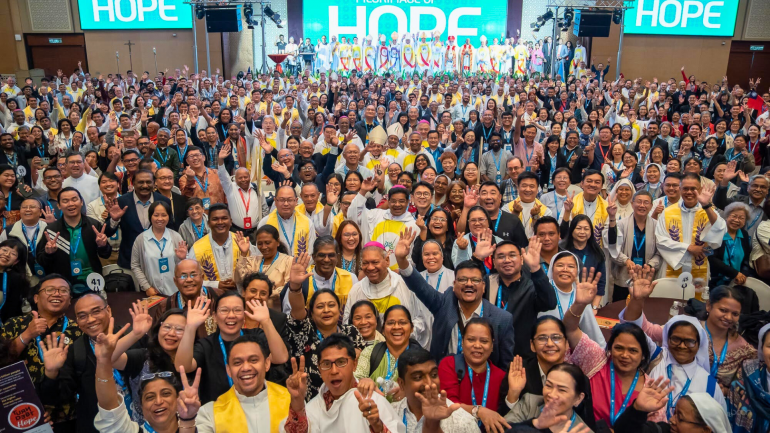
From Asia, an answer is emerging, quietly, humbly, and with remarkable clarity. It comes from the lived experience of the Great Pilgrimage of Hope (GPH 2025), where bishops, clergy, religious, and lay faithful reflected on what it truly means to be Pilgrims of Hope today. Their answer can be summed up in a simple but powerful phrase: the Missionary of Hope.

Hope That Sends Us Forth
Christian hope, the Asian Church reminds us, is not optimism or wishful thinking. It is rooted in the Resurrection itself. As Cardinal Luis Antonio Tagle noted during the GPH, hope is a spiritual force poured into our hearts by the Holy Spirit, the energy that moves us forward even when circumstances seem overwhelming.
This hope does not allow believers to remain still. It sends them out.
The Church, as St John Paul II taught in Redemptoris Missio, is missionary by nature. Every baptized person is sent. In this light, the Jubilee’s call to become Pilgrims of Hope is not symbolic, it is deeply practical. To be a pilgrim is to walk with others, to share life, and to offer hope not as a slogan, but as a presence.
As St Paul wrote, “Rejoice in hope, be patient in tribulation” (Romans 12:12). For millions of Asian Christians, this is not theory. It is daily life.
Hope Lived on the Margins
Across Asia, hope often takes shape far from the spotlight.
At GPH 2025, stories emerged from countries where Christians are small minorities or live under pressure, and communities continue to celebrate the Eucharist quietly. They keep schools open, care for the poor, and support one another, not because conditions are easy, but because hope sustains them.
This, participants said, is what it means to open the “Holy Door of Hope” in the middle of suffering, precisely what Pope Francis desired when he spoke of prisoners, migrants, and those on the margins.
In Asia, hope survives not by shouting, but by endurance, fidelity, and love.
Walking Together: Synodality as Hope in Action
One of the strongest lessons from Asia is that hope grows when people walk together.
Synodality, listening deeply, journeying together, and discerning as a community, has become a concrete way of living hope. For Asian Churches living amid religious pluralism, synodality is not optional. It is how evangelization happens.
The Missionary of Hope, Asian Church leaders say, is first a listener. One who respects cultures, engages in interreligious dialogue, and builds trust through presence rather than power. Hope, in this sense, is not imposed, it is shared.
From Hope to Service
Hope becomes credible when it takes flesh.
Across Asia, missionaries of hope accompany migrants, defend human dignity, and care for creation. Ministries in Thailand and Malaysia, for example, provide legal aid, medical support, and pastoral care to migrant workers, quietly responding to Pope Francis’ repeated calls to welcome the stranger.
Justice, peace, ecological responsibility, and even the call for debt relief for poorer nations, these are not abstract ideas. They are part of the Church’s prophetic mission today, and they echo strongly in Spes non confundit.
The Power of Joy
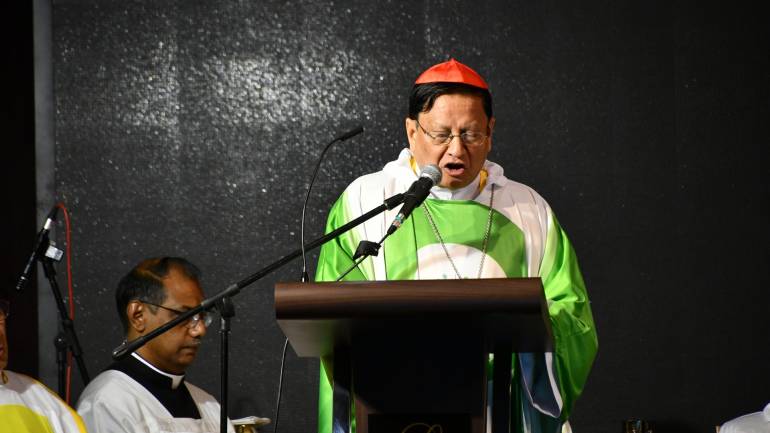
If there is one image that lingered at GPH 2025, it was this: joy as mission.
Cardinal Charles Maung Bo urged participants to bring “a smile from the heart”, a witness often stronger than any sermon. This joyful hope, rooted in the Resurrection, reflects what Pope Francis wrote in Evangelii Gaudium: evangelization flourishes when it springs from joy.
In Asia’s crowded cities and fragile villages, joy becomes a language everyone understands.
A Jubilee Legacy for the Whole Church
As the Jubilee Year closes, the Asian Church offers the wider Catholic world not a document, but a lived vision.
The Missionary of Hope is not a new role, but a renewed identity, especially for lay faithful, who carry hope into families, workplaces, and society. It is a call to a more synodal, prophetic Church: one that listens more, serves more, and fears less.
Most importantly, it bridges theology and action. It transforms Spes non confundit from a Jubilee text into daily discipleship.
Hope That Continues Beyond the Jubilee
The Jubilee doors may soon close, but the pilgrimage continues.
From Asia’s faith communities comes a quiet conviction: if the Church truly becomes a community of Missionaries of Hope, rooted in joy, united in synodality, and committed to service, then the Jubilee will not end in December 2025. It will continue wherever believers choose hope over fear, love over indifference, and peace over violence.
In a restless world longing for meaning, the Church’s most credible witness may still be this: ordinary believers walking together as Pilgrims of Hope.