For many Catholics, the word “post-modernism” triggers unease. It signals moral confusion, distrust of institutions, and a culture where truth feels negotiable. Today, the Church no longer occupies the social centre she once did. Her voice now competes with influencers, algorithms, and endless streams of opinion. From one perspective, it can feel like a crisis.
But what if this moment is more than a breakdown — what if it is a Kairos, a decisive, grace-filled opportunity? Not merely a loss of influence, but an invitation to rediscover the heart of the Gospel and the missionary vision of Vatican II with renewed clarity.
As the Council reminded the Church, she is called to read “the signs of the times.” Perhaps post-modernism, with all its instability, is one of those signs.
A Society Searching, Even While Doubting
Post-modern culture is sceptical of authority. Large institutions, sweeping explanations, and claims to absolute truth are often met with suspicion. Politics, media, and religion all struggle to be trusted. From a Christian perspective, this can feel unsettling. Yet beneath the noise lies a persistent spiritual hunger. People still search for meaning, belonging, and hope — only now in more personal and less institutional ways.
This shift may open a door for the Gospel. The Church has flourished before without cultural privilege. The first Christians lived in pluralistic, often hostile societies. They did not wield power; they bore witness through lives marked by generosity, courage, and hope. Their faith was visible in how they loved, forgave, and cared for the vulnerable.
Today, a world weary of being talked at craves authenticity. This is where synodality becomes essential — a Church rooted in listening and walking together. As Pope Francis explained,
“Synodality is not a simple discussion. It is not an ‘adjective.’ Never ‘adjectivize’ the substantiality of life. Synodality is not even the search for majority consensus, this is done by a parliament, as is done in politics. It is not a plan, a program to be implemented. No. It is a style to be adopted, in which the main protagonist is the Holy Spirit, who expresses himself above all in the Word of God, read, meditated upon, and shared together.”
In a divided culture, that posture of listening is already a powerful sign.
From Influence to Witness
The Church’s loss of automatic cultural authority may feel painful, but it can also be purifying. Stripped of privilege, she can more clearly be what she truly is: a sacramental sign of God’s presence. People may question doctrine, but they still recognise mercy, quiet joy in hardship, and love that costs something.
Christianity has always grown through witness rather than power. When believers forgive in a culture of outrage, remain faithful in a culture of convenience, and serve the vulnerable in a culture of self-interest, faith becomes visible in ways arguments alone cannot. Many may resist moral lectures, but they cannot easily dismiss lives shaped by compassion, integrity, and hope.
Evangelisation Must Begin Within
Before the Church can speak convincingly to a sceptical world, she must look inward. Evangelisation cannot be a mere program directed outward; it must first be a renewal of faith among Catholics themselves. Too many are sacramentalised but not evangelised — they have received the sacraments but lack a deep understanding of Scripture, Tradition, and the Church’s moral and social teaching.
A missionary Church must first be a formed Church. Hearts must be converted, minds renewed, and communities spiritually alive. Only then does evangelisation become credible.
Practical Paths Forward
If this truly is a Kairos, the Church must respond with concrete action:
1. Formed Catholics, Living Faith – Parishes should invest in ongoing adult catechesis, Scripture study, and formation rooted in Catholic social teaching so that believers understand the faith they are called to share.
2. Making Papal Teaching Practical – Encyclicals and apostolic exhortations are rich but often unread. Parish discussions and workshops can help translate them into daily life — family, work, civic responsibility, and service to the vulnerable.
3. Strengthening Faith Across Generations – The Church must renew how faith is passed on, beginning with stronger support for families and reimagined marriage preparation that forms couples for a lifetime of shared prayer, mission, and witness — not just a wedding day.
4. Communion in a Divided World – Synodality calls for collaboration rooted in fidelity to Christ and the Magisterium. Parishes can model dialogue, shared service, and accountable leadership that foster unity within and offer a sign of reconciliation to society.
5. Nurturing Gifts for Mission – Parishes should identify and mentor the talents of young people and lay members, equipping them to take active roles in evangelisation. Mission becomes vibrant when it is shared.
6. Truth Spoken with Mercy – Moral clarity must be joined with compassion. Catholics formed in both doctrine and charity can address difficult issues — life, family, justice — with the heart of Christ.
7. Purification that Restores Credibility – The sexual abuse crisis has caused deep wounds and eroded trust. Repentance, justice for victims, and strong safeguarding are essential if the Church is to speak credibly about healing and dignity.
8. Engaging the Secular World – Catholics are called to bring Christ into workplaces, universities, media, and civic spaces through respectful dialogue, moral integrity, and steady presence.
9. Witness Through Ordinary Holiness – Families who pray together, professionals who act ethically, young adults who serve the marginalised — these quiet choices proclaim the Gospel more convincingly than slogans ever could.
Kairos in the Crisis: Living the Gospel Today
Post-modernism is disruptive, but it also reveals a deep spiritual thirst. This is not the end of belief; it is the end of complacency.
Vatican II provides the compass. Synodality offers the path. Evangelisation remains the mission.
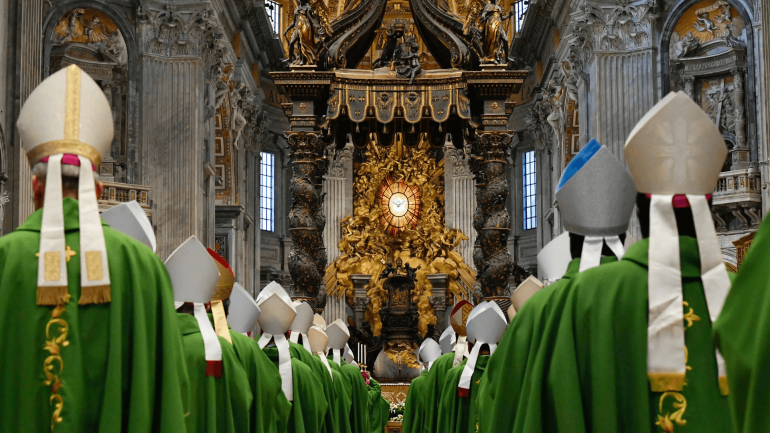
As Pope Leo XIV reminded the cardinals at the 2026 consistory, “It is not the Church herself who attracts, but Christ.” Only when Christ is clearly at the centre can faith rise above bureaucracy, communion deepen, and witness spread with courage and care.
The Church can respond with fear and nostalgia, or she can embrace this Kairos — a God-given moment to return to essentials: Christ at the centre, holiness in daily life, and a living witness that radiates outwards.
The Gospel once transformed a world of competing ideas and restless loyalties through love, truth, and sacrifice.
There is no reason it cannot do so again.