When Michelangelo completed his famous statue of Moses in San Pietro in Vincoli, Rome, he was so struck by its lifelike appearance that, according to tradition, he tapped its knee with his hammer and exclaimed, "Perché non parli?"—"Why don't you speak?"
The story continues to resonate today. We hear the same question in families, workplaces, communities, and especially in public life: Why don't our leaders speak? Beneath this question lies a simple expectation: those entrusted with responsibility should not remain silent when truth, justice, and human dignity are at stake. A statue is silent because it has no life. Human beings, especially leaders, are expected to have both a voice and the courage to use it.
The Value—and Limits—of Silence
Silence is not always a weakness. Swiss philosopher Max Picard, in The World of Silence, describes silence as a positive reality with its own beauty and depth. It enables listening, reflection, prayer, and genuine understanding. Silence can nurture wisdom and deepen relationships.
Yet silence also has its limits. There are moments when remaining silent is no longer prudent but irresponsible. When silence conceals the truth, ignores suffering, or avoids responsibility, it becomes a moral failure.
Pope Francis highlights this danger in Fratelli Tutti. Reflecting on the parable of the Good Samaritan, he describes those who pass by a wounded person, or flee after causing harm, simply to avoid inconvenience. Such indifference, he warns, reflects a society more concerned with comfort than compassion.
His insight applies not only to ordinary citizens but also to those in positions of authority. Political leaders are elected to serve the people. When communities face corruption, violence, discrimination, poverty, or injustice, leaders cannot remain silent or shift responsibility to others. Leadership demands presence, honesty, and the willingness to reassure people that their concerns are being heard.
Speaking for the Common Good
The Second Vatican Council reminds us that political authority exists to serve the common good, not personal interests. Serving the common good includes speaking truthfully, especially during times of uncertainty. Honest communication builds trust, reduces fear, and enables people to face challenges together.
Scripture presents the same responsibility. In the Book of Ezekiel, leaders are compared to watchmen. If a watchman sees danger approaching but fails to warn the people, he shares responsibility for the consequences (Ez. 33:6). Likewise, Proverbs urges: "Speak up for those who cannot speak for themselves" (Prov. 31:8-9).
Silence, therefore, is rarely neutral. At times, it becomes a failure to defend those who depend on us.
A Leader's Voice Matters
People do not elect leaders merely to make decisions behind closed doors. They expect them to explain their actions, communicate honestly, and speak with clarity during moments of crisis. Truthful, compassionate leadership strengthens confidence, calms anxiety, and unites communities. Silence, by contrast, creates uncertainty, allowing rumors and misinformation to flourish.
This challenge is even more urgent in the age of artificial intelligence and digital media. News, falsehoods, and manipulated content can circle the globe within seconds. When credible voices remain silent, misinformation often fills the vacuum.
Responsible communication is therefore no longer optional, it is an essential part of leadership.
Of course, leadership is not measured by the number of words spoken but by their quality. Words should be truthful, respectful, and directed toward building unity rather than deepening division.
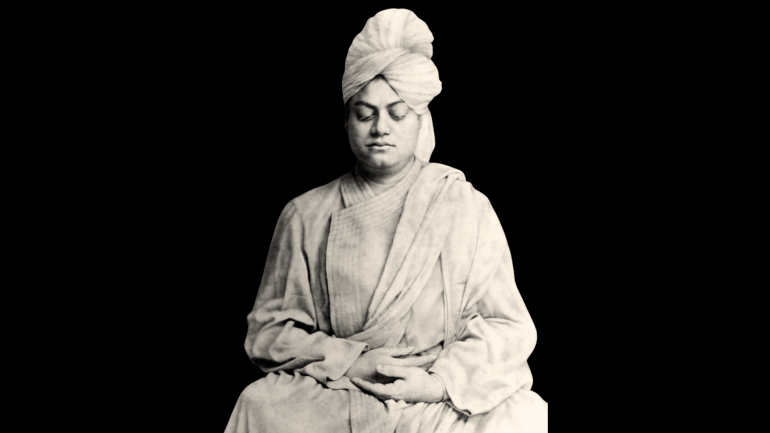
History offers many examples of the power of responsible speech. One of the most memorable is Swami Vivekananda's address at the World's Parliament of Religions in Chicago in 1893. His opening words, "Sisters and Brothers of America", immediately won the audience's hearts because they conveyed fraternity, respect, and shared humanity. His speech remains memorable not because it was loud or dramatic, but because it was sincere.
Leadership is never about speaking to dominate others; it is about speaking to serve them. A leader's voice should offer hope, especially to those who feel forgotten, marginalized, or powerless.
Michelangelo's statue remained silent because it was carved from stone. Leaders, however, are entrusted with living responsibility. Their silence in the face of injustice, corruption, violence, or human suffering can never be morally neutral. Every generation needs leaders who know both when to remain silent and when to speak, but above all, leaders whose words are guided by truth, courage, compassion, and an unwavering commitment to the common good.