As Christians, we’re called to be defenders of life. We often hear the expression “from the womb to the tomb,” a powerful reminder that life is sacred from the moment of conception to its natural end.
But too often, the pro-life conversation becomes limited, focused almost entirely on abortion and euthanasia. Don’t get me wrong, those are critical issues, and we should never downplay their importance. But if we’re deeply committed to being pro-life, our concern can’t stop there.
Because life doesn’t end at birth, nor does it begin at death.
What about all the lives in between? The people struggling with poverty, inadequate healthcare, education, and the weight of racial injustice and violence? What about innocent civilians caught in the chaos of war or refugees fleeing for their lives, displaced by bombs and bullets?
These lives matter, too. If we overlook them, we’re defending life only in pieces, not in its entirety. To be genuinely pro-life, we must advocate for the dignity of all people, in every stage of life.
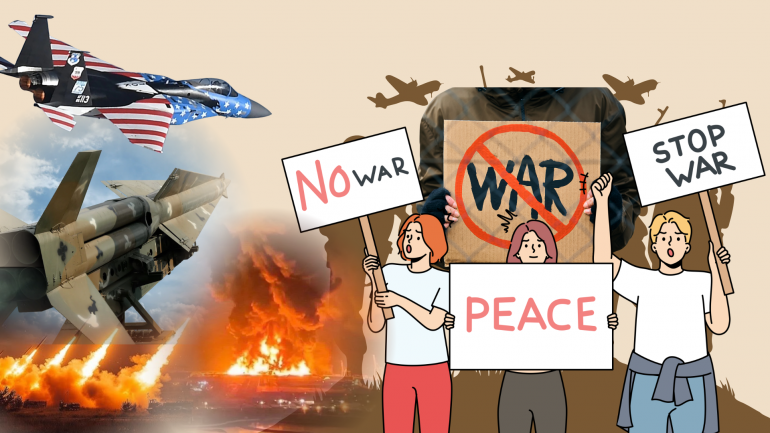
War Is a Pro-Life Issue
Right now, the world feels like it’s burning. In Ukraine, Sudan, Gaza, and with the escalating conflict involving Iran following recent U.S. and Israeli strikes and Iran’s retaliatory attacks, violence is erupting across the globe.
These aren't just geopolitical crises. They’re human tragedies, and they demand our attention as people who claim to stand for life.
Being pro-life means standing for every innocent life, not just those in the womb. It means grieving for families hiding in basements, for children growing up under the sound of gunfire, and for refugees walking miles with no home to return to.
If we say we’re pro-life, then we have to mean it, even when life is being taken by airstrikes instead of abortion.
A Biblical Vision of Life
The phrase “from the womb to the tomb” might not be a direct quote from Scripture, but its spirit runs throughout the Bible. Life is sacred because it comes from God. In Jeremiah 1:5, God says, “Before I formed you in the womb, I knew you.” Psalm 139 reminds us that we are “fearfully and wonderfully made,” knit together by the hands of God.
But Scripture doesn’t stop there. It calls us to care for the poor and the marginalized, to speak up for the voiceless, to welcome the stranger, and to seek peace rather than revenge. Jesus reminds us, “Blessed are the peacemakers, for they will be called children of God.”
In other words, the Bible calls us to a consistent ethic of life, not a selective one.
The Seamless Garment: A Call for Consistency
In the 1980s, US Cardinal Joseph Bernardin of Chicago introduced the concept of the "seamless garment" to describe a consistent ethic of life. The idea is simple: we shouldn’t “take scissors” to the seamless garment of life.
We can't selectively choose which life issues to care about. All life is interconnected. Whether it's abortion, capital punishment, euthanasia, or social justice, the moral principle remains the same: life is sacred from conception to natural death.
This “seamless garment” is more than a theological concept; it’s a call for moral consistency. That doesn't mean we have to be experts or activists on every issue.
But it does mean we need to care. We can’t champion the unborn and ignore the bombs falling on children in Gaza, Ukraine, or Iran. We can’t oppose euthanasia and remain silent when civilians are being slaughtered. If we believe every life is made in God’s image, then we are called to care about all of them.
What the Church Says About War
The Catholic Church does not automatically reject every war, but it sets an extremely high bar for what can be justified on moral grounds. Through the Just War tradition, developed by saints like Augustine and Aquinas, the Church outlines strict criteria: a just cause, declaration by a legitimate authority, war as a last resort, proportional means, and the protection of civilians.
But modern wars rarely meet these standards.
In today’s conflicts, civilians are not just caught in the crossfire; they often become the crossfire. Bombs fall on homes, schools, and hospitals. We have seen this in Afghanistan, Syria, Iraq, Sudan, Ukraine, Gaza, and now Iran.
Drones strike with little regard for who they harm. International laws meant to protect civilians are frequently ignored. And too often, moral voices fall silent or become lost in diplomatic language.
Being Pro-Life Means Being a Peacemaker
Peace is not an abstract ideal. It is a daily commitment to respect life in all its forms. As Jesus said, “I came that they may have life, and have it abundantly.” That is what being pro-life is about: helping people live fully, freely, and with dignity.
Peacemaking can take many forms: advocating for ceasefires, helping refugees, supporting diplomacy, or addressing the root causes of conflict, such as poverty, injustice, and oppression.
Catholic organizations like Caritas, Pax Christi, and the Catholic Worker Movement show what this kind of consistent witness looks like, defending life before birth while also standing with those suffering in war and poverty.
An Undivided Heart for Life
The Catholic pro-life witness is most powerful when it is both consistent and compassionate. This means speaking up for the unborn, but also for the elderly, the sick, the poor, and the innocent victims of war. Scripture makes it clear that God values every life, from the womb to the tomb, and everywhere in between.
We cannot compartmentalize our moral concern. To be truly pro-life is to be a peacemaker, an advocate for the voiceless, and a defender of all who suffer unjustly.
In doing so, we reflect the heart of Christ, who came that all might have life, and have it abundantly.