


February 01, 2026 Fourth Sunday in Ordinary Time
Daily Readings: Zephaniah 2:3; 3:12-13; 1 Corinthians 1:26-31; Matthew 5:1-12
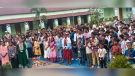
In 1948, a small group of Catholics foreigners who had recently arrived in Kuwait to work in the oil industry opened a small chapel in Al-Ahmadi, the country’s second city. Just a few years later, a church took its place and was decorated with an image of the Virgin Mary, our Lady of Arabia.
As the oil industry took off, and ever greater numbers of foreign workers began to arrive in Kuwait, the church continued to grow in importance. This chapel serves mostly migrant workers from Asia—Filipinos, Indians, Sri Lankans, and other nationalities—who gather there to pray after long hours of labor.
Fast-tract January 16, 2026. The humble Church is now a Minor Basilica.
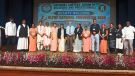
In a quiet but historic moment for the Church in the Middle East, Kuwait’s first Catholic church was elevated to the rank of a minor basilica. The Church of Our Lady of Arabia, located in Ahmadi, became a sign of hope for Catholics living as a small minority in a Muslim country.
Cardinal Pietro Parolin, Vatican secretary of state, presided over Mass at Kuwait’s Our Lady of Arabia Church Jan. 16 as it was raised to a minor basilica.
The cardinal said that the church built on the desert stands is a reminder that “Mary herself once found refuge in those same desert lands.” The basilica stands as a reminder that holiness can grow quietly in unlikely places.
In the gospel story of Matthew, Jesus also speaks not to the powerful or the celebrated, but to ordinary people gathered on a hillside, and he describes a kind of blessedness that does not look impressive by worldly standards (Matthew 5:1–12).
What are our inspirations for today?
First, the Beatitudes reveal that God’s favor rests on those the world often overlooks.
Jesus begins by calling blessed the poor in spirit, the meek, the mourners, and those who hunger for righteousness (Matthew 5:3–6). These are not traits admired by societies driven by success and strength.
Yet Jesus insists that the Kingdom of heaven belongs precisely to them.
Blessedness, in Jesus’ teaching, is not about having more, but about needing God more.
The Catholic community in Kuwait reflects this Beatitude-shaped faith. Many worshippers are far from home, separated from families, and living with limited rights.
Still, they gather week after week, trusting that God sees their sacrifices. Like the poor in spirit, they know that everything depends on grace, not control.
Second, the Beatitudes teach that holiness is lived through mercy, peace, and integrity.
Jesus calls blessed the merciful, the pure of heart, and the peacemakers (Matthew 5:7–9).
Jesus tells us that holiness is relational, not ritualistic. These virtues shape communities that heal rather than divide.
In a country like Kuwait, where Christians live alongside people of other faiths, mercy and peace are not optional. The Church survives by respect, dialogue, and good witness. This mirrors Jesus’ vision of peacemakers who are called children of God (Matthew 5:9).
For all believers, the Beatitudes challenge faith that is loud but shallow. Jesus proposes a way of life where goodness is proven through compassion, forgiveness, and truthfulness.
Such holiness may be demanding, but it is credible and life-giving.
Children of God: The Beatitudes tells us that holiness does not need privilege to survive. Jesus’ words invite us to trust that living gently, justly, and faithfully is never wasted.
The world may not always applaud such lives. Yet heaven already calls them blessed.
May we learn to recognize grace where the world sees weakness. May we choose mercy over force and peace over pride. May our faith be deep rather than dramatic.
Radio Veritas Asia (RVA), a media platform of the Catholic Church, aims to share Christ. RVA started in 1969 as a continental Catholic radio station to serve Asian countries in their respective local language, thus earning the tag “the Voice of Asian Christianity.” Responding to the emerging context, RVA embraced media platforms to connect with the global Asian audience via its 21 language websites and various social media platforms.
Latest News