




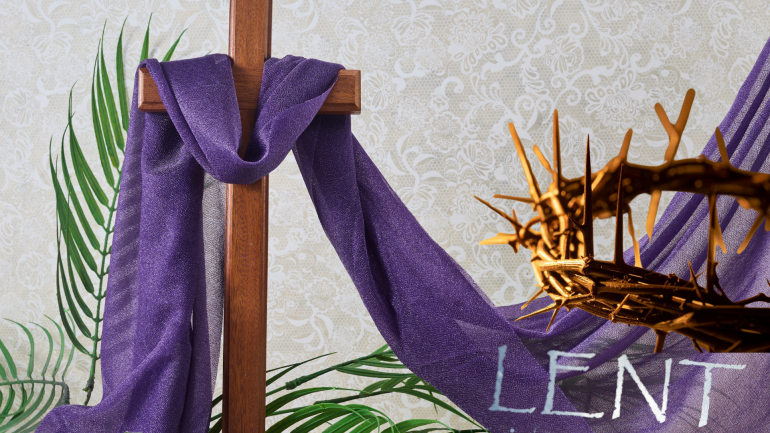
Lent is a season of profound self-reflection for Christians. It is a time when we are drawn to ponder our mortality and that final, fateful moment when we will meet our Maker. In his classic work Preparation for Death, St. Alphonsus Mary Liguori invites us to reflect on the “Four Last Things”: Death, Judgment, Heaven, and Hell.
On Ash Wednesday, the Church reminds us: “Remember that you are dust, and to dust you shall return.” Death is the great equalizer; it comes to all, young and old, rich and poor, strong and weak. No one is exempt from this destiny.
The Reality of the Cross: A Mother’s Final Lesson
I encountered this reality through my mother. At 90, she was still relatively strong and independent. Even with a pacemaker, she could eat, walk, and bathe on her own. She was the teacher of our faith, leading us in prayers, the rosary, confession, and bedtime devotions. For as long as I can remember, she prayed for a peaceful and holy death.
She modeled a joyful Christian life. Like a child, I held onto the wishful thought that life with her would never end. I convinced myself that death was still far away.
I recall the parable of the barren fig tree (Luke 13:7). My mother lived “thirty times three years,” yet the fruits she bore were not material but spiritual, her children, her acts of mercy, her witness of faith. Still, I believed such a life would simply continue.
Until illness made death real.
It was not the quiet passing I had imagined. I saw her struggle in the Intensive Care Unit, tubes in her throat, her body marked by needles. Each time I cared for her, I felt a deep wound within me. I tried to hide it, to remain strong for her sake. I turned to prayer.
I prayed with her whenever I could. Looking at her frail face, I saw life slowly slipping away. “Mommy, offer your pain to Jesus,” I would say. She responded with a faint smile. I held her hand, praying until she fell asleep. Leaving the ICU, hearing her groans, I carried a quiet anguish. I clasped my hands, remembering the hands that once carried and cared for me.
In tears, I spoke to Jesus: “You know my mother, Lord. She served others, brought people to You. Why not grant her a peaceful death? You have a mother too, why let mine suffer?”
Yet at the moment her soul left her body, I understood: the death of those who love God brings consolation, because it ends all suffering. The time to prepare our soul is not at death, but while we live.
My mother had long prepared. She was loved and respected not for wealth or status, but for her life and her love. Her “good fruit” lives on in her children.
Those who love God are not troubled by leaving worldly things behind. They see them for what they are, fleeting, like vapor.
Since then, my prayer has changed. I no longer pray in anxiety, but that I may do God’s will. When my mother passed, I felt both sorrow and peace. Her life did not end; it led her home. Until we meet again, I strive to fulfill my duties faithfully, using God’s gifts to reflect His love.
In the Book of Revelation, we read: “Blessed are the dead who die in the Lord” (Rev. 14:13). Happiness in death has become my new hope.
From Fear to Transformation
How do we face the fear of leaving this world? We look to the Apostles. After the crucifixion, they hid in fear. But the Resurrection transformed them. They went forth boldly, proclaiming the Risen Lord, no longer afraid of death.
As St. Alphonsus Mary Liguori teaches, those who are “dead to the attachments of this world” do not fear death. Instead, they embrace it, for it unites them with the Supreme Good, God Himself.
The Urgency of “Now”
Death strips us of everything: possessions, titles, achievements. We are travelers passing through a foreign land. It is foolish to cling to what we cannot take with us.
St. Alphonsus reminds us: “God promises pardon to the penitent, but not tomorrow to the sinner.” This is the urgency of Lent, to detach from worldly attachments and prepare our hearts for eternity.
Even in a world often opposed to Christ, Pope Benedict XVI reminds us in Caritas in Veritate that the call to authentic love never fades. God has written love into the human heart. We encounter Him daily, in our communities, in the Church, in our families, and in the Eucharist.
Going Home Gracefully
This Lent, let us reflect on how we have lived. Death is not an end, but a passage into eternal life for those who die in grace. Now we see through the eyes of faith; one day, we will see God face to face.
Scripture asks, “Who can live and never see death?” (Psalm 89:49). And Sirach teaches: “In all you do, remember your end, and you will never sin” (Sirach 7:36).
May we live so that when we awaken to eternal life, we may behold God and be reunited with those we love.
This Lent, may we realize that our final destination is not loss, but fulfillment. Jesus Christ, our Resurrection and our Life, walks with us, calling us to live fully, love deeply, and return to Him, where His love has always awaited us.
Let us know how you feel!
Comments

The writer of this article, with whom I once studied theology together at San Carlos Seminary, shared the experience of the death of her beloved mother and the reflection in the face of her death.
For me, the message is powerful. I got the message, "Prepare yourself, concentrate on what you are supposed to do, so that you may go home gracefully."
When I was a Jesuit novice more than 30 years ago, our novice master said "if you contain your experience in your homily, it becomes powerful." I think this holds true in the article.
"Jesus, let death come as a gentle friend to sit and linger with me until You call my name.
Then let me enter Your Heavenly Home to receive Your final gift of grace to be near you forever and look upon the divine countenance of Your Holy Face"..
Would add a bit on the topic.
Death is a paradox. We were created by Life itself. And being so meant eternity. It ended the moment it was severed by sin.
The soul which originally felt no fear and shame now cowered in the realization of an end. A disconnection. So everything about death, even sufferings leading to it, became sources of confusion and fear. That is why, in the "Gospel of Lazarus" raised from the dead, Jesus was perturbed. Not by death but by sin that causes death.
And Jesus cried.
Not only out of love for a treasured friend but also because of the destruction a human freewill can do on wrong choices in life. Jesus is saddened by creatures created in the image of God losing their state of grace. Not only temporal but eternal death as well. Jesus cannot be troubled by death. He has power over death. What troubles Him is how He cannot undermine our will to automatically avoid sins so He can give us eternal life. He knows the suffering and pains of sinners even in just trying to decipher death. To explain the pain. To understand the sufferings.
And so, he raised a 4-day decomposing, smelly cadaver, back to life. In Christ, though we die, we live. No death or suffering can touch a creature without sin.
Be it death within us or death we see around, we are no longer confused, we are no longer afraid.

- Reply
Permalink