



If one were to return, with some honesty, to the Gospel accounts of Holy Week, one quickly realises that the story of redemption is not carried by the powerful, nor even consistently by the chosen Twelve - but, in crucial moments, by women who refused to leave.
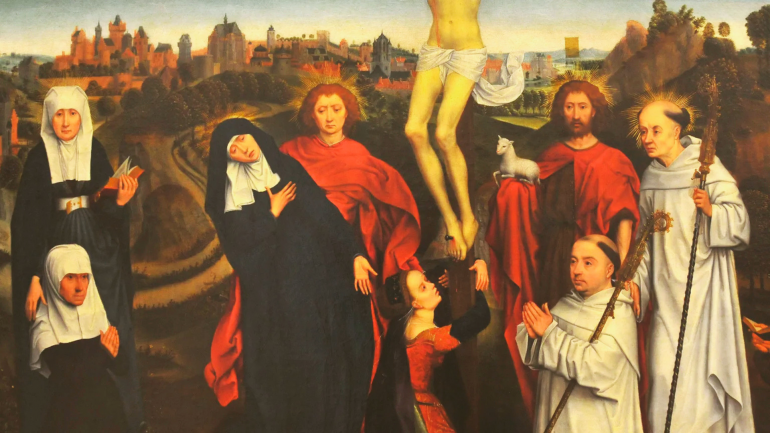
“Standing by the cross of Jesus were his mother, and his mother’s sister, Mary the wife of Clopas, and Mary Magdalene” (John 19:25).
They stood. In that single verb lies a theology of presence.
They did not preach, organise, or intervene. They remained. In a world that often equates importance with action, the Gospel quietly elevates fidelity - the courage to stay when staying changes nothing, and yet means everything.
The Ministry of Presence
There is, within this, an often overlooked dimension of discipleship: the ministry of presence. The women at the Cross could not halt the crucifixion. They could not argue with Pilate or outmanoeuvre the Sanhedrin. What they could do was refuse abandonment.
In pastoral and human terms, this is no small thing. Anyone who has sat beside a hospital bed, stood at a graveside, or accompanied suffering without answers understands this ministry well. It is not dramatic. It does not make headlines. But it reflects something profoundly divine.
In remaining at the Cross, these women mirror the very nature of God - Emmanuel, God-with-us - even in suffering.
Dawn and the Unexpected
“At dawn, on the first day of the week…” (Matthew 28:1).
The women go to the tomb not as believers in the Resurrection, but as mourners faithful to the dead. They carry spices, not expectation. There is no triumphalism here - only love that continues its duty even when hope appears buried. And then, the rupture.
The stone has been rolled away. The tomb is empty. The message is delivered not to priests, nor to Roman officials, nor even initially to the remaining apostles - but to these women: “He is not here; for He has risen, as He said” (Matthew 28:6).
One must pause here to appreciate the audacity of this detail. In the cultural and legal context of the time, women’s testimony was often considered unreliable or inadmissible in formal settings. If one were fabricating a story to convince, this would be an unlikely narrative choice.
Mary Magdalene: Called by Name
In John’s account, Mary Magdalene stands outside the tomb, weeping. She sees Jesus, but does not recognise Him. It is only when He speaks her name - “Mary” - that recognition dawns (John 20:16).
There is a theological tenderness here that cannot be overstated. The Resurrection is not first revealed through spectacle, but through relationship. It is not announced with trumpets, but with a name spoken in love.
And Mary responds, “Rabboni!” – Teacher!
In that exchange, the entire Christian experience is distilled: to be known, to be called, and to recognise.
Sent to Proclaim
But the encounter does not end in private consolation. “Go to my brothers and say to them…” (John 20:17).
Mary Magdalene is “sent”. She becomes, in effect, the first herald of the Resurrection. “I have seen the Lord” (John 20:18) is not merely a personal testimony - it is the first Easter proclamation.
The early Church did not miss the significance of this. To call her “apostola apostolorum,” the apostle to the apostles, is to acknowledge that the foundational message of Christianity passed first through her witness.
Holy Week as Mirror and Measure
What, then, does Holy Week reveal to the Church today?
It reveals, first, that proximity to Christ is not guaranteed by position. Those closest in structure were not always closest in action. It reveals, too, that witness often emerges from those willing to remain in suffering rather than escape it.
And it poses, quietly but persistently, a question: if the first proclamation of the Resurrection was entrusted to women, what does it say about how the Church listens - or fails to listen - to women today?
This is not a question of importing contemporary frameworks into ancient faith. It is a matter of fidelity to the text itself.
Recovering What Was Always There
To speak of the role of women in the Church, especially in the shadow of the Cross and the light of the empty tomb, is not to advocate novelty. It is to recover memory.
A memory in which presence is as vital as proclamation, fidelity outweighs visibility, and those who remain in love are often those entrusted with truth.
In the end, the Resurrection does not begin in a crowded square or a seat of power. It begins in a garden, in the quiet of grief, where a woman hears her name. And in hearing it, she becomes the first voice of Easter.