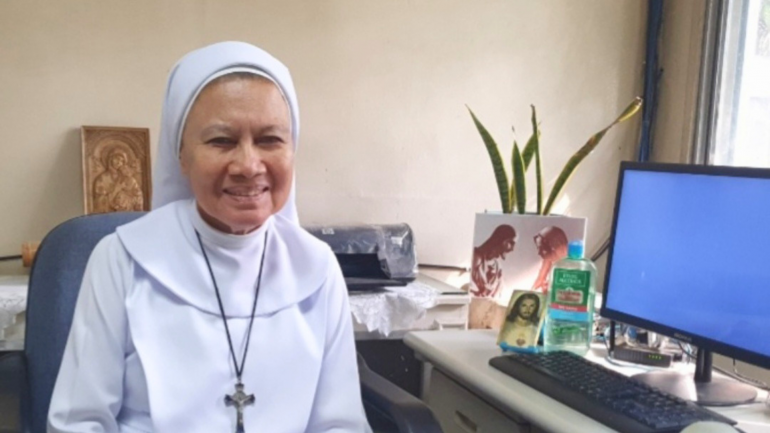
A surgeon-nun and member of the Sisters of St. Paul de Chartres, Filipino Sr. Eva Fidela Maamo practiced medicine in places where there were no operating rooms, no dextrose, and often no second chances.
In the 1970s, in a remote village in Lake Sebu, southern Philippines, she once performed surgery on a bamboo table, using coconut water to keep her patient alive, because the nearest hospital was hours away on foot, a journey that meant crossing several rivers.
But for Sr. Eva, the greater challenge was not only how to reach the sick, but how to ensure that healing would remain long after she left. That conviction would shape the course of her ministry. Rather than positioning herself as the lone doctor sent to underserved communities, she began forming indigenous “barefoot doctors”, men and women trained to respond to common illnesses and provide basic care.
“Barefoot doctors are not medical doctors,” Sr. Eva said. “But they are trained to treat common diseases.”
In Lake Sebu, she trained her first batch of 17. What began as a small effort would grow over the years: by 2005, she expanded the program to Manila, and eventually, 274 barefoot doctors from 110 indigenous communities across the country would carry forward her work.
Her work unfolded among some of the most geographically and socially isolated communities in the Philippines, including Aeta families displaced by the Mount Pinatubo eruption in 1991. There, healing could not be separated from displacement, poverty, and the long process of rebuilding life after loss.
Sr. Eva’s response was not only medical but deeply human: she walked with communities as they resettled, trained local leaders, and helped restore a sense of dignity alongside physical well-being.
Over time, a resettled Aeta community took shape, where today around 146 families, now numbering more than 500 individuals, continue to rebuild their lives. Many of the younger generation have since been baptized, reflecting not only a change in circumstance but the long, quiet presence of a faith lived alongside them.
In time, her efforts took more structured form through her leadership in the Foundation of Our Lady of Peace Mission, which she co-founded with Fr. James Reuter, SJ, in 1984 to sustain community-based health programs and extend care to underserved areas.
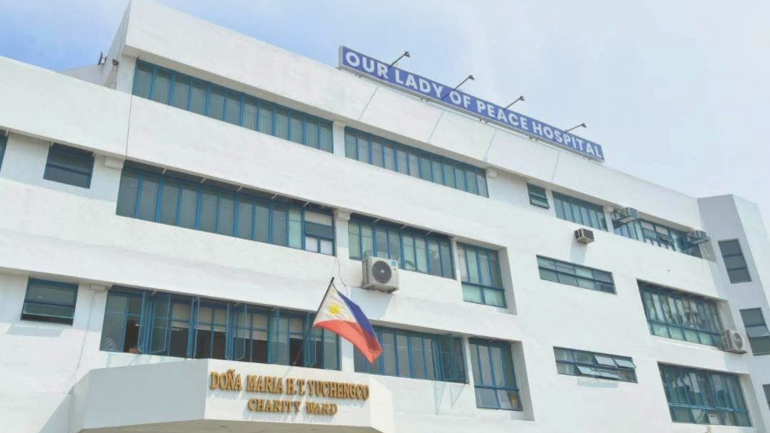
In the 1990s, Sr. Eva and Fr. James traveled to the United States to seek support from charitable individuals and groups, with help from her siblings who were also in the medical field. A hospital, Our Lady of Peace Hospital, Parañaque, which she helped establish in 1992, would eventually grow out of these efforts, strengthening access to more advanced care.
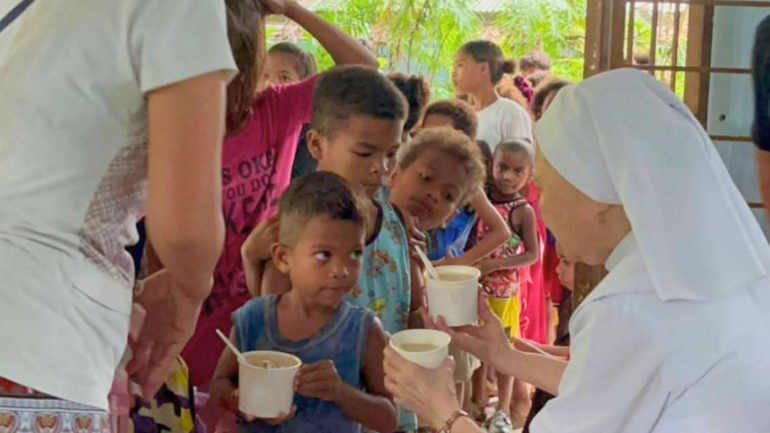
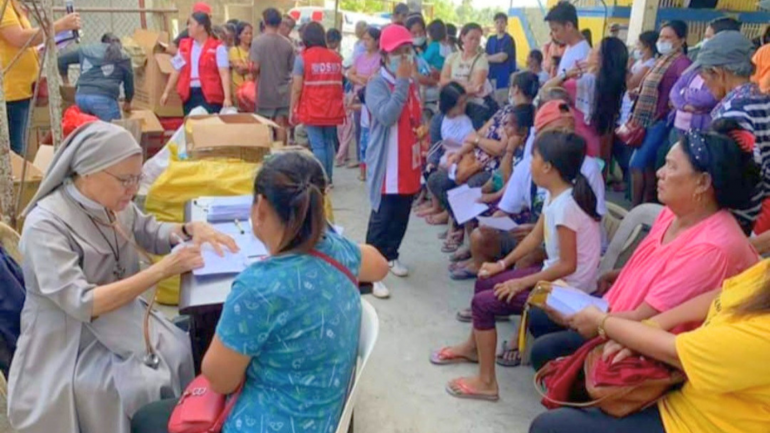
The work of the foundation gradually expanded beyond medical care. Recognizing that health could not be separated from daily life, it developed programs in livelihood, education, child nutrition, and care for the elderly.
Communities were trained in practical skills, from sewing and food processing to organic farming, and encouraged to build small sources of income. In this way, her vision of healing extended beyond the clinic, taking root in the conditions that make health possible.
Fr. James died at the age of 96 in the very hospital they helped build. Though his superior came to take him, Fr. James chose to remain, spending his final days in the place that had become part of their shared mission. Yet even then, she did not abandon the model she had built in the margins. The hospital served as support for more complex cases, but the heart of her work remained with the communities themselves, where healing had already taken root in the hands of those she had trained.
In my last visits to her office, Sr. Eva spoke of her search for someone who could carry the work forward.
At one point, she said quietly, “Baka mawala na ako” (“I may soon be gone”), a recognition that the mission she had built would need to be entrusted to others.
When I spoke with her years ago, she described her work in simple, almost understated terms. There was little emphasis on recognition, despite receiving the Ramon Magsaysay Award in 1997, often regarded as Asia’s Nobel Prize, as well as other honors, including the Mother Teresa Award of the Philippines in 1992.
What stayed with me instead was the clarity of her vision: that access to care should not depend on distance, and that the most sustainable form of healing is one that communities can claim as their own.
In remembering Sr. Eva today, it is tempting to speak of her as a surgeon, a missionary, or an awardee. But her legacy resists being contained in titles. It lives instead in the quiet continuity of her work, in villages where trained hands still tend to the sick, in communities where knowledge has replaced helplessness, and in lives saved not by her presence alone, but by what she chose to pass on.
As news of her passing at 85 reaches those she served, what remains is not only the memory of her work, but the lives and communities that continue it.