



Growing Faith, Growing Life: How an Indian Catholic and Retired Government Official Lives Laudato Si’

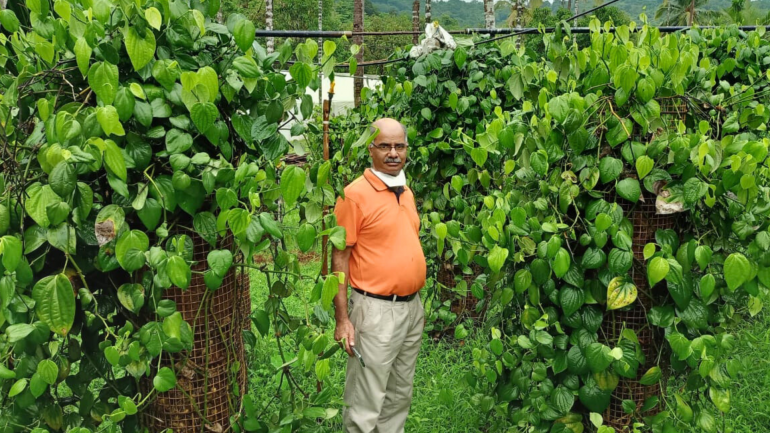
For Nevil Alphonso, a Catholic and retired Director of the Department of Agriculture, Government of Goa, southwest India, tending soil and sowing seeds is not merely good agriculture—it is a quiet act of faith, gratitude, and service to God’s creation.
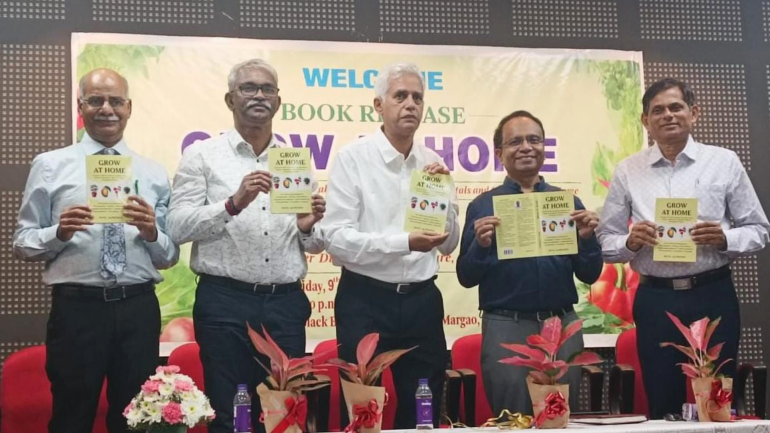
His latest book, “Grow at Home,” offers practical guidance on growing vegetables, fruits, flowers, ornamental and medicinal plants, and microgreens. Rooted in a deep Catholic faith and guided by a strong sense of service, Nevil’s journey in agriculture and writing is closely linked to his conviction that caring for the earth is an essential part of Christian discipleship.
A Family of Faith
Nevil’s roots are firmly grounded in a faith-filled family. One brother is a diocesan priest, while one sister is a religious nun belonging to the Congregation of the Sisters of the Holy Family of Nazareth, Sancoale, Goa. Growing up in a household that nurtured priestly and religious vocations helped him discern his own mission in life.
“Our home was filled with prayer, sacrifice, and dedication to God,” he reflects. “This atmosphere helped me understand that our talents are meant to be used for others. My service in the Department of Agriculture was never just a job; it was a way of serving God, farmers, and society.”
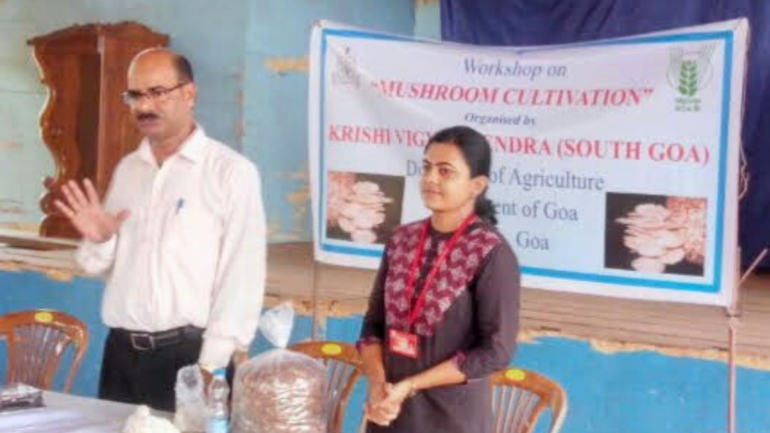
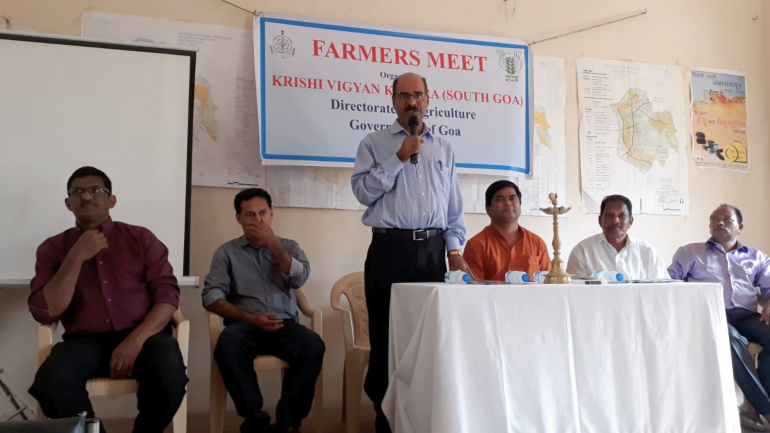
He completed his B.Sc. in Agriculture and joined the Department of Agriculture in 1986. Over the decades, he served in various capacities before eventually leading the Department as its Director. These years shaped not only his professional expertise but also his spiritual outlook. “Leadership is not about power,” he says gently. “It is about responsibility and service to others.” Christian values such as honesty, compassion, justice, and respect for human dignity guided his decisions, whether he was working with farmers, colleagues, or policymakers.
What the Book Offers
“Grow at Home” is a beautifully illustrated handbook that brings gardening within everyone’s reach—whether one has a backyard, terrace, balcony, or just a few pots. It provides step-by-step guidance, simple techniques for soil care, watering, and plant nutrition, easy methods for container and vertical gardening, clear visuals for beginners, science-based advice drawn from years of experience, and sustainable, chemical-free practices for growing fresh produce at home.
A Catholic Vision of Creation
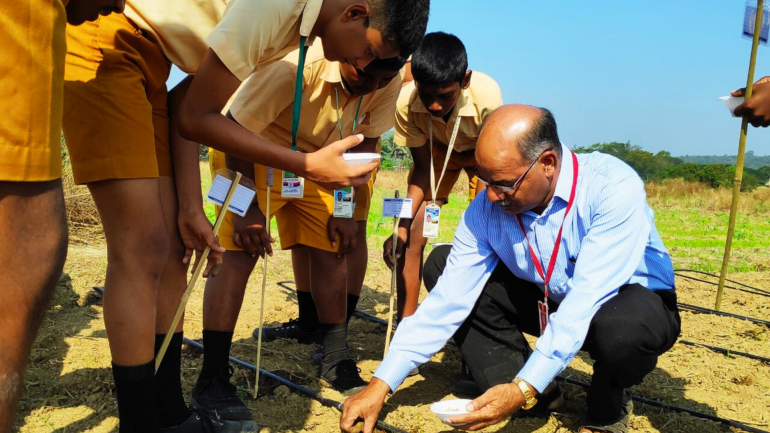
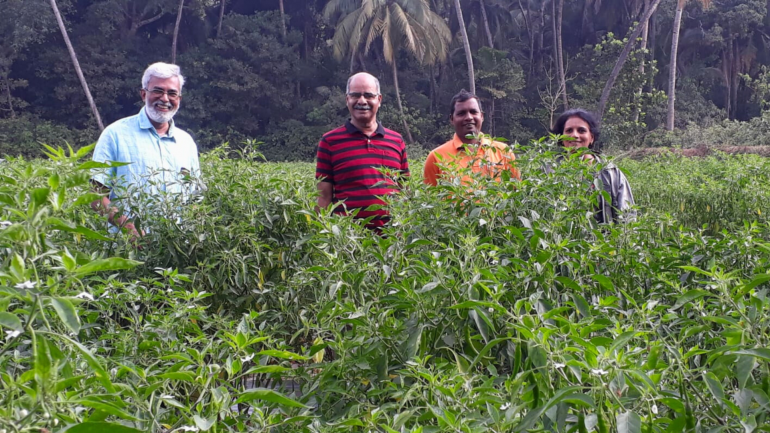
When Nevil Alphonso speaks about soil, plants, and seeds, he does so not merely as an agricultural scientist, but as a Catholic who sees creation as a gift from God and cultivation as participation in God’s ongoing work of creation. “Working with soil, seeds, plants, and farmers allows one to participate in God’s ongoing work of creation,” he shares. His understanding echoes Pope Francis’ Laudato Si’, which reminds us that work is “part of the meaning of life on this earth, a path to growth, human development and personal fulfillment.”
The book was born out of decades of listening to people. Families, farmers, and home gardeners repeatedly asked simple yet profound questions: How do we begin? What can we grow? How do we avoid chemicals? How do we use small spaces? “Grow at Home” responds with practical and accessible guidance on vegetables, fruits, flowers, ornamentals, medicinal plants, and microgreens. Yet it carries a deeper purpose. “This book,” he affirms, “is part of the Church’s mission of caring for creation. By helping families grow their own food, reduce waste, and live sustainably, it encourages respect for God’s gift of the earth.”
Nevil has also made significant contributions to Konkani agricultural literature, including a book on coconut cultivation. Konkani, he says, is the language of the heart. Writing in the mother tongue empowers farmers, elderly people, and ordinary families, while preserving culture and strengthening faith-based communities by making useful knowledge accessible.
Laudato Si’ and Ecological Spirituality
Laudato Si’ frequently features in his conversations. Pope Francis’ call to “ecological spirituality” and “integral ecology” resonates deeply with him. Home gardening, he believes, is a concrete way of living these teachings. “When families grow even a few plants,” he explains, “they begin to see creation not as something to exploit, but as something to cherish.”
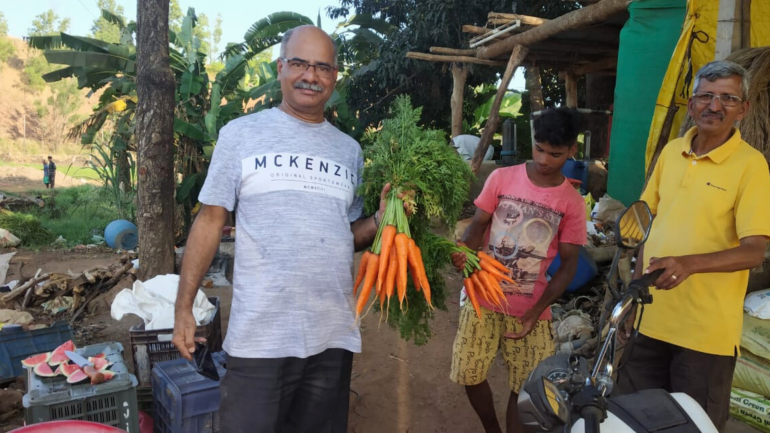
Nevil speaks with conviction about home gardening as a form of prayer. “When we sow seeds, water plants, and harvest fruits, we become aware of our dependence on God,” he says. It becomes an act of thanksgiving for life and food. His suggestions are simple yet powerful: start small, grow herbs and vegetables in pots or balconies, compost kitchen waste, involve children, and share produce with those in need. Parishes and religious communities, he believes, can also transform small spaces into gardens that educate and nourish.
Looking back, Nevil sees God’s gentle hand guiding every major step of his life—education, opportunities, mentors, responsibilities, and writing. There were moments of struggle, but also strength beyond his own. Grace, he says, becomes visible when we look back with faith.
Message to Young Catholics
His message to young Catholics today is clear: faith and ecology are not two separate worlds. “Grow your own food if you can, avoid waste, respect what you consume, and protect nature,” he urges. He hopes many will become “Laudato Si’ ambassadors” in their families, parishes, and communities.
Through his life in public service, his books, and his Catholic vision of creation, Nevil Alphonso continues to cultivate more than plants. He cultivates hope, responsibility, and gratitude to God the Creator. His story reminds us that even the smallest home garden can become a sacred space—where faith takes root and life flourishes.
Let us know how you feel!
Comments


- Reply
Permalink