



Archbishop Leopoldo Girelli: A Diplomat Who Reshaped the Catholic Church in India

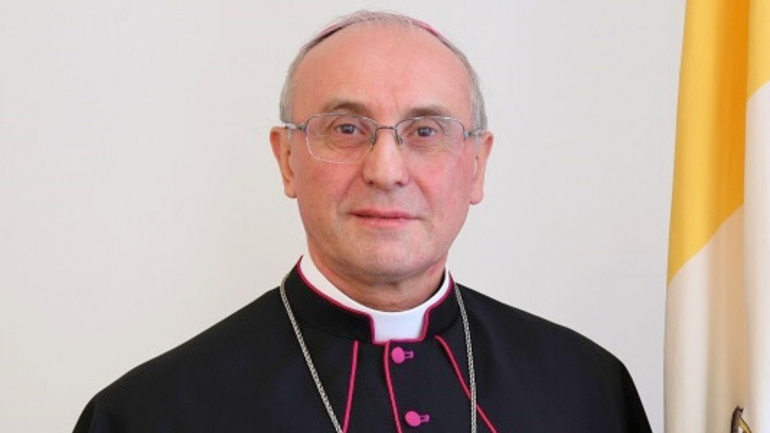
Archbishop Leopoldo Girelli has been appointed to Croatia by Pope Leo XIV on March 13, bringing to a close his five-year mission as Apostolic Nuncio to India and Nepal. Many observers consider his tenure one of the most consequential diplomatic missions in the recent history of the Catholic Church in India.
During his mission, Archbishop Girelli traveled extensively across the country, engaging with local Churches and overseeing a significant generational transition in leadership.
His tenure was marked by a large number of episcopal appointments. A total of 92 ecclesiastical announcements were made, of which 64 involved priests being elevated to the episcopate. These appointments spanned 16 states and one Union Territory, Chandigarh, reflecting both the geographical breadth of the Church in India and the scale of leadership restructuring undertaken.
The regional distribution showed a strong concentration in southern India. Kerala recorded 14 appointments across the Syro-Malabar, Syro-Malankara, and Latin rites. Tamil Nadu followed with 10, Maharashtra with 9, Karnataka with 8, and Andhra Pradesh and Telangana with 6 each. This pattern underscores the demographic and ecclesial significance of southern India and highlights efforts to ensure leadership continuity across different rites and regions.
In Northeast India, the impact was also significant. The Church saw six episcopal appointments, including three diocesan bishops, one archbishop, and two auxiliary bishops. Archbishop Girelli visited several dioceses in the region, including Itanagar, Miao, Agartala, Tezpur, Bongaigaon, Kohima, Tura, and Guwahati. He participated in key ecclesiastical events, including episcopal ordinations, the imposition of the pallium, and centenary celebrations, strengthening the Church’s presence in the region.
Notable events during his tenure included the episcopal ordination of Auxiliary Bishop Joachim Walder of Aizawl, the ordination of Archbishop Linus Neli of Imphal, the imposition of the pallium on Archbishop Victor Lyngdoh of Shillong, the ordination of Bishop Wilbert Marwein of Nongstoin, and the episcopal ordination of Auxiliary Bishop Bernard Laloo of Shillong. He also attended the centenary celebration of the Catholic faith in Aizawl. His decision to celebrate Christmas 2025 in the Diocese of Itanagar further reflected his pastoral engagement with frontier missions.
During his mission, the Church in India also saw the creation of two cardinals, both considered historically significant. One marked the first elevation of a Dalit prelate from the Telugu region, a community historically marginalized in India, while the other involved a priest from Kerala being directly elevated to the College of Cardinals.
Archbishop Girelli was born on March 13, 1953, in Predore, Italy. He was ordained a priest in 1978 and holds a doctorate in theology. He entered the diplomatic service of the Holy See in 1987, serving in Apostolic Nunciatures in Cameroon, New Zealand, and the United States, as well as within the Secretariat of State in Vatican City. His diplomatic formation shaped a leadership style that combined administrative clarity with pastoral sensitivity.
His tenure in India is widely seen as a period of renewal in Church leadership. The appointment of a large number of bishops in a relatively short period facilitated a generational transition and ensured continuity in mission.
At the same time, his transfer highlights a broader principle in Church leadership: positions are held in trust for a time, and renewal requires movement. Leadership that adapts and allows space for new responsibility sustains the Church’s mission.
As Archbishop Girelli begins his new assignment in Croatia, he leaves behind a Church in India that has experienced visible leadership renewal and structural strengthening. His legacy is reflected not only in the appointments made and the dioceses visited but in the example of faithful service and pastoral engagement he demonstrated throughout his tenure.
Let us know how you feel!
Comments



- Reply
Permalink