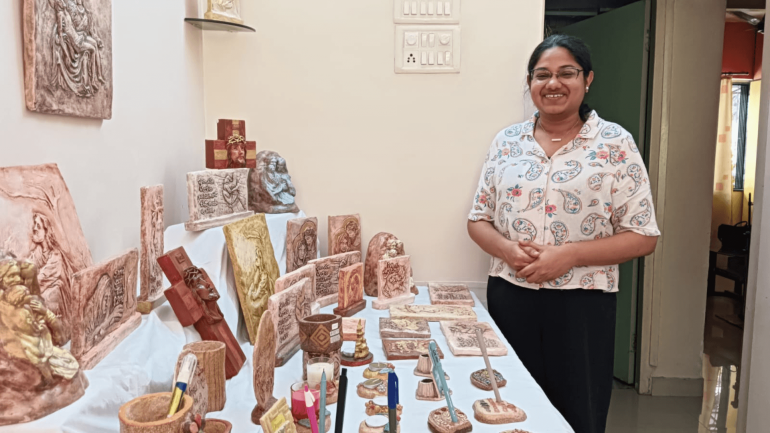
In Mumbai, western India, a young Catholic product designer is exploring how faith and environmental responsibility can intersect through creative practice.
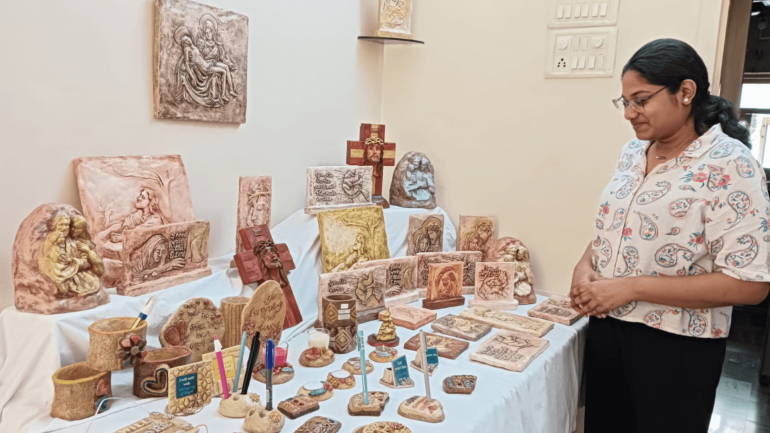
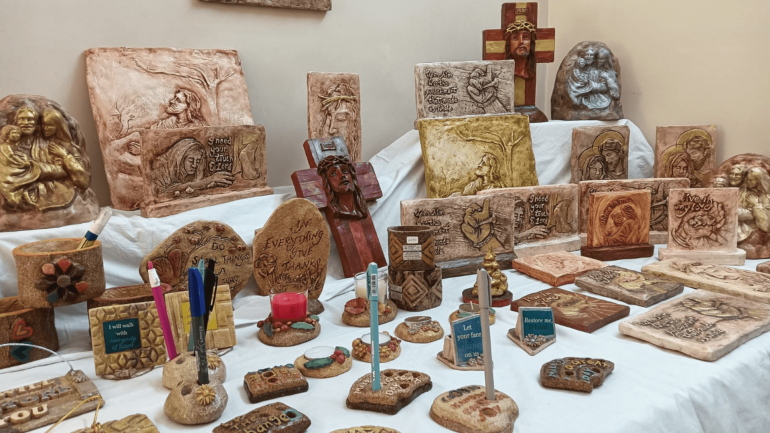
Giselle Wilson, a Bachelor of Design (B.Des) graduate from MIT Pune, has developed a series of eco-conscious devotional artworks using plant-based materials and recycled religious literature.
Her work is inspired by the ecological vision of Laudato Si’, which calls for greater care for the environment. Having completed an Eco Ambassador course conducted by the Archdiocese of Bombay’s Office of Environment, Wilson focuses on transforming discarded materials into functional and symbolic objects.
Her two initiatives, “Revive Design” and “ReNew Sculptures,” aim to produce sustainable devotional items while reducing waste.
Giselle’s sensitivity to nature was shaped early in life. Growing up in a family of four, she credits her mother, a homemaker, for nurturing a love for creation.
“My mother’s love for nature made us admire creation—from gardening to simply watching the sky and listening to birds,” she said. Her father, a retired electrical engineer, also encouraged a thoughtful and disciplined approach to her pursuits.
“Being a creative child, I turned to product design, but soon realized I wanted to create products that better rather than harm the earth,” Giselle explained.
A key influence on her work was her mentor, Leslie Dsouza, who introduced her to the idea of reusing spiritual literature in artistic forms. “I was taken up by this idea,” she recalled. This concept eventually led to the development of “ReNew Sculptures,” a project named by Giselle’s parish priest, Fr. Reuben Tellis, at Our Lady of Lourdes Church in Malad West. The has supported her efforts by helping collect used materials.
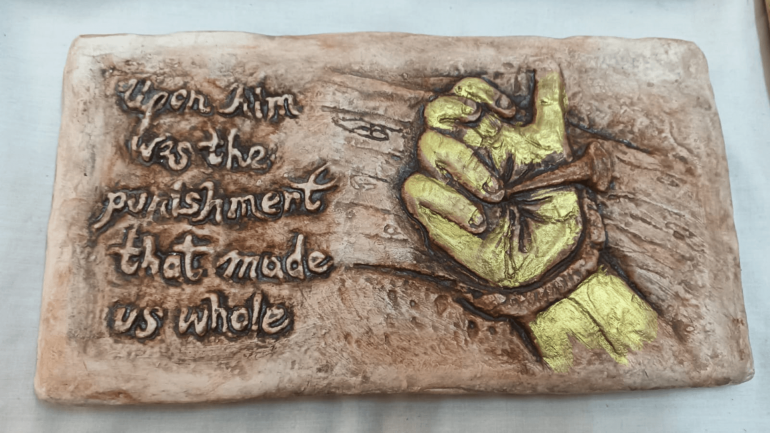
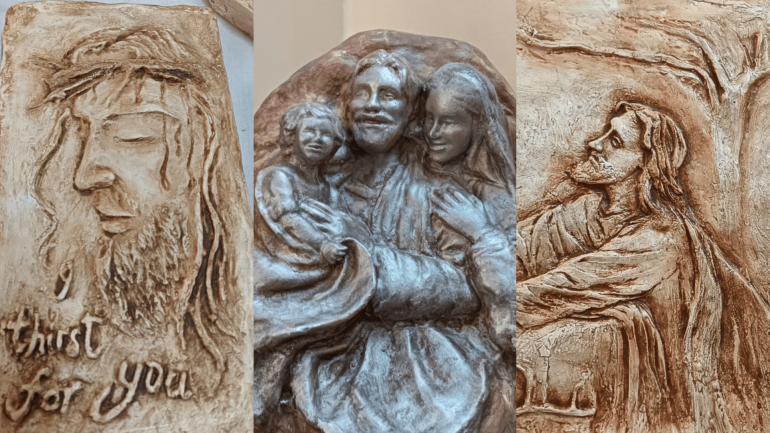
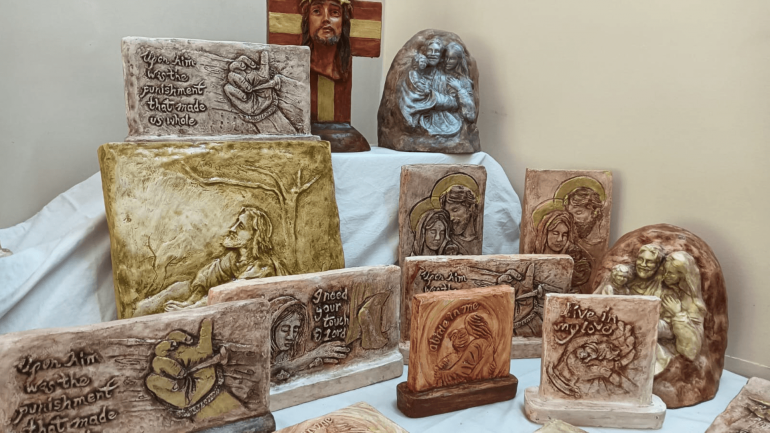
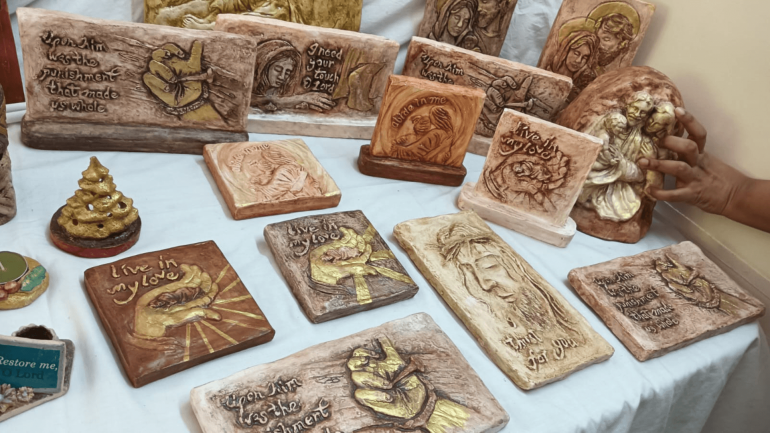
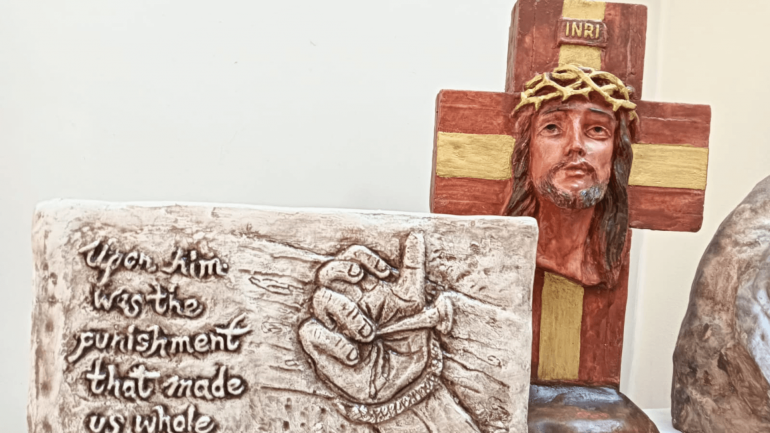
The journey, however, was not without challenges. “There were moments when I felt like giving up, but the beauty of bringing Scripture to life through texture kept me going,” she said.
Giselle works with discarded devotional items such as Bible diaries—materials often preserved in homes but not easily disposed of. “Religious literature is a cherished part of our homes, and people are often unsure how to dispose of it,” she explained. “With the belief that waste is an untapped resource, I began to find new ways to transform paper so that it continues to nourish us in a new form.”
Sustainability remains central to her design philosophy. “Every decision is designed around circularity,” she said. “The products are recyclable and non-toxic.” While her creations serve a devotional purpose, they also represent a conscious effort to reduce environmental impact through design.
Giselle sees her work as an expression of faith. “We are called to be stewards of the environment,” she said, referring to the earth as a shared “common home.” “We care for creation by loving it as we would love another person—with patience and understanding.”
Users have responded positively to both the spiritual and ecological dimensions of her work. Some describe the pieces as reminders of faith in daily life. One user shared that the artwork “brings solace and reminds me that Jesus is always with my family,” while others view the creations as “symbols of conscious living” that encourage people to see value in what is often discarded.
Looking ahead, Giselle hopes to expand her initiatives. “We want to create more spiritual artworks that bring the Word to life in new forms,” she said, adding that she also hopes to create employment opportunities for those in need.
She credits her support system for sustaining her journey. “My biggest support has been my family,” she said. “I have also been blessed by the encouragement of clergy, friends, and collaborators who have journeyed with me.”
Her work reflects a growing effort among young Catholics to align creative practice with environmental responsibility—using locally available materials and community support to respond to both ecological and spiritual concerns.