In 2014, when I first visited what is now St. Augustine Parish in Gubat, Sorsogon in the Bicol Region of the Philippines, it was still more of a construction site than a church.
Concrete was rising from a three-hectare stretch of unirrigated rice land. Sand and gravel lay in piles. The walls were unfinished. The future church, then anticipated for consecration later that year, was only halfway to completion.
But even then, it already carried the outline of something larger than a building.
According to Fr. Armando Dayao, OSA, then community prior, the church was designed to accommodate around 1,000 faithful and to serve people from 15 surrounding barangays. Once opened, it would help ease the pastoral load of St. Anthony of Padua Parish, then the only Catholic parish in Gubat.
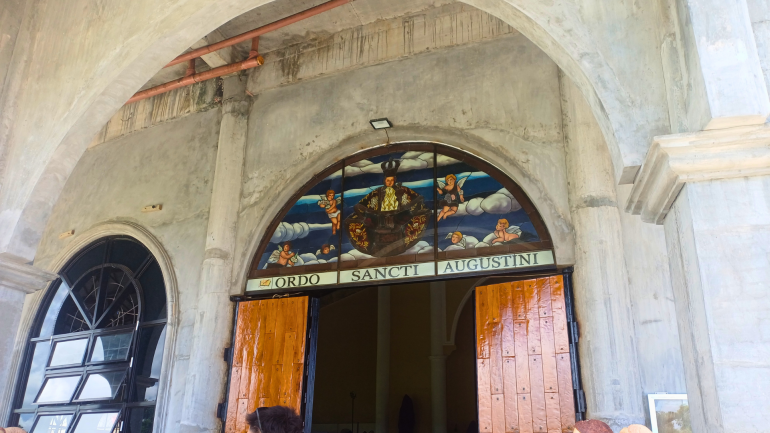
It was not merely another church structure rising in a town. It was the making of what would become Gubat’s second Catholic parish, and the first Augustinian parish in Sorsogon.
What stayed with me, however, was not only the scale of the vision, but the way it was being built.
Fr. Dayao did not always look like a priest during the construction.
With his long hair and plain, work-worn appearance, he could easily be mistaken for one of the laborers. Together with another Augustinian, he joined the men at the site, mixing sand and cement, shoveling gravel, and working under the same heat as the construction workers. If you did not know who he was, you might have thought he was simply one of them.
That memory was not mine alone. A friend of mine, himself a construction worker, also saw him there during the construction, working alongside the men. Dressed simply in pants and a shirt, Fr. Dayao did not stand out from the laborers. I also remember that even after the workers had already gone home for the day, he remained at the site, carrying buckets of sand and transferring them to where they were needed.
It was a striking image: priests not standing apart from the work, but physically participating in it.
Yet the life of the future parish was never only about concrete and steel.
Around the unfinished structures, the Augustinians were also cultivating the land. More than half a hectare was planted with rice, with a second harvest then expected within a month. Other portions were planted with cassava and mongo. Ducks were also raised.
Fr. Dayao said the rice, mongo, and cassava were sold to help cover electricity, water, and other expenses. The ducks were intended for community consumption and special occasions. Even as benefactors donated rice for their staple needs, the friars were already shaping a mission that tried to stand on both faith and practical stewardship.
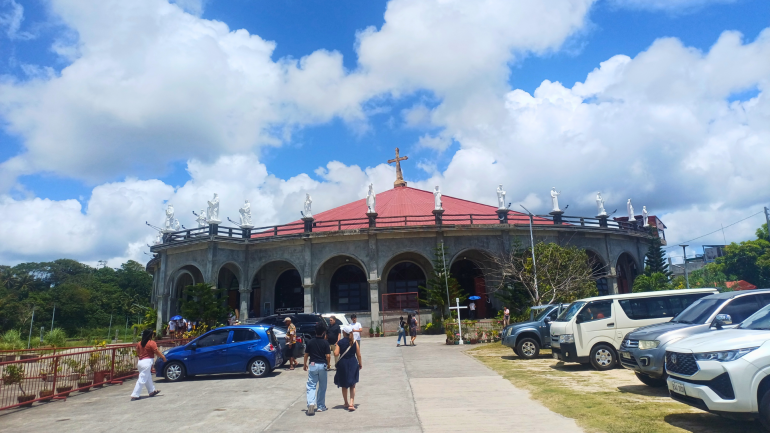
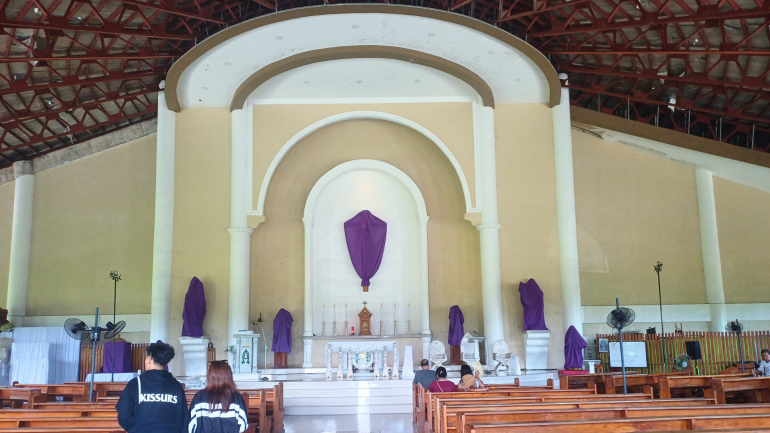
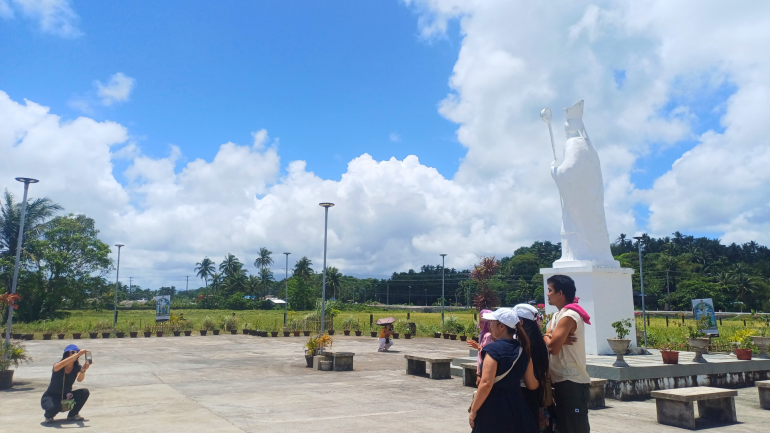
When I returned this Holy Week during Visita Iglesia with my family, the church was no longer an unfinished promise. It stood complete against the sky, its red roof and statues now familiar to the faithful who come to pray there.
But the priest I had hoped to find was gone.
Fr. Dayao had told me before that once the church was completed, he would leave for a new assignment.
And he did.
I later searched his name online, hoping perhaps to trace where mission had taken him next. There was little that pointed directly to him, no obvious personal account, no carefully maintained public self.
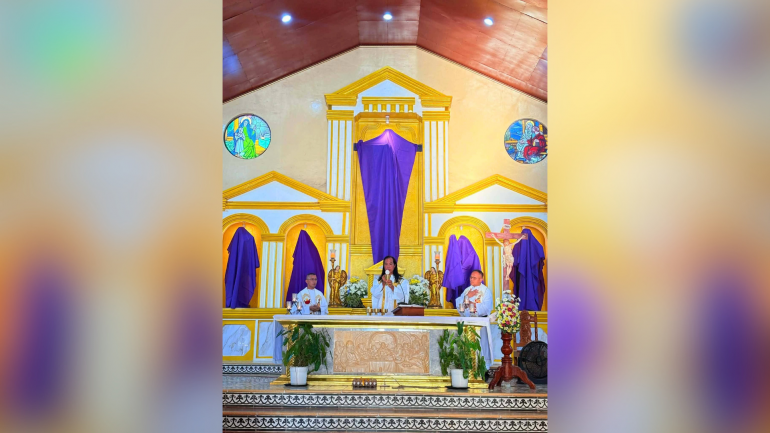
But on the Facebook page of Saint Augustine of Hippo Parish in Saguday, Diocese of Bayombong, I found him again: presiding over a Mass, still wearing the same long hair I remembered from the construction site.
It felt fitting.
Some people leave behind many words and public traces. Others leave behind something quieter, but perhaps more enduring: a church, a community, and the memory of having once worked with their own hands.