




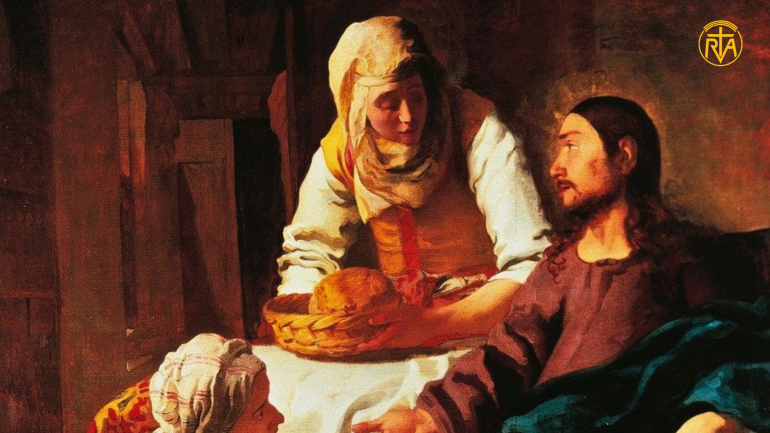
Until recently, only Martha was celebrated on July 29. For decades, it was hers alone, while her brother and sister were remembered, if at all, in her shadow. In 2021, Pope Francis quietly brought the family back together by adding Mary and Lazarus to the memorial.
This small change highlighted a bigger truth: these three were never meant to be honored separately. They are a household, and a household is a system, three different personalities living together under one roof.
We often forget what that house really was. Bethany was where Jesus could step away from his role as the Messiah and simply be a friend who was cared for and welcomed. In terms of attachment theory, it was his secure base, the ordinary, reliable place someone returns to before heading back out into the world. The point is simple: even the Son of God needed a place to be loved without having to give anything in return. The siblings gave him that, and it might be the most overlooked ministry in the Gospels.
Then there is Martha, who is often misunderstood because of one scene. Everyone remembers her as "distracted with much serving," being scolded for fussing while Mary sat and listened. This has turned her into a stereotype: the stressed hostess, the lesser sister, the patron saint of people who can't relax. But look at what Jesus actually says. He does not criticise her service. Instead, he points out her anxiety: "You are worried and upset about many things." This is not a rebuke of her work; it is a clear description of someone whose nerves are overwhelmed. Family-systems therapists would quickly see her as the over-functioner, the one who takes on too much responsibility for everyone’s comfort, does more than needed, and quietly resents those who do less. The solution Jesus offers is not to stop working, but to know that her value was never based on the meal.
And lest we reduce her to a personality type, John hands Martha the other half of her story. At Lazarus's death, it is Martha, not Peter, not John, who makes one of the boldest confessions of faith in all the Gospels: that she believes he is the Christ. The woman dismissed for her casseroles is also a theologian. Let her be both.
Mary, by contrast, sits. In her world, a student sat at a teacher's feet, and that place belonged to men; for a woman to take it was a quiet act of nerve dressed as stillness. Later, she pours a fortune of perfume over Jesus' feet and dries them with her hair, and he reads it as a rehearsal for his burial. Mary is the one who feels things all the way down and is unafraid to show it. Where Martha manages, Mary surrenders. Neither is the "good" sibling. There are two different ways of loving the same person, and the house held both.
Lazarus is the strangest of the three, because Lazarus says nothing. He is the headline miracle, four days dead, called out of the tomb, the sign that sets the whole crucifixion in motion. And he never speaks a recorded word. The man who came back from death offers no account of it. That silence is psychologically honest. Some experiences sit beneath language; trauma and the territory near death often do. The people who have been to the edge are frequently the quietest in the room, and we mistake their silence for having nothing to say. Lazarus is the patron of everyone who survived something they cannot narrate.
Grief holds the family together. When Jesus reaches the tomb, he weeps, even knowing how the story ends. That detail dismantles the idea that faith should make sorrow unnecessary. Knowing it turns out all right does not cancel the loss; presence matters more than fixing. And notice the sisters grieve differently: Martha runs out to meet him and argues theology through her tears; Mary stays home, then collapses at his feet. One approaches, one withdraws. He meets each exactly where she is.
That is the gift of this restored memorial. In an age that moralises busyness, isolates us from any reliable table, and rushes the grieving toward closure, three siblings model something we've nearly lost: love comes in temperaments, a home can be a refuge, and none of us has to be the whole house alone.