

Asian Catholic Leaders Urge Lasting Institutional Change at Laudato Si’ Anniversary in Rome

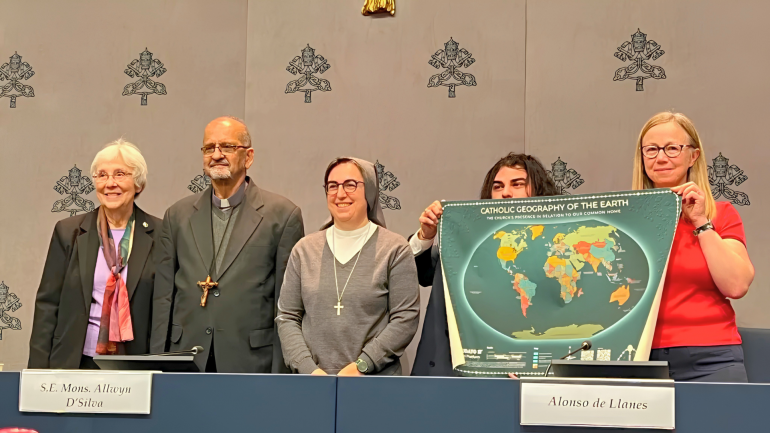
Four Catholic leaders from India, Bangladesh, and the Philippines have called for sustained institutional commitments, community-led climate action, and ethical use of technology as the Vatican’s Laudato Si’ Action Platform (LSAP) marked its fifth anniversary in Rome from November 4 to 6.
Representing pastoral leadership, humanitarian development, environmental advocacy, and theological research, the Asian participants shared experiences of translating Pope Francis’ vision of integral ecology into practical responses to environmental and social challenges.
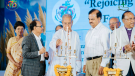
The anniversary celebration, held under the theme “When Laudato Si’ Comes to Life,” brought together Church leaders, religious congregations, academics, and environmental advocates to assess five years of ecological initiatives and outline priorities for the Platform’s next phase toward 2031.
At a November 4 press conference at the Holy See Press Office, Bishop Allwyn D’Silva, Auxiliary Bishop Emeritus of Bombay, India, stressed that ecological responsibility must become an integral part of Church institutions rather than depend on individual initiatives.
“Care for creation is part of our pastoral responsibility,” he said.
Drawing on the experience of the Archdiocese of Bombay, he highlighted parish initiatives involving rainwater harvesting, solar energy, plastic reduction, and biodiversity conservation. He also cited the archdiocese’s Lenten carbon fast and efforts to develop a common ecological plan for its 125 parishes.
“If our faith can change what we choose for forty days, why should it not change what our institutions choose for the next forty years?” he asked.
Daud Jibon Das, executive director of Caritas Bangladesh, brought the perspective of community-based development and humanitarian response to a November 6 panel on institutional transformation. He emphasized that ecological initiatives must be rooted in local dignity and ownership, particularly in communities facing climate-related disasters, poverty, and displacement.
Filipino environmental advocate Rodne R. Galicha, executive director of Living Laudato Si’ Philippines, highlighted the importance of community participation in sustaining ecological conversion. Speaking on a panel examining lasting community transformation, he presented initiatives involving Catholic schools, dioceses, sustainable lifestyles, responsible investment, and advocacy against destructive mining.
“Accompaniment means standing with people, not speaking over them. Communities must shape decisions, not merely receive assistance,” Galicha said.
Another Filipino participant, Ivan Efreaim A. Gozum, a theology instructor and researcher at the University of Santo Tomas in Manila, challenged Church institutions to examine the environmental and ethical implications of artificial intelligence.
In his keynote, “From Artificial Intelligence to Ecological Wisdom: Safeguarding Humanity and Our Common Home,” he highlighted the environmental costs of digital infrastructure, including data centers, energy consumption, water use, mineral extraction, and human labor.
The anniversary also featured the launch of the Digital Atlas of Laudato Si’, alongside plans for accessible learning resources and improved assessment of ecological initiatives.
The four Asian contributions highlighted the region's growing role in shaping the Church's ecological mission, emphasizing that integral ecology requires not only individual lifestyle changes but also institutional accountability, social justice, and sustained community participation.
Radio Veritas Asia (RVA), a media platform of the Catholic Church, aims to share Christ. RVA started in 1969 as a continental Catholic radio station to serve Asian countries in their respective local language, thus earning the tag “the Voice of Asian Christianity.” Responding to the emerging context, RVA embraced media platforms to connect with the global Asian audience via its 21 language websites and various social media platforms.
Latest News